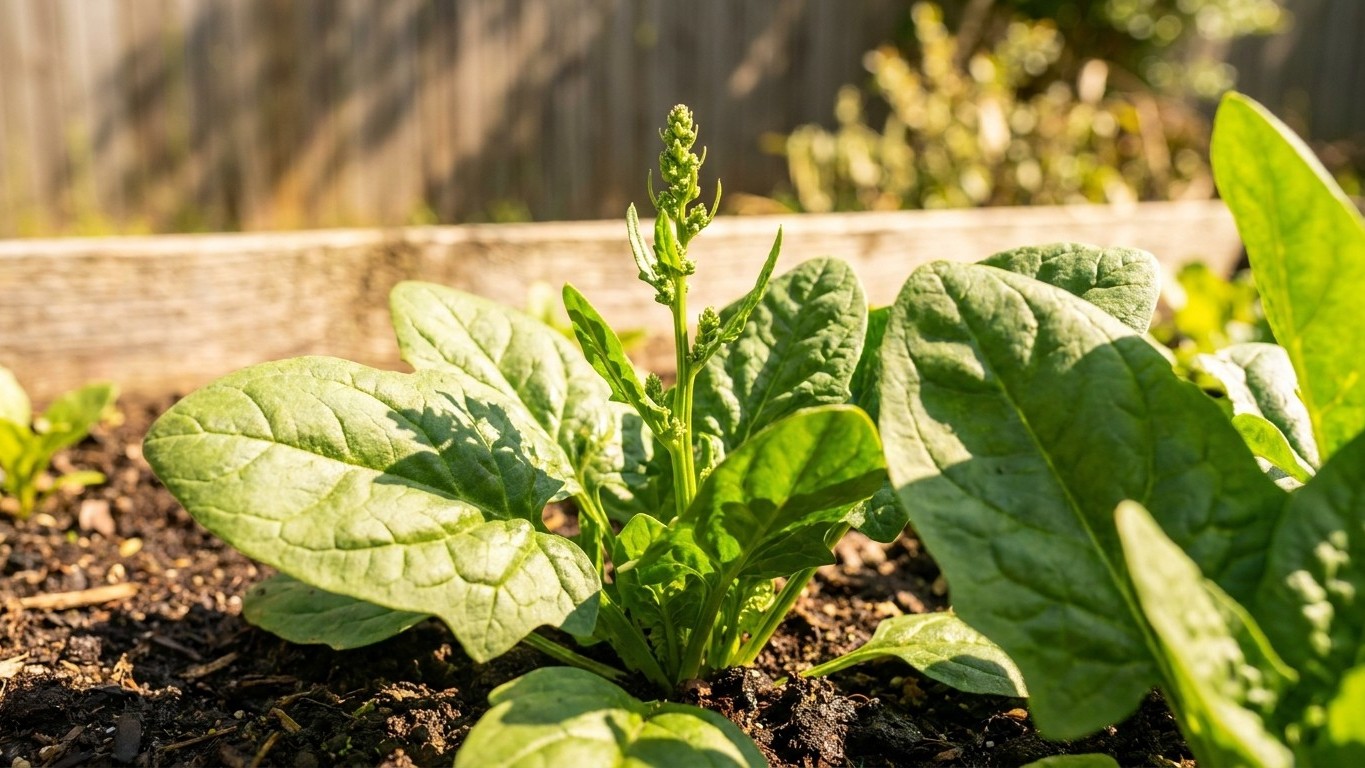

University of Illinois Extension tracks eight garden pests statewide, but only two realistically show up on spinach leaves: Japanese beetle and brown marmorated stink bug, generalist feeders that eat almost anything green when their preferred hosts run short. The other six, from bagworm to squash vine borer, are built for entirely different plants. Timing follows spinach’s own narrow growing window, not a pest calendar, and in Illinois that window sits squeezed between frost, heat, and day length working against each other.
Which pests attack spinach in Illinois

University of Illinois Extension documents eight garden pests active in the state: Bagworm, Brown marmorated stink bug, Colorado potato beetle, Japanese beetle, Jumping worms (Amynthas spp.), Spotted lanternfly, Squash bug (Anasa tristis), and Squash vine borer. That’s the full list, and there’s no reason to pad it with names that show up on other sites.
Most of that list has nothing to do with a spinach bed. Bagworm builds its spindle-shaped cocoons on conifers and broadleaf evergreens like arborvitae and juniper, with no reason to cross into a vegetable row. Colorado potato beetle is a nightshade specialist, sticking to potato, eggplant, and tomato foliage. Squash bug and squash vine borer both need a cucurbit stem or leaf to complete their life cycle, and spinach offers neither. Spotted lanternfly feeds on woody plants and vines, with tree of heaven and grapevine as preferred hosts here. Jumping worms live in the soil and don’t chew leaves at all; they change soil structure and nutrient cycling, which can leave spinach roots sitting in a coarser, drier medium, but that’s a soil problem, not a feeding problem.
That leaves two generalists: Japanese beetle and brown marmorated stink bug. Neither is a spinach specialist, but both feed on a wide range of garden plants when their favorites are unavailable, and a spinach bed sitting near roses, beans, or fruit trees can draw incidental attention from both. The honest answer to what eats spinach in this state is: not much, by design, and what does show up is opportunistic rather than dedicated.
When each one shows up, and what it does first
Spinach’s own calendar decides when it’s vulnerable, and that calendar is tight. In this part of the state, the last spring frost falls between April 11 and April 22, and spring-sown spinach usually goes into the ground right around that window, while the plant can still tolerate a light frost. The seedlings are up and tender for the weeks that follow, and that’s the stretch when Japanese beetle and brown marmorated stink bug are most likely to find them.
Japanese beetle feeding shows up first as skeletonized leaves: the beetle eats the tissue between veins and leaves a lacy, see-through pattern behind, usually starting on whichever leaves catch the most sun. Brown marmorated stink bug feeding looks different from the start, small, pale, slightly sunken spots where the insect pierced the leaf and drew out sap, sometimes with a faint yellow ring around each puncture. Neither insect strips a spinach plant the way it would strip a bean plant or a rose bush, because spinach isn’t what either one is actually looking for, but a handful of marked leaves is the first sign either has passed through.
The window closes on its own regardless of pest pressure. Spinach bolts under long days and warm temperatures, and grows best where temperatures stay below 75°F; once daylight and heat push past that line, the plant switches to flowering and stops producing usable leaves no matter what’s eating it. That 75°F line is a growth ceiling, not a calendar date, and can arrive early in a warm stretch or late in a cool one. A fall crop, sown once soil temperatures drop back out of the germination-inhibiting range above 80°F, gets a second, cooler run at the same two insects, but by then both are winding down, and the plant is racing the first fall frost window of October 24 to November 3 instead of the heat.
Telling the damage apart from everything else
Chewed and speckled leaves get blamed on insects by default, but spinach shows the same symptoms for reasons that have nothing to do with a pest. The check that separates feeding damage from everything else is whether the marks follow a pattern an insect’s mouthparts would leave, versus a pattern spread evenly across the whole bed. A beetle or a bug damages leaf by leaf, plant by plant. Heat stress, drought, and nutrient shortages tend to show up across most of the row at once, driven by the same soil and weather conditions everywhere in the bed.
| Symptom | Likely cause | What tells it apart |
|---|---|---|
| Lacy, see-through patches between leaf veins | Japanese beetle feeding | Veins left intact; damage concentrated on a few plants, often in full sun |
| Small sunken spots with a pale or yellow ring | Brown marmorated stink bug feeding | Punctures are round and isolated, not spread edge to edge |
| Pale, yellowing leaves across the whole bed | Nutrient shortage or waterlogged soil | Affects every plant roughly equally, regardless of sun exposure |
| Wilting despite moist soil, bitter-tasting leaves | Heat stress near or above the 75°F growth ceiling | Coincides with a warm stretch and eases once temperatures drop |
| Torn, ragged leaf edges with no insect visible | Wind, hail, or foot traffic | Damage follows the direction of the wind or a clear path through the row |
Jumping worms complicate the picture from below rather than above. They don’t chew a single leaf, but their castings change garden soil into a loose, grainy material that drains fast and holds fewer nutrients, which can leave spinach looking pale and stunted with no visible feeding marks anywhere. That combination, thin plants, no chew marks, gritty soil, is worth describing to a local expert rather than guessing at. A county extension office exists for exactly this kind of call.
What actually works here, and what is a waste of time
A floating row cover, laid over the bed the day spinach is sown and sealed at the edges, keeps both Japanese beetle and brown marmorated stink bug off the crop for the entire time it’s up, since neither insect can reach leaves it can’t land on. The cover has to go on before the seedlings emerge, not after damage is already visible. Closing the barrier late just traps whatever got in first. Because spinach doesn’t need pollinators, the cover can stay in place for the plant’s whole life without costing a single leaf.
Hand-removing Japanese beetles in the early morning, when they’re sluggish and slow to fly, works on a small bed and costs nothing but time. It won’t scale to a large planting, but a spinach bed is usually small enough to keep this realistic.
Timing the crop around the heat matters more than anything applied to the leaves. A spring planting that goes in near the last frost window and finishes before day length and heat push past the 75°F ceiling skips the stretch when the plant is most stressed and most attractive to opportunistic feeders looking for something tender. A fall planting, seeded 50 to 75 days before the target harvest date once soil has cooled out of the germination-inhibiting range above 80°F, sidesteps the worst of the season for both insects.
What doesn’t help is treating the bed for pests that don’t target spinach in the first place. Spraying for squash vine borer or Colorado potato beetle activity elsewhere in the garden does nothing for a spinach row those insects were never going to visit, and it burns a treatment window that could matter for a crop they actually attack. Beyond exclusion and timing, any chemical option needs to be checked against what’s registered for use on leafy greens in Illinois specifically, and that answer comes from University of Illinois Extension, not from a label read in isolation.
Where to check this for your own county
Everything above is documented at the state level by University of Illinois Extension, and a state-level list doesn’t say what’s actually crawling through a specific backyard. Pest pressure inside Illinois shifts county by county and even yard by yard, depending on nearby host plants, how close a garden sits to woods or a river, and what’s been growing on that soil for years.
University of Illinois Extension maintains county-level offices set up to answer exactly this kind of question, and they’re the right first call for anything that looks off in a home garden, whether it’s a leaf pattern that doesn’t match anything described here or a soil problem that might be jumping worms rather than a nutrient gap. A county office can also confirm what’s registered for use on leafy greens in that specific county, since that answer can shift in ways a general article never will.
The frost dates used on this page come from the reference weather station in the NOAA climate record, and gardens outside that immediate area typically see the last spring frost later and the first fall frost earlier, sometimes by one to two weeks, more at elevation or in a low spot that holds cold air. A gardener elsewhere in the state should treat those dates as a starting point, then adjust based on what actually happens in their own yard over a season or two.
The next useful step is direct: contact the local University of Illinois Extension office before the next planting window opens, bring a photo or sample of anything unusual, and ask what’s been reported nearby recently. That’s a more current answer than any list published for the whole state.
Common questions
Does spinach have many dedicated pests in Illinois?
Not according to University of Illinois Extension’s documented list. Six of the eight pests tracked statewide target other plants entirely, and the two that could reach spinach, Japanese beetle and brown marmorated stink bug, are generalists rather than spinach specialists.
When is spinach most at risk from insects?
During the weeks the plant is up and tender, roughly from the last spring frost window through the point where day length and heat push past the 75°F growth ceiling and the crop bolts on its own.
How do I tell insect damage from heat stress on spinach?
Insect feeding tends to show up on a few plants or leaves at a time, with a clear chew or puncture pattern. Heat stress and nutrient shortages usually spread across the whole bed at once, since the whole row shares the same soil and weather.
Are jumping worms a real threat to spinach?
They don’t eat spinach leaves, but their effect on soil structure and nutrient cycling can leave plants pale and stunted with no chew marks anywhere. That pattern is worth reporting to a county extension office rather than treating as a typical feeding problem.