
Plan on setting out winter squash after the last week of May, and expect to bring in the harvest by late September at the latest, before the average first fall frost hits on October 2. That gives New Brunswick gardeners a working season, but the real answer depends on soil temperature, not the calendar square you circled.
When the soil is warm enough in New Brunswick

The average last spring frost for the Moncton area lands on May 23, according to Environment and Climate Change Canada’s Canadian Climate Normals for 1981-2010. That date is a mean, not a guarantee. In roughly half of all years, frost arrives after May 23, sometimes well after. Treat it as the midpoint of a risk window, not a signal to rush outside with trays of transplants the moment it passes.
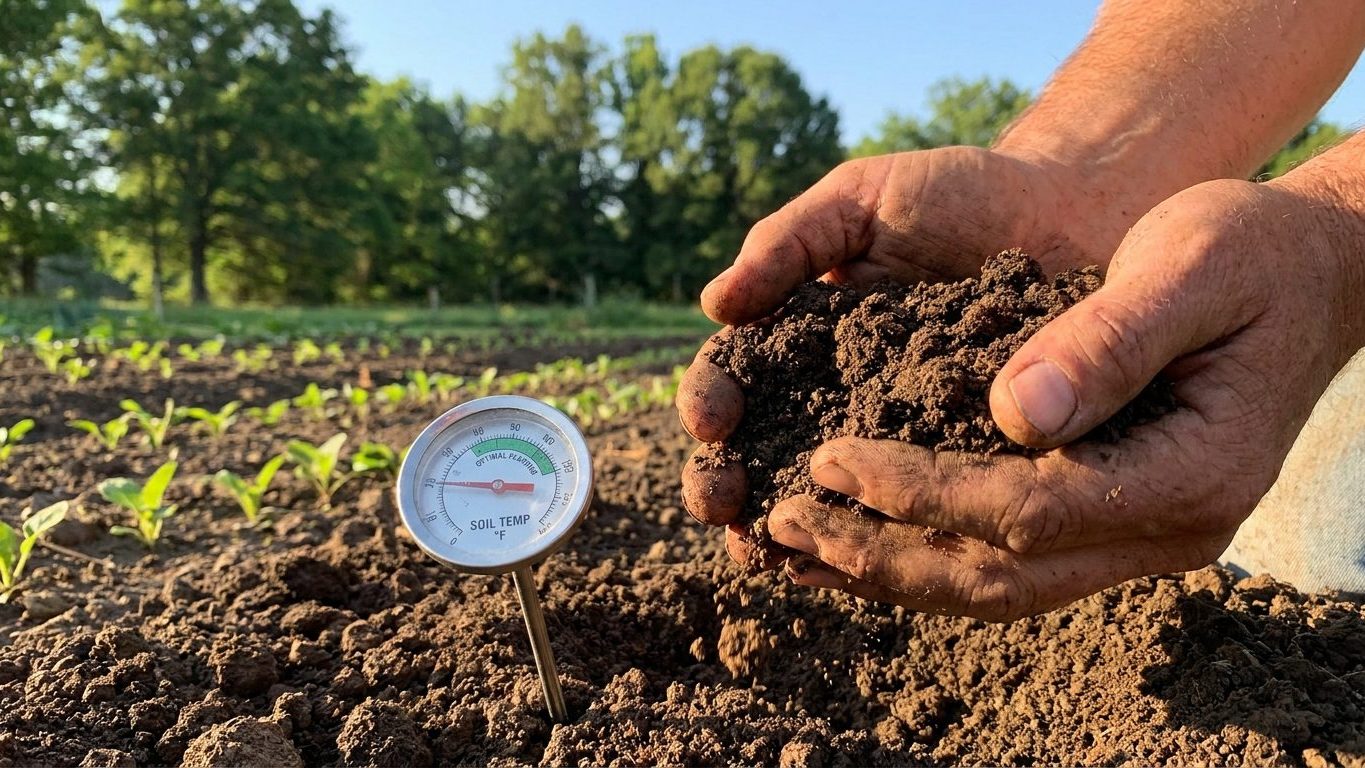
Winter squash doesn’t actually care about frost dates. It cares about soil temperature, and that’s the piece most planting calendars skip. Seeds sown into cold, wet ground simply sit there, rot, or germinate so slowly that any early start gets erased by mid-June anyway. Squash wants soil that has warmed well past the point where frost risk has faded, typically a week or two after that May 23 average, once the ground itself has caught up with the air.
For gardeners in New Brunswick, that means resisting the urge to plant on the frost date itself. Wait until the soil feels warm to the back of your hand at a two-inch depth, and hold off longer if you’re in a low-lying spot, a river valley, or anywhere north of the Moncton reference station, since inland and upland districts routinely run behind the coastal normal.
What this changes for direct sowing versus transplants
Because the soil-warming lag pushes the practical planting window later than the frost date suggests, many gardeners here get better results starting seed indoors three to four weeks ahead, then transplanting once the ground has genuinely warmed. Direct-sown squash in a cool spring can lose two or three weeks to slow germination alone, and in a growing season that isn’t long to begin with, that’s a real cost.
None of this calls for a specific variety. The right choice depends on how much of the season you have left to work with, which is the next question worth answering honestly.
How long the season lasts here
Subtracting the two Moncton-station averages, May 23 to October 2, gives a frost-free window of roughly 132 days, a little under 19 weeks. That’s the number to build a planting plan around, and it’s tighter than what gardeners in much of the northern United States work with.
A window that size is workable for winter squash, but it isn’t generous. It rules out a casual approach to timing. Every week lost to a cold spring, a late transplant, or a rot-plagued reseeding cuts directly into the maturation period the fruit needs at the other end, since winter squash has to finish ripening and start curing on the vine before that October frost, not after it.
What a 132-day window does allow is a single, well-timed sowing of squash itself, paired with succession planting of faster crops around it. There isn’t enough spare season here to plant a second round of winter squash after an early one fails or gets pulled, the way a gardener further south might. If the first planting stalls or gets eaten by cutworms in early June, replanting squash in July is a gamble against the fall frost, not a fallback plan.
Why this pushes gardeners toward transplants over direct seed
Given how little slack the season carries, many New Brunswick growers start squash indoors specifically to protect against that risk of a failed first sowing eating into an already short window. The tradeoff is real: squash resents root disturbance, so raising it in biodegradable pots or soil blocks that go straight into the ground, rather than bare-root transplants, matters more here than in a longer-season territory where a setback simply gets absorbed.
For gardeners looking to fill the rest of that 132-day window with other crops planted in relay behind or alongside the squash, the site’s succession sowing guide covers how to stagger plantings so the season isn’t wasted on a single long-season crop alone.
Heat and water in New Brunswick

The Moncton reference station records an average of 0.0 days a year at or above 90 degrees Fahrenheit. That’s not a typo and not a rounding artifact, it’s the plain fact: this is not a hot-summer climate, and it changes what kind of trouble a squash patch runs into here compared with warmer parts of the continent.
Where a hot, dry territory has to worry about irrigation carrying fruit through a stressful filling period, New Brunswick’s risk runs the other way. Summer rainfall averages about 10.5 inches across June, July and August (June 3.73 inches, July 3.63 inches, August 3.18 inches, the driest of the three), spread across a season with essentially no extreme heat to dry things out between showers. That combination, cool and reasonably damp, is exactly the setup that favors powdery mildew and other foliar disease on squash vines, along with slower fruit ripening than a grower further south would see with the same number of growing days.
This doesn’t mean New Brunswick gardens don’t need watering. A wet summer on the coast doesn’t always mean wet soil on a particular plot, especially on sandy ground where rain drains through fast, or during a dry stretch between rain events. But the dominant management concern here is airflow and disease pressure, not drought stress. Spacing vines generously, avoiding overhead watering late in the day, and keeping foliage dry when possible will do more for a New Brunswick squash crop than any irrigation schedule borrowed from a hotter climate zone.
The province’s overall hardiness rating reflects this same cool, moderate profile: the Moncton area sits in Canadian zone 5a, based on Natural Resources Canada’s seven-variable system. That’s worth naming carefully, because the Canadian zone system doesn’t convert cleanly to the USDA zones used elsewhere on this site. NRCan is explicit that a single Canadian zone can span several USDA zones, so treat 5a as a description of this specific territory, not a number to cross-reference against American zone maps.
Which winter squash suit New Brunswick
Given a 132-day window, no meaningful heat load, and a rainfall pattern that favors mildew over drought, the type of winter squash that fits New Brunswick best is an early-maturing one bred or selected for shorter seasons, not one that needs a long, hot stretch to finish properly. Beyond that, disease resistance, particularly to powdery mildew, should weigh at least as heavily as maturity length when picking what to grow, given the cool, damp summer profile documented above.
This page won’t name a specific cultivar, and that’s a deliberate choice rather than an oversight. Variety trials run by provincial and federal agriculture programs test dozens of squash types under New Brunswick’s actual conditions each year, tracking which ones reliably mature and cure before frost in this specific climate. A name picked from a general gardening list, without that local trial data behind it, is a guess dressed up as advice. It might be bred for a 160-day Zone 7 season and simply never finish here.
The dependable move is to check current trial results and recommendations through Agriculture and Agri-Food Canada, which tracks what performs under conditions like Moncton’s. Provincial agriculture offices often publish their own shortlists too, built from local field trials rather than a generic seed catalog description.
What to look for once you have a shortlist
- An early or short-season type, since the 132-day window leaves little room for a long-maturing squash to finish and cure
- Documented tolerance or resistance to powdery mildew, given the cool, damp summer pattern here
- Vigorous enough growth habit to benefit from wide spacing and good airflow, which matters more in humid conditions than in dry ones
Match those three traits against whatever trial-backed list the extension service provides, and the specific variety name becomes a much smaller decision than the groundwork that leads up to it.