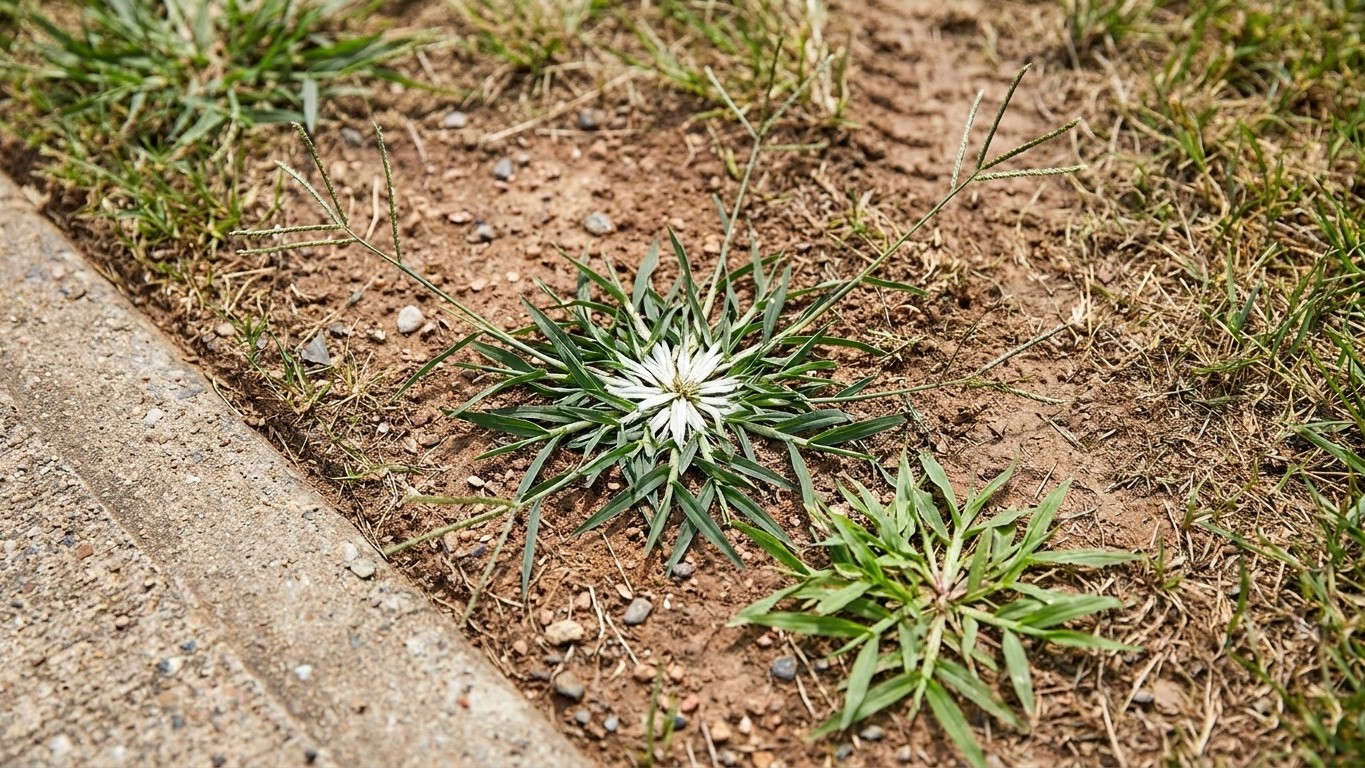

Texas overseeds in late spring through mid-summer, not fall like northern lawns, because nearly every grass recommended here is a warm-season species that needs heat to root before winter. There’s no single statewide date. The right window is whatever falls roughly 45 days of growing weather before your local first fall freeze, and that freeze date shifts by weeks depending on where in Texas you live.
The overseeding window in Texas
Most cool-climate lawn advice tells homeowners to overseed in fall, when soil is cooling and rain picks up. Texas works backward from that. Bahiagrass, Bermudagrass, Carpetgrass, Centipedegrass, Seashore Paspalum, St. Augustinegrass, and Zoysiagrass are all warm-season grasses, and warm-season seed germinates and roots while soil is warming, not while it’s cooling. A cool-season grass simply won’t hold through a Texas summer, so the fall-overseed calendar that works in Ohio or Pennsylvania doesn’t apply here at all.
That flips the planning question. Instead of asking “how late can I still seed before frost,” the useful question is “how much growing weather do I have left before frost arrives.” Turfgrass guidance from Clemson Cooperative Extension and Penn State Extension puts that figure at about 45 days of active growing weather before the first fall freeze. Seed sown later than that window germinates, limps along, and then dies over winter without ever building the root mass it needs.
Here’s where it gets specific to your zip code. NOAA’s 1991-2020 climate normals for station USW00012960, the Houston Bush Intercontinental Airport gauge, put the 32°F freeze probability window between December 1 and December 19. Count back 45 days from that range and you land in mid-to-late October for the outer edge of a Houston-area planting, though most homeowners there are seeding well before that, in the warmer months when soil temperature cooperates.
Why one city’s date can’t stand in for the state
Texas spans four USDA hardiness zones, and Houston sits at the mild Gulf end of that range. The Panhandle freezes months earlier in fall and holds frost months later into spring, which compresses its whole growing season into a narrower band. Hill Country and North Texas run their own separate calendars again, shaped by elevation and distance from the coast. Even inside the Houston metro, Hobby Airport typically runs about two weeks milder than IAH, which is a reminder that “Houston’s frost date” isn’t even one number for Houston.
The practical takeaway: find the first fall freeze data for a station near your actual property, not just the nearest big city name, and count backward from there. NOAA’s National Centers for Environmental Information publishes these normals by station, and your county extension office through Texas A&M AgriLife Extension can help translate that into a planting window for your specific area.
The soil temperature that actually decides it
Calendar dates are a starting guess. Soil temperature is the actual gatekeeper. Warm-season grass seed germinates reliably once soil reaches 65 to 70°F and is still rising, not just brushing that number on a warm afternoon and dropping back overnight. That distinction between “reached” and “rising” matters more than most seed bag instructions let on.
Soil warms and cools slower than air. A string of 80°F days in late winter can fool a homeowner into thinking it’s time, while two inches down the soil is still sitting in the 50s from months of cold nights. The fix is a basic soil thermometer, pushed two inches deep, checked mid-morning rather than at midday when surface heat skews the reading high. Mid-morning gives a more honest average of what the seed bed actually experienced overnight and into the day.
This is also why the same calendar week can be plantable in San Antonio and premature in Amarillo. Soil temperature responds to local ground cover, sun exposure, soil type, and regional climate, not to a single statewide switch flipping on. A shaded north-facing yard warms slower than an open south-facing one a few miles away, even under identical air temperatures.
What “warm zone” means for the timing
Reference climate data for the Houston area places it in a warm turf zone, based on days spent at or above 90°F and the mean daily minimum of the coldest month, read against the season tolerances Clemson Cooperative Extension publishes for turfgrass species. That warm classification is specific to the reference station, not a blanket label for the entire state. Higher ground, and the far north or south edges of a state this large, can sit in a neighboring zone with a shorter or longer warm season than the reference city suggests. Checking actual soil temperature beats assuming a zone label applies exactly to your yard.
How much seed, and what it costs to guess
Seeding rates aren’t a rough suggestion, they’re a species constant, meaning the number doesn’t shift by region the way planting dates do. What shifts the number is whether you’re starting a bare lawn or thickening an existing one. Overseeding an established lawn uses half the rate used for a brand-new seeding, because existing turf is already occupying root space and competing for light and water. Dumping full new-lawn rates onto an existing stand doesn’t thicken it faster, it just crowds seedlings against each other until the weaker ones thin out on their own.
Rates for a new lawn, per 1,000 square feet, according to Clemson Cooperative Extension and Penn State Extension turfgrass guidance:
| Grass | New lawn seeding rate |
|---|---|
| Bahiagrass | 5 to 10 lb |
| Bermudagrass | 1 to 2 lb |
| Carpetgrass | 2 to 3 lb |
| Centipedegrass | 0.25 to 0.5 lb |
| Zoysiagrass | 1 to 2 lb |
| Seashore Paspalum | Sod or sprigs only, not seed |
| St. Augustinegrass | Sod or plugs only, not seed |
Halve every number in that table for overseeding an existing lawn. Bermudagrass, for instance, drops to roughly a half to one pound per 1,000 square feet when it’s thickening a stand that’s already established, rather than starting from bare dirt.
Two grasses that skip seed entirely
Seashore Paspalum and St. Augustinegrass aren’t offered as seed at all in practical lawn care, they establish from sod, sprigs, or plugs. If a bag at the store claims otherwise, that’s a different cultivar or a mislabeled product, not a shortcut around how these two species actually spread. Guessing on rate matters less here because you’re not counting seed, but the same logic applies: more plugs packed tighter isn’t automatically a faster lawn, it’s more material competing for the same root space while it establishes.
Guessing high on any of these numbers doesn’t buy insurance against a thin lawn. It buys competition among seedlings, which thins the stand anyway, just after you’ve already spent the seed.
The three weeks after you sow
Getting the timing and rate right doesn’t finish the job. The first three weeks after sowing are when a Texas overseeding project actually succeeds or fails, and most of what goes wrong here is preventable. Newly germinated warm-season seedlings have almost no root system yet, which means the topsoil around them can’t be allowed to dry out even for a day, but it also can’t sit saturated, since standing water rots seed before it ever sprouts.
Foot traffic is the other quiet killer. A seedling with roots barely an inch into the soil doesn’t survive a dog running laps across it or a kid’s bike tire cutting a path through the yard. Roping off a newly overseeded section, even loosely, for the first few weeks prevents damage that’s otherwise invisible until the bald patch shows up weeks later.
Mowing comes only once seedlings have grown tall enough for the species, and cutting too early strips growing points before the plant has built enough root mass to recover. Since mowing height is a species constant rather than a local variable, the right timing depends on which grass you planted, not on the calendar week since sowing.
Racing the calendar you started with
Remember the 45-day window that set your planting date in the first place. That clock doesn’t pause for a slow germination or a rainy stretch that delayed sowing by a week. If cooler weather or a late start pushes germination past that 45-day mark before the first fall freeze, the seedlings that do come up likely won’t have built enough root reserve to survive winter dormancy. In that case, the more reliable move is waiting for the next warm-season window rather than pushing seed into ground that’s already running out of growing time.
Common questions
Can I overseed a Texas lawn in fall like cool-season states do?
No. Every grass recommended for Texas lawns is a warm-season species, and warm-season seed needs soil at 65 to 70°F and rising to germinate. Fall soil in most of Texas is cooling, not warming, which works against germination rather than for it.
Does the same overseeding date work across all of Texas?
No. Texas spans four USDA zones, and a frost date measured at one station, even within the same metro area, can differ by two weeks or more from a nearby station. Count backward from the first fall freeze data for your specific location, not a single statewide guess.
How do I know if my soil is actually warm enough to seed?
Push a basic soil thermometer two inches deep and check mid-morning. You’re looking for 65 to 70°F and still rising over several days, not a single warm reading that could reverse overnight.
Should I use the same seeding rate for a new lawn and for overseeding an existing one?
No. Overseeding an established lawn uses half the rate recommended for a new lawn. The existing turf is already occupying space and resources, so full new-lawn rates just create overcrowding among the new seedlings.