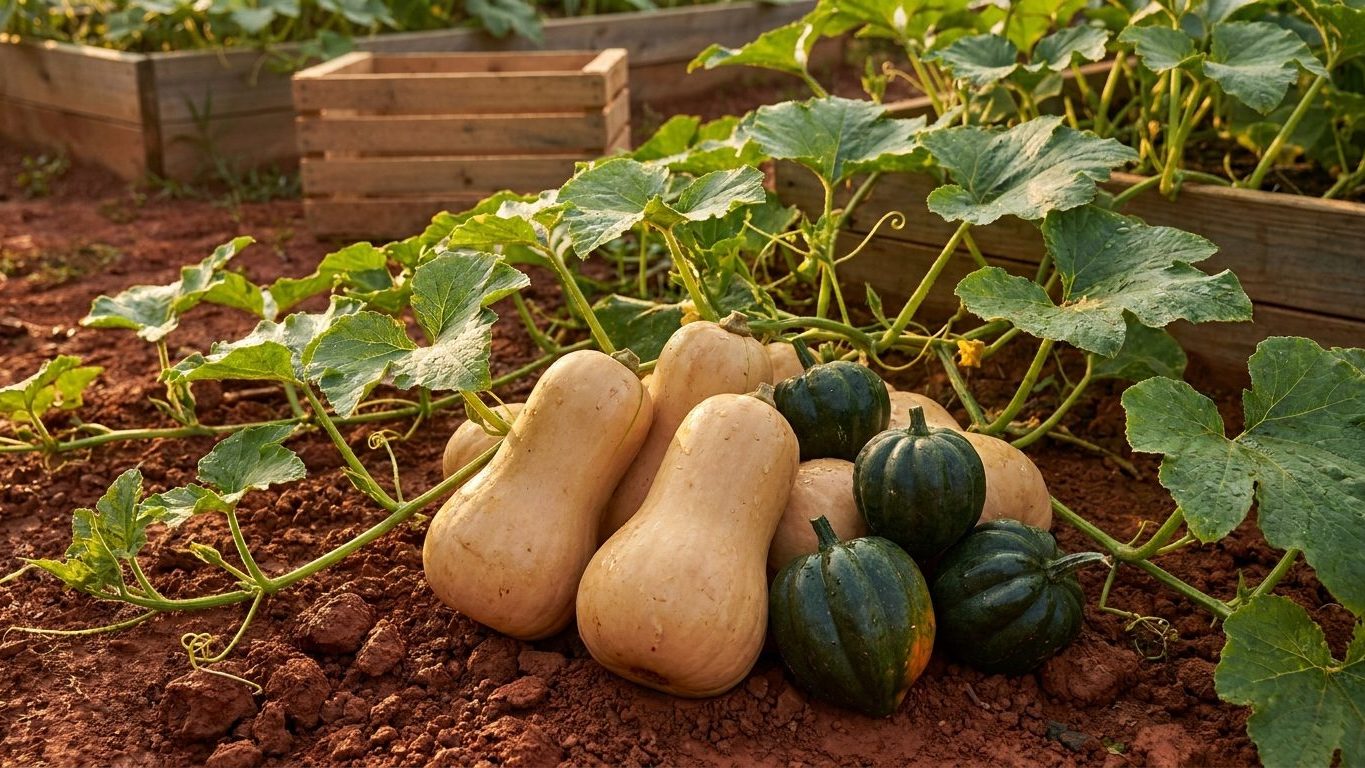

Cucurbita moschata varieties, tropical pumpkin, kabocha, and heat-bred butternut types, outperform nearly everything else across the islands. They shrug off the humidity, resist the vine borers that plague other squash species, and keep producing through months mainland gardeners would call summer but Hawaii treats as just another growing window. Acorn and delicata can work in drier pockets, but they’re the exception, not the rule.
The short answer for Hawaii
There’s no frost date to plan around here. NOAA’s 1991-2020 Climate Normals for the reference station show a flat zero: no measurable freeze days, no computable frost percentile at 32F or 36F. That single fact restructures the whole question. On the mainland, “best variety” usually means “fastest variety that beats the first fall frost.” In Hawaii, the clock that matters isn’t cold, it’s heat and moisture, and it never stops running.
That reframes the decision by species rather than by days-to-maturity. Cucurbita moschata, the group that includes butternut, tropical pumpkin (kalabasa), and kabocha-type squash, tolerates the mean 18.7 days a year that reach 90F or higher at the reference station, and its thicker, waxier leaves shrug off the fungal pressure that comes with island humidity. Moschata also carries a natural resistance to squash vine borer that the other two common species lack, which matters in a place with no winter to interrupt a pest’s life cycle.
Cucurbita maxima (buttercup, hubbard, kabocha’s cousin) can produce here, but it wants cooler nights to set fruit reliably and drier air to cure well after harvest. It’s a second choice, not a first.
Cucurbita pepo (acorn, delicata, spaghetti squash) matures fastest, which sounds like an advantage until you remember there’s no season pressure forcing a fast harvest. Its thinner foliage and shallower root habit make it the most vulnerable of the three to both heat stress and the fungal issues that come with the wetter months.
| Species group | Examples | Heat tolerance | Humidity resistance | Hawaii fit |
|---|---|---|---|---|
| Cucurbita moschata | Butternut, tropical pumpkin, kabocha | High | High | Best overall |
| Cucurbita maxima | Buttercup, hubbard | Moderate | Moderate | Workable, needs drier microclimate |
| Cucurbita pepo | Acorn, delicata, spaghetti | Lower | Lower | Best in the driest leeward pockets |
What will not work here

Any variety bred for a short, cool mainland season is fighting the wrong battle in Hawaii. Those cultivars are often selected to size up and mature quickly before an early fall frost, and that breeding trades away heat tolerance the state doesn’t need a frost date for, it needs a plant that keeps flowering and setting fruit through repeated 90-degree days. With 18.7 such days a year at the reference station, a squash that drops blossoms in heat stress simply produces less, season after season, with no cold snap ever resetting the calendar in its favor.
The bigger problem is pest and disease pressure that never breaks. Everywhere with a real winter gets a reset: freezing temperatures knock back overwintering squash vine borer larvae and slow fungal spore loads. Hawaii’s zero freeze days mean those populations simply persist year-round, so pepo types especially (acorn, delicata, spaghetti squash), which have the least natural borer resistance among common winter squash, tend to decline over repeated plantings unless a gardener actively manages the pest rather than relying on climate to do it.
Rainfall timing punishes the wrong choices too. Summer months average only about 1.9 inches of rain combined across June, July and August, with June as dry as 0.5 inches, July at 0.52, and August at 0.84. That’s a real dry stretch by Hawaii standards, even though the annual total runs a wetter 16.4 inches. A moschata variety with a deeper root system tolerates that summer gap far better than a shallow-rooted pepo vine, which wilts fast and sets fruit poorly without supplemental water during exactly the months when island heat is also highest.
None of these numbers describe a single garden, only the reference station they were measured at. But they explain why “just plant what works back home” fails here more often than it succeeds: the mechanism (heat load plus a dry summer plus no cold reset) is specific to this territory, not a generic tropical caution.
What changes across Hawaii
Hawaii’s official hardiness range spans USDA zones 9a to 13a, one of the widest spreads of any state in the country. That’s not a rounding error, it’s the difference between a warm coastal garden and a cool upcountry slope thousands of feet higher, sitting in what’s functionally a different climate a few miles apart. A single “best variety” answer for the whole state doesn’t exist, and any page (including this one) that claims otherwise is oversimplifying.
Windward versus leeward exposure matters as much as elevation. The windward sides of the islands catch trade-wind moisture and stay wetter and milder; leeward sides sit in a rain shadow and run drier and hotter. A gardener on a leeward slope is fighting the dry-summer numbers cited above even harder than the state average suggests, while a windward garden may need to manage fungal pressure on moschata foliage that a drier plot would never see.
Elevation adds a third variable on top of that. Gardens higher up the slopes of Mauna Kea, Mauna Loa, or Haleakala sit at the cooler end of that 9a-13a range, closer to conditions where a maxima variety’s preference for cooler nights actually becomes an advantage rather than a limitation. Lower, warmer sites near sea level sit at the other end, where moschata’s heat tolerance carries more weight in the decision.
Figuring out where a specific garden falls inside that 9a-13a range takes the USDA’s hardiness zone map, not a guess based on which island or general region it’s in.
Where to check this for your own county
The University of Hawaii’s Cooperative Extension Service (CTAHR) is the source for county-level detail. Hawaii’s five counties (Hawaii, Honolulu, Maui, and Kauai) each carry different rainfall patterns, elevation ranges, and pest pressure, and CTAHR’s county-level offices track how squash varieties actually perform in their specific service areas.
Two things are worth looking for once there. First, a local planting calendar for the specific county, which accounts for that county’s typical rainfall pattern rather than the state-wide summer average cited earlier. Second, any list of varieties CTAHR extension agents have trialled locally, since real field performance on volcanic soils and in island humidity tells a gardener more than a species-level generalization ever can.
A county recommendation beats a state recommendation every time, because it’s built from local trial data rather than territory-wide averages. A county extension office describes what’s specifically true on the ground where a reader is actually gardening. Treat this article as the starting framework, and the county office as the source that adjusts it for the real conditions of a specific garden.
Checking this against your own garden
No calendar, hardiness zone, or rainfall normal beats what a plant is actually doing in front of a gardener. Three simple observations tell more about a specific microclimate than any of the numbers above.
Soil warmth by feel is the first. Press a hand into the planting bed at mid-morning; if it’s noticeably cool and damp even after a few dry days, that’s a sign of a shadier or windward-influenced site where moschata’s disease resistance will matter more than its heat tolerance. Warm, quickly drying soil points toward a leeward or lower-elevation spot where the summer dry stretch described above will hit harder and sooner.
The first flush of male flowers is the second. Squash plants typically produce male blossoms before female ones, and a long gap between that first flush and the appearance of female flowers (the ones with a small swollen bulge at the base) often signals heat stress suppressing fruit set, especially relevant on the hotter days the reference station counts at 18.7 a year.
The first true leaves round it out. Slow, pale true-leaf growth after otherwise healthy seedlings can point to either overly saturated soil, common on windward or high-rainfall sites, or nutrient lockout in the volcanic soils common across the islands. Watching that early growth, rather than assuming the calendar or the county average applies exactly, is what turns a general answer into one that actually fits the garden in question.