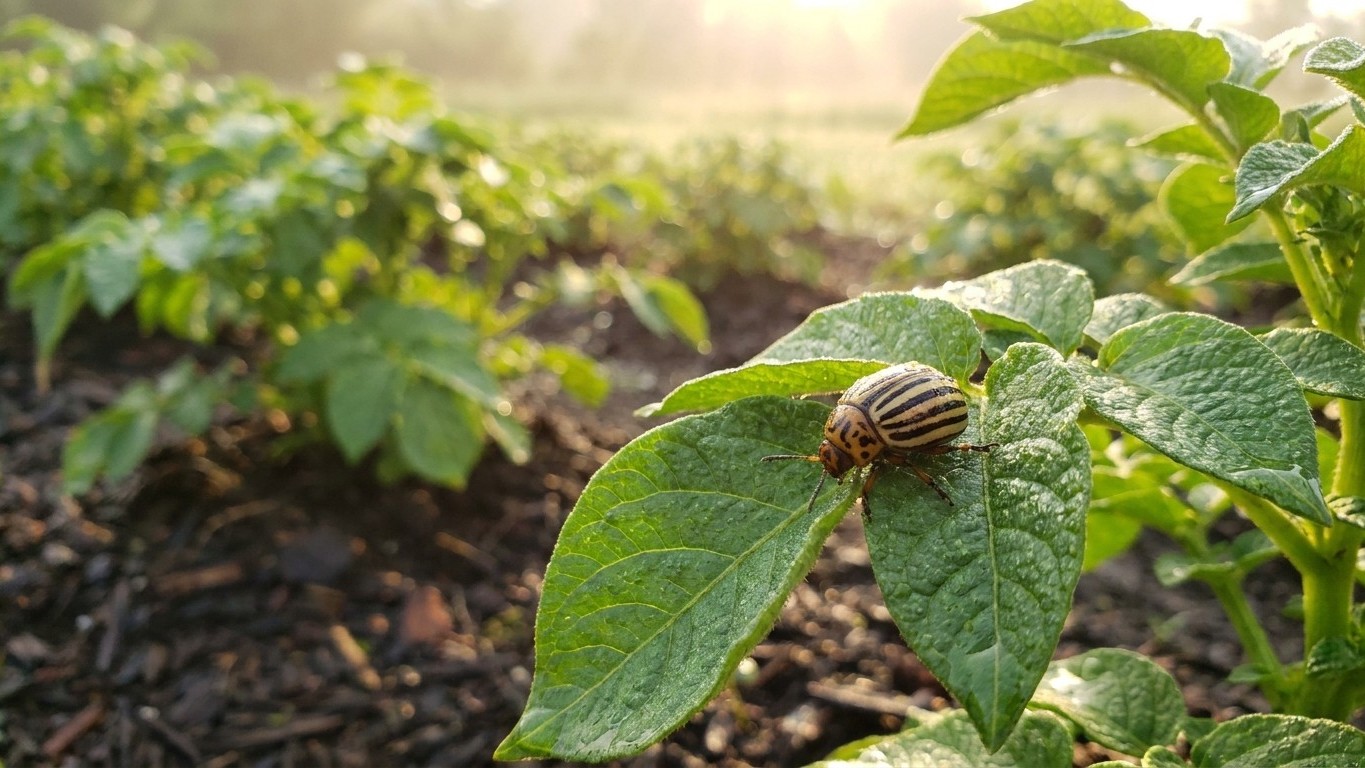

Four insects show up in Mississippi potato patches with enough regularity that Mississippi State University Extension tracks them in its home garden pest guide: armyworms, fire ants, mole crickets, and vegetable weevils. Each targets a different part of the plant, from chewed leaves to tunneled tubers, and each shows up at a different point in the growing season. Most of the other pests that same guide documents for home vegetable gardens target other crops entirely, not potato.
Which pests attack potato in Mississippi
Mississippi State University Extension Publication 2347, Insect Pests of the Home Vegetable Garden, lists ten species for home gardens across the state: armyworms, cowpea curculios, fire ants, harlequin bugs, leaf-footed bugs, mole crickets, pickleworms and melonworms, squash vine borers, vegetable weevils, and yellowmargined leaf beetles. Not all ten belong on a potato page, and pretending otherwise would send a gardener chasing the wrong bug.
Cowpea curculios feed on cowpeas and southern peas, puncturing pods, not foliage or tubers, so they have no reason to be in a potato row. Harlequin bugs and yellowmargined leaf beetles are crucifer specialists, drawn to cabbage, turnip, mustard, and collards, plants with a completely different leaf chemistry than potato. Leaf-footed bugs go after fruiting vegetables like tomato and pepper, piercing developing fruit, a feeding style that doesn’t apply to a crop grown for its underground tubers. Pickleworms and melonworms and squash vine borers are cucurbit pests through and through, tied to squash, melon, and cucumber vines.
That leaves four species actually worth watching in a Mississippi potato bed: armyworms, fire ants, mole crickets, and vegetable weevils. Armyworms are generalist foliage feeders that will strip potato leaves along with dozens of other garden crops. Vegetable weevils are documented broad feeders that attack both the foliage and the below-ground parts of root and tuber crops, which puts potato squarely in their path. Mole crickets tunnel through the root zone and can disturb or gnaw developing tubers, a risk the extension service flags specifically for the southern half of the state, especially in sandy soils. Fire ants aren’t plant feeders in the usual sense, but their mounds and foraging workers show up around seed pieces and developing tubers in the same soil, often doing damage while defending their colony rather than eating for food.
This is a short list on purpose. Publication 2347 documents these ten species for Mississippi home gardens overall, not a longer roster specific to potato, and stretching it further than the source allows would do a gardener no favors.
When each one shows up, and what it does first
Mississippi’s last spring frost, measured at the Jackson-area reference station, falls somewhere between March 6 and March 22 in a typical year. Because potato is one of the few garden crops planted while frost risk still lingers, the pest calendar in a Mississippi patch doesn’t start with a calendar month. It starts with how far the plants have gotten past that frost window.
Fire ants are usually the first sign of trouble, and they don’t wait for foliage. Workers can be found around seed pieces in the days right after planting, particularly where the soil is cracked or dry, sometimes hollowing out a piece before it has a chance to sprout. A gardener who finds a mound thrown up right along the row, with ants boiling out the moment the soil is disturbed, is looking at the earliest pest pressure the crop will see.
Vegetable weevils follow once the plants have real leaves to offer. Adults feed on foliage first, leaving ragged notches along the leaf margin, before the larval stage moves below ground later in the season to feed on the tubers themselves. That two-stage pattern, foliage damage first and tuber damage later, is the clearest identifying trait this species offers.
Armyworms arrive once the canopy has filled in enough to feed a crowd. Their damage shows up as papery, skeletonized patches between the leaf veins, sometimes overnight, since the larvae are most active after dark and can strip a surprising amount of foliage in a short stretch of warm weather.
Mole crickets are a soil story rather than a leaf story. In the sandy ground of southern Mississippi especially, their tunneling loosens the root zone as soil warms, and a plant that lifts free with almost no resistance when tugged is often standing over a mole cricket tunnel rather than suffering from anything wrong with the plant itself.
Telling the damage apart from everything else
A ragged leaf or a soft tuber doesn’t automatically mean an insect did it. Nutrient shortages, dry spells, tuber diseases, and a careless garden fork all leave marks that get blamed on bugs more often than they should. The detail that separates insect feeding from everything else is almost always texture, not just shape.
| What you see | Insect at work | Look-alike cause | What tells them apart |
|---|---|---|---|
| Ragged holes or skeletonized patches on leaves | Armyworms | Wind-whipped or hail-damaged foliage | Armyworm feeding leaves a papery layer of tissue between the veins; wind and hail tear leaf edges and often bruise stems too |
| Plant wilts and lifts with little resistance | Mole crickets tunneling the root zone | Drought stress or a root disease | A loosened soil surface and a shallow tunnel near the row point to mole crickets; drought-stressed roots usually stay anchored, just limp |
| Tubers hollowed, notched, or scarred at the skin | Vegetable weevil larvae or fire ants feeding underground | Common scab or a nick from a garden fork | Insect feeding leaves irregular, ragged tunnels or chewed edges; scab produces corky, rounded lesions confined to the skin surface |
| Small dome-shaped mounds of loose soil near the row | Fire ants | Earthworm castings or vole activity | Fire ant mounds disturb instantly, with workers boiling out; earthworm castings are flat and granular and don’t react to a touch |
None of this replaces an actual look at the plant in front of you. A county extension agent who can see the soil type, the plant stage, and the specific lesion will always beat a general description, and that’s the point of the next section.
What actually works here, and what is a waste of time
On a season this short, timing beats almost anything sprayed on after the fact. Hilling soil high enough to keep developing tubers fully covered is the single step that does the most work against both vegetable weevil larvae and fire ants, since neither can reach a tuber that isn’t exposed at or near the surface. Clearing old crop debris and volunteer potato plants before planting removes overwintering sites for weevils, and it costs nothing but a little labor.
For mole crickets, working the soil before planting in known sandy, southern-half ground disrupts tunnels that are already established, and a firm, well-settled seedbed gives the crickets less loose ground to move through. Harvesting promptly once the foliage dies back, rather than letting mature tubers sit in the ground, cuts down the window larvae and crickets have to feed underground where nobody can see the damage happening.
Fire ant mounds near the row are worth addressing directly at the mound rather than treating the whole bed, since broad treatment of a vegetable garden raises its own risks around a food crop. For all four pests, a broad-spectrum spray applied without regard to which life stage is present is close to a waste of time: armyworm larvae feeding at night are often missed by daytime applications, and a weevil larva already inside a tuber is already out of reach of anything applied to the foliage above it. Products and rates aren’t something to guess at here. What’s labeled and legal for use on food crops in Mississippi is a question for the county extension office, not a garden blog.
Where to check this for your own county
Everything above comes from one publication covering the whole state, and a state-wide list is never the same thing as what’s actually in one garden. Mole crickets are flagged specifically for the southern half of Mississippi and for sandy soils, which means a gardener on heavier clay farther north may see little pressure from that species while still dealing with vegetable weevils or fire ants on the same plot.
Mississippi State University Extension is the authority behind Publication 2347, and every county in the state has a local extension office that can confirm what’s actually showing up in a given season, in a given soil type, on a given block of gardens. That office can also point to what’s currently labeled for use on potato in Mississippi, since labeled products and rates change and a state guide isn’t the place to look for them.
A pest documented for the state doesn’t guarantee its presence in any one yard, and a pest absent from this list doesn’t mean nothing else could ever show up. The next useful step is a call or visit to the county extension office, ideally with a sample of the damage in hand, before deciding what’s actually eating the potatoes.
Common questions
Do squash vine borers ever attack potato plants in Mississippi?
No. Squash vine borers are cucurbit specialists tied to squash, melon, and cucumber vines, and Mississippi State University Extension does not list them as a potato pest.
What’s the very first sign of vegetable weevil damage in a Mississippi potato patch?
Ragged notches along the leaf margin from adult feeding, appearing before any damage shows up on the tubers themselves later in the season.
Are mole crickets a problem in every Mississippi county?
No. They’re flagged specifically for the southern half of the state and for sandy soils, so pressure varies widely depending on location and soil type.
Does planting potato before the last frost date increase pest risk?
The last spring frost at the Jackson-area reference station falls between March 6 and March 22, but that date is about cold risk to the plant, not pest timing. Fire ants and soil pests respond to soil warmth and moisture, which a gardener’s own county extension office is better placed to judge than a single reference station.