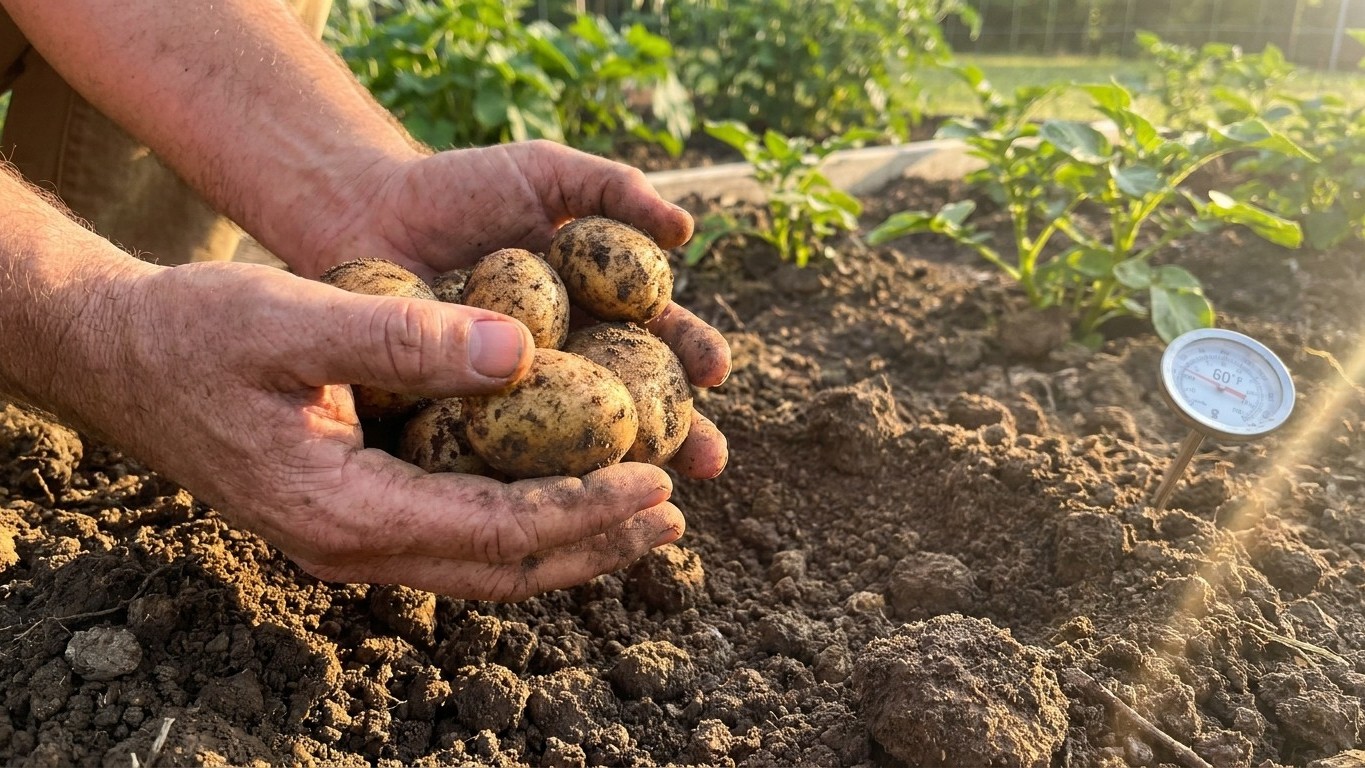

In Mississippi, potatoes go in the ground as a spring crop, not a summer one. With soil in Jackson averaging 71.1 days a year at 90 F or hotter, and the last spring frost falling somewhere between March 6 and March 22, the growing window sits ahead of that heat, not inside it. Plant early, dig before the soil bakes, and skip any variety talk that promises a summer harvest.
The short answer

Two numbers decide how this crop goes in Mississippi. The first is 71.1, the average number of days per year that Jackson reaches 90 F or higher, according to NOAA NCEI Climate Normals covering 1991 to 2020. The second is the last spring frost window for that same reference station: March 6 to March 22. Put those together and the picture is plain. This state carries more than two months of dangerous soil heat most years, and that heat arrives well before summer officially does on a calendar.
Potatoes size their tubers underground, and that process has a hard ceiling. Once soil temperatures climb above 90 F, tuber set and fill stop, according to Utah State University Extension. Mississippi’s count of 71.1 days above that threshold at the air-temperature level means soil temperatures spend a long stretch of the warm season above the point where a potato plant can keep working. That is not a soft guideline, it is the mechanism that decides whether a Mississippi garden gets a crop worth digging.
Spring crop, not summer crop
The answer for this state is a spring crop dug before the heat load builds, not a summer planting nursed through July and August. Seed goes in while soil is still cool from winter, plants push through the mild weeks of April and into May, and the crop comes out of the ground before soil temperatures cross that 90 F line for good, a process detailed in Harvesting and Storing Potatoes in Mississippi. Waiting for a second planting window in fall is possible in parts of the Gulf South, but it depends heavily on when the first fall frost arrives locally, a figure this page does not have for your specific county. The safe, well-documented approach is the spring window built around that March frost date; for a detailed breakdown of dates, see When to Plant Potatoes in Mississippi.
Variety choice matters less than timing here. Both Utah State University Extension and the University of Maine Cooperative Extension classify potato varieties by season length, calling them early, mid-season, or late, without publishing a days-to-maturity count for any of them. An early-season variety, suited to baking or boiling depending on the type, gives Mississippi gardeners the best chance of finishing before the heat closes the tuber-sizing window. A late-season variety, planted at the same time, is racing a clock it is less likely to win in this climate. For guidance on which options fit this timeline, see Potato Varieties That Suit Mississippi.
When to plant here
Counting backward from the frost window is the only reliable way to land on a planting date, and the arithmetic works the same whether you garden in Jackson or two counties over.
- Start with the last spring frost window for the closest official reporting station: March 6 to March 22 for Jackson, per NOAA NCEI 1991-2020 Climate Normals.
- Subtract 14 to 21 days from that date. That is the window Utah State University Extension and the University of Maine Cooperative Extension both point to for potato planting, timed to soil conditions rather than the calendar alone.
- Check soil temperature directly rather than trusting the date alone. Potatoes go in once soil reaches 50 F, measured a few inches down, not once the air simply feels warm.
- If soil sits at 50 F earlier than the frost-minus-14-to-21-days estimate suggests, and a hard freeze is not forecast, planting can move earlier. If a cold snap is still likely, wait, since seed pieces sitting in cold wet soil are one of the most common failures in this climate.
- Once seed goes in, track weeks forward rather than a fixed maturity date. Watch the plants and the calendar together, since no days-to-maturity number is published for any variety by either extension source used here.
For a Jackson-area garden, that arithmetic points to mid-to-late February as the earliest realistic planting window in most years, sliding into early March depending on how soil temperature actually reads that season. Counties further south typically warm earlier; counties further north, or at any elevation, typically warm later. The date is a starting point for checking soil, not a fixed instruction.
What the heat does to the crop
The mechanism here is simple and it is the one fact that decides the whole season. Once soil temperature climbs above 90 F, tuber set and fill are inhibited, according to Utah State University Extension. Below the surface, the plant stops adding size to the tubers it has already started, regardless of how green and healthy the foliage looks above ground.
Mississippi’s climate normal of 71.1 days a year at 90 F or above, measured at Jackson, means that ceiling gets crossed regularly and for an extended stretch each year, typically running from early summer through late summer. A potato crop planted late, or one that runs long because a late-season variety was chosen without accounting for that heat, is very likely to spend part of its critical bulking phase sitting in soil that has already crossed the 90 F line. The tubers stop sizing at that point, and no amount of irrigation reverses it.
This is the detail that catches new gardeners in hot states. Watering more, or watering more often, keeps the plant alive and green, but it does not lower soil temperature enough to restart tuber fill once that threshold is crossed. Mulching over the row can moderate soil temperature somewhat and is worth doing, but it buys a modest cushion, not a solution to a 71-day heat load. The real fix is timing: get the crop planted early enough, using the 14-to-21-day-before-frost window, that most of the bulking happens before soil crosses 90 F, and dig before the deep heat of summer sets in rather than trying to hold the crop through it.
What goes wrong here
- Planting uncertified seed potatoes. Seed saved from a grocery store potato or an unlabeled bag often carries viruses that stunt the plant and reduce yield before the heat even becomes a factor. Certified seed potatoes, sold as such, are grown and inspected specifically to be free of these viruses, and that single choice does more for a Mississippi harvest than almost any other decision.
- Planting into cold, wet soil to chase an early date. Rushing the calendar without checking that soil has actually reached 50 F leads to seed pieces rotting in place before they sprout. Check soil temperature directly rather than planting by date alone.
- Skipping hilling and ending up with green tubers. Tubers that develop near the surface and get exposed to sunlight turn green and produce solanine, making them unfit to eat. Hilling soil up around the base of the plant as it grows keeps developing tubers covered and is not an optional cosmetic step.
- Digging too early, before the crop has finished bulking. In a state where the safe window closes fast once soil heat builds, some gardeners dig at the first sign of trouble rather than confirming the plant has actually stopped growing. Digging a test hill before committing to the full harvest avoids losing size the crop had left to add.
Checking this against your own county
Jackson’s numbers are a reference point, not a guarantee for every Mississippi garden. Elevation, and the real distance between the northern and southern parts of the state, shift both the last frost date and the length of the 90 F stretch by a couple of weeks in either direction. A garden in the Delta or along the Gulf Coast is not on the same clock as one in the hill country further north.
The reliable next step is checking those figures against a local source rather than assuming Jackson’s dates apply directly. Mississippi State University Extension, at extension.msstate.edu, is the land-grant extension service for the state and the right place to confirm frost dates and planting timing for a specific county before finalizing a planting date.
Common questions
Can potatoes be grown as a summer crop in Mississippi?
Not reliably. With soil crossing 90 F on 71.1 days a year on average at the Jackson reference station, a crop still bulking through midsummer runs into the same ceiling that stops tuber set and fill, per Utah State University Extension. Planning around a spring harvest, dug before that heat load builds, avoids the problem entirely.
Does more watering during hot weather help tubers keep growing?
No. Watering keeps the plant alive and the foliage green, but it does not lower soil temperature enough to restart tuber sizing once soil has crossed 90 F. The fix is timing the crop to finish bulking before that threshold is reached, not irrigating through it.
How early can potatoes go in the ground in Mississippi?
Count backward 14 to 21 days from the local last spring frost date, then confirm with a soil thermometer that the soil has actually reached 50 F before planting. For the Jackson reference station, with a frost window of March 6 to March 22, that arithmetic generally points to mid-to-late February as the earliest realistic date, adjusted for actual soil readings that season.
What variety should be planted for Mississippi’s short cool season?
Neither Utah State University Extension nor the University of Maine Cooperative Extension publishes a days-to-maturity figure for named varieties, but both classify varieties by season length: early, mid-season, or late, and by use, such as baking or boiling. Given how quickly Mississippi’s soil crosses 90 F, an early-season variety gives the best chance of finishing tuber bulking before that ceiling is reached.