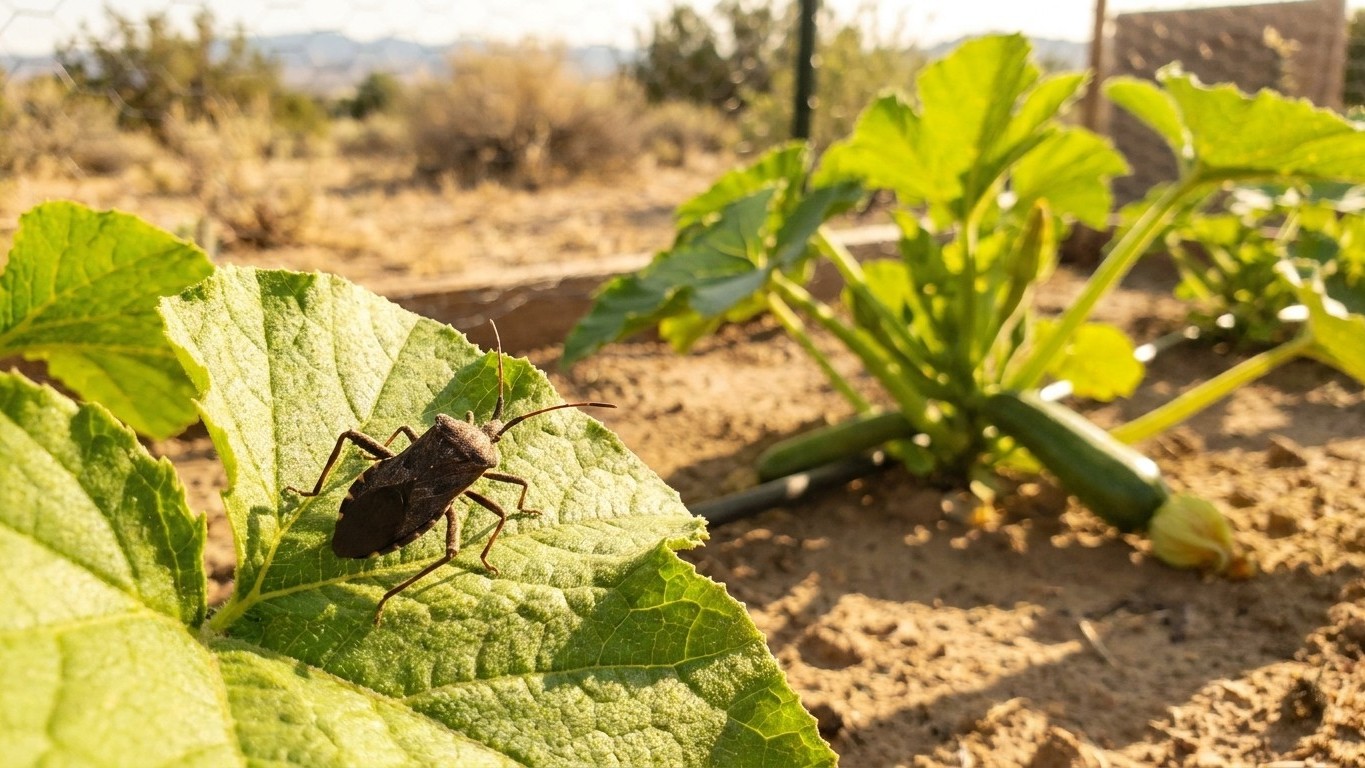

Pick Summer Squash when the skin is glossy and a fingernail sinks in without effort, usually from mid-July into mid-September across most of Alberta. That signal matters more than any calendar date. But the real challenge with this crop isn’t the picking window, it’s the glut that follows: summer squash keeps for barely a week in the fridge, so a heavy harvest means freezing or preserving, not storing.
When summer squash are ready in Alberta
Skin is the tell. A ready summer squash has a glossy, unblemished surface and gives easily to a fingernail, with no hardening and no dulling of the color. Size matters too: zucchini and yellow squash are best picked at 6 to 8 inches, pattypan smaller still, well before the seeds inside toughen up. Wait for a dull, matte skin and you’ve waited too long.
Timing that signal against Alberta’s season means working backward from frost. Environment and Climate Change Canada’s 1981-2010 normals put the average last spring frost at Calgary Int’l A on May 21, and the average first fall frost on September 16. Those are means, not guarantees, one year in two the frost actually lands later than that date, so neither one is a date to plant or harvest by with confidence. Squash transplanted once frost risk has genuinely passed, often the first week or two of June in a cautious garden, needs roughly 50 to 55 days to first harvest. That puts the earliest fruit in mid-July, with picking continuing steadily until frost shuts the plant down.
Picking frequency decides the yield
Once a single fruit on the plant fully matures and is left on the vine, the plant slows or stops setting new ones. That makes harvest frequency the actual yield lever, not soil or fertilizer. In a productive patch, that means checking plants every two to three days through the whole window, roughly mid-July through mid-September, and picking small and often rather than waiting for a few big trophies. A garden in a warmer microclimate, a south-facing yard sheltered from wind, might push a week or two past the average frost date; a low spot or an upland district north of Calgary should expect the season to close earlier, not later.
Keeping them, and for how long
Summer squash does not store the way winter squash does, and that single fact should reshape how anyone plans for a glut. Clemson Cooperative Extension’s Home & Garden Information Center is direct about it: summer squash “can be harvested about 55 days after planting,” and once picked, it should be kept “in a plastic bag in the refrigerator for up to 1 week.” That’s the ceiling, not a promise, and it assumes the squash went into the fridge clean, dry, and undamaged, with no soft spots or bruising from a rough harvest.
Compare that to a winter squash sitting in a cool, dry spot for months, and the difference in biology is obvious: summer squash has thin, tender skin built to be eaten fresh, not a hard rind built to seal moisture in. There’s no root cellar trick, no curing period, no dry-storage fix that extends that one-week window in any meaningful way. Treating a zucchini glut like a squash-and-pumpkin harvest, setting it on a shelf and hoping, ends the same way every time: soft spots, then a slick, sour mess within days past that week mark.
The real answer to a glut is the freezer or the jar
Because the fridge window is so short, a heavy harvest has to be processed within days of picking, not weeks. Shredded and frozen in bags, summer squash holds up well for soups, baking, and fritters through the winter. Blanched slices freeze reasonably too, though they soften on thawing and work best cooked rather than eaten raw. Pickling relishes and refrigerator pickles are the other common route, and either approach beats letting a countertop pile of zucchini turn to compost by the second week of August. Alberta’s provincial agriculture resources, reachable through alberta.ca/agriculture-and-irrigation, cover general food handling guidance for gardeners dealing with exactly this kind of seasonal surplus.
Where in the house that actually is
A standard kitchen fridge runs colder than a lot of vegetables tolerate, but summer squash is one crop it actually suits, provided the squash goes into the crisper drawer, not the coldest back corner near the cooling element. A fridge set around 4°C (40°F) matches what Clemson’s one-week figure assumes; colder than that, and chilling injury can show up as pitting or watery flesh before the week is even up. It’s worth checking that setting with an actual fridge thermometer rather than trusting the dial, since many home fridges run several degrees colder or warmer than their display suggests.
A root cellar or an unheated basement cold room, the classic answer for potatoes and winter squash in this province, is the wrong call here. Those spaces sit too warm for the crisping most fridges provide and too humid for a thin-skinned vegetable that has no rind to protect it, so squash left there softens and sweats within days. A heated main living space is worse still, since room temperature accelerates the same softening that a cold room merely slows. An attached garage, which in Alberta swings from summer heat spikes to hard freezes as soon as the season turns, is unreliable in both directions and risky by October regardless.
Bag it loosely, perforated plastic works better than sealed, in the crisper drawer, and check the thermometer once. That’s the entire storage plan a fridge can offer, and it’s also the ceiling, not a workaround for a bigger harvest.
What goes wrong here
The most common failure isn’t a storage mistake at all, it’s a picking one. Missing a few days during peak production, easy to do on a busy August week, lets fruit balloon past the tender stage and signals the plant to slow down. The fix is mechanical, not climatic: checking the patch every two to three days through the harvest window, because skipping that costs future fruit, not just the oversized one already on the vine.
The second failure is trying to stretch the one-week fridge window by moving squash somewhere else, a cold room, an unheated porch, a garage shelf, expecting winter-squash behavior from a summer crop. It rots or turns slick instead, and by the time that’s obvious, the harvest is gone. Freezing or preserving within the first few days after picking sidesteps the problem entirely.
Dry, hot stretches add a third pressure specific to this region. Calgary Int’l A averages just 216 mm (about 8.5 inches) of rain across June, July and August, with August running driest at 57 mm (2.24 inches), so squash plants under moisture stress during a dry run are also the plants most likely to draw grasshoppers, one of the pests Montana State University Extension’s Urban IPM program documents for this territory. A consistent watering schedule through dry weeks does double duty: it keeps fruit setting steadily and makes the crop less of a target.