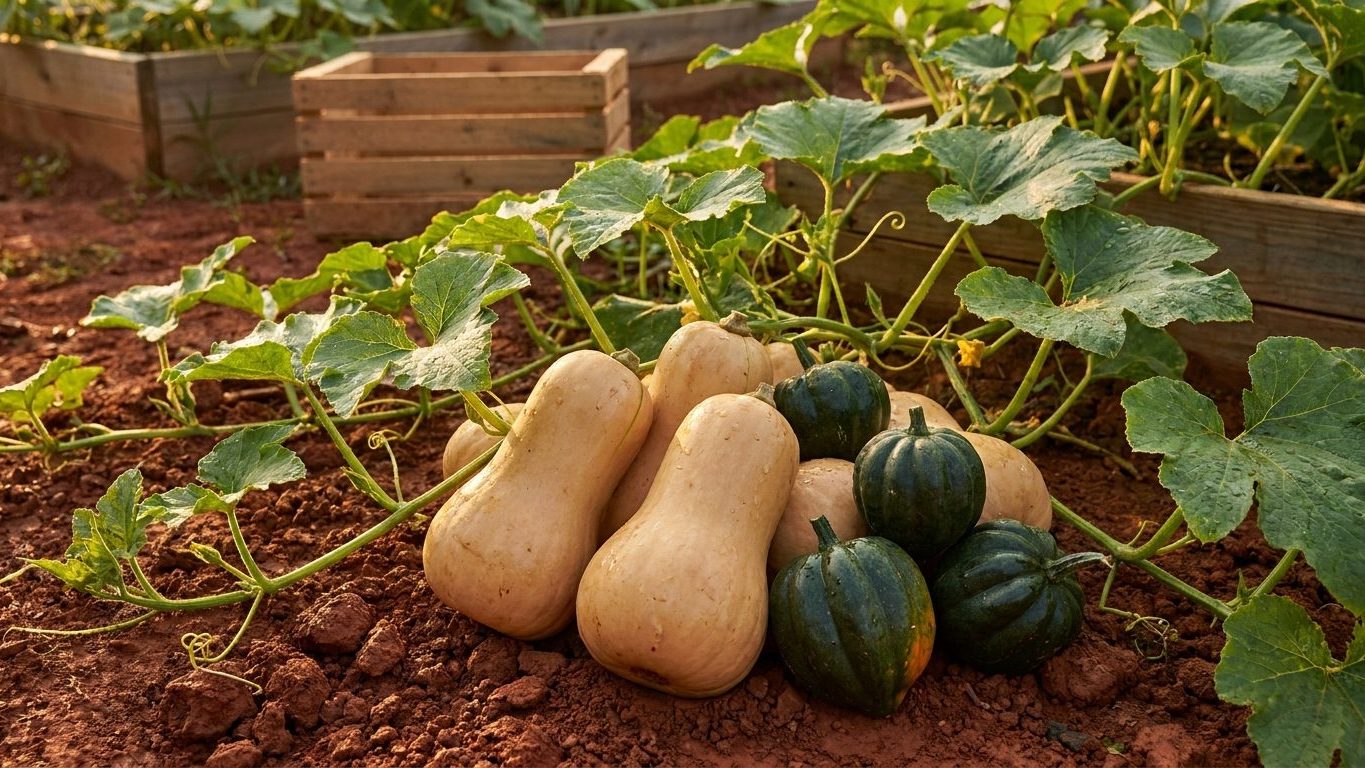

Short-season, cold-hardy winter squash win in Saskatchewan: bush acorn types, delicata, sweet dumpling and buttercup varieties bred to finish in roughly 85 to 105 days. The province’s mean frost-free window, from May 18 to September 18 near the Saskatoon reference station, runs about 123 days on the calendar, but that number is softer than it looks. Long-season butternuts, big Hubbards and giant pumpkins are the ones that struggle to catch up.
The short answer for Saskatchewan
Start with the 123 days between the mean last spring frost (May 18) and the mean first fall frost (September 18). That’s the frame every variety choice has to fit inside, and it’s generous only for squash that finish fast. The catch: these are mean dates, not guaranteed ones. In half the recorded years, the last spring frost actually lands after May 18, and in half the years, the first fall one lands after September 18 too, which sounds like it cancels out but doesn’t help you in a year where spring runs late and fall runs early at the same time. Treat 123 days as an average, not a promise, and build in a margin.
That margin is why bush-type, short-season squash dominate the recommended list here. Acorn squash (Table Queen types), delicata and sweet dumpling squash typically mature in 85 to 100 days, which leaves slack even in a shorter-than-average year. Buttercup varieties run closer to 95 to 105 days and still generally finish with room to spare. Butternut squash sits on the edge: many standard cultivars need 100 to 115 days, so only the shorter-season butternut selections belong on a Saskatchewan seed list, and even those do better started indoors.
| Squash type | Typical days to maturity | Fit for the ~123-day window |
|---|---|---|
| Acorn (bush types) | 80-95 days | Good fit, solid margin |
| Delicata / Sweet Dumpling | 95-100 days | Good fit |
| Buttercup | 95-105 days | Workable, less margin |
| Short-season butternut | 100-110 days | Tight, needs a head start indoors |
| Hubbard / giant pumpkin | 110-125+ days | Poor fit, high risk |
There’s a second layer that days-to-maturity alone doesn’t capture: heat. Saskatoon’s reference station records an average of zero days a year at or above 90°F. That means even squash that fit inside the 123-day window on paper ripen more slowly here than the same variety would in a hotter climate, because the plant is accumulating fewer heat units per day. The practical fix is starting the borderline varieties indoors three to four weeks before the last frost date and setting out transplants rather than direct-seeding, which effectively buys back the days that cool nights take away.
What will not work here
Giant pumpkins and full-size Hubbard squash are the clearest mismatch. They need 110 to 125-plus days AND real heat to size up and thicken their rinds for storage. Saskatchewan supplies neither reliably: the season is short by national standards, and with zero days above 90°F, the heat load needed to push a giant pumpkin to full size and cure it properly on the vine just isn’t there most years. The usual outcome isn’t total crop failure, it’s fruit that stalls at a fraction of its potential size, or that’s still soft-skinned when the first fall frost arrives.
Direct-seeding any long-season squash outdoors right at the mean last frost date compounds the problem. Since May 18 is a 50/50 date, not a safe one, seed germinating on that exact day is still gambling on the second half of the odds. For a 90-day squash that’s a manageable risk; for a 115-day one, losing even a week to a late cold snap can push harvest past the mean fall frost entirely.
The other local failure mode is less about cold and more about dry timing. Summer rainfall here totals about 6.6 inches across June, July and August, and August, the very month most winter squash are sizing fruit and thickening rind, is the driest of the three at 1.68 inches. Squash left to rely on rainfall alone during that fruit-fill stretch commonly show stalled or lopsided fruit, not because the variety was wrong, but because the moisture simply wasn’t there when it mattered. This isn’t a humid-climate problem of fungal disease from tight spacing; it’s closer to the opposite, a drought stress issue during the exact weeks fruit needs steady water. A garden here needs a plan for supplemental watering in August specifically, regardless of which winter squash is planted.
What changes across Saskatchewan
The 3a hardiness rating cited for this province belongs to the Saskatoon reference station, not to the whole of Saskatchewan. Canada’s plant hardiness system is built from seven climate variables, not one, and it can shift by several zone classes between a sheltered river valley garden and an open prairie one just a short drive away, let alone between the province’s southern grain belt and its northern forest fringe. There is no single hardiness number for “Saskatchewan,” and treating 3a as universal would be a mistake for anyone gardening north of Saskatoon or at a higher, more exposed elevation.
What that means in practice: a gardener farther north should assume both the frost-free window and the heat load are less generous than the Saskatoon figures suggest, not more. That points toward leaning even harder into the shortest-season squash on the list, acorn and delicata over buttercup, and buttercup over any butternut, plus starting transplants indoors rather than direct-seeding. A gardener in a warmer southern pocket may have a little more room to try a short-season butternut outdoors, but still shouldn’t assume the Saskatoon mean frost dates apply exactly to their own plot.
Rather than guessing which zone applies to a given yard, the right move is checking it directly on Natural Resources Canada’s Plant Hardiness site, which maps zones by location across the country using the same seven-variable model behind the Saskatoon figure. That’s the tool built for exactly this question, and it will place a specific address far more accurately than any provincial average can.
Where to check this for your own county
Everything above is built from one reference station and province-wide averages, which makes it a starting point, not a local forecast. The next step is Saskatchewan’s own agriculture resources, at saskatchewan.ca’s agriculture, natural resources and industry section. That’s the place to look for two specific things: a provincial or regional planting calendar that accounts for local frost patterns rather than the single Saskatoon-based average used here, and any variety trial results for winter squash grown specifically in Saskatchewan conditions rather than general seed catalog claims.
A regional or district recommendation will always beat a province-wide one, for the simple reason that it’s built from more local data points. This page works from a single reference station’s climate normals because that’s the best data available at the provincial-cluster level, but a garden two hours from Saskatoon, especially one at a different latitude or elevation, can have a meaningfully different frost pattern and heat load. If the province’s agriculture resources publish anything more localized for your area, whether that’s a regional planting guide or trial results from a nearby demonstration garden, that information should take priority over the averages used in this article.
It’s also worth checking whether any local seed suppliers or gardening groups publish their own variety notes, since real-world results from gardeners a short distance away often catch microclimate quirks that province-wide climate normals can’t.
Checking this against your own garden
None of the dates or averages above outrank what’s actually happening in a specific garden bed, and three simple observations tell more than any calendar date. First, soil warmth by feel: winter squash seed germinates poorly in cold soil, so pushing a bare hand a couple of inches into the bed and feeling for warmth (not just air temperature) is a better test than trusting the mean frost date alone. Cold soil that lingers past mid-May, even in a year with an early last frost, is a sign to wait or start indoors instead.
Second, watch for the first flush of male flowers. Squash plants typically produce male blossoms before female ones, and their appearance signals the plant has moved past early establishment into active growth, useful confirmation that the season is truly underway in that particular spot, not just on the calendar.
Third, track how fast true leaves develop after the first seedling leaves (cotyledons) appear. Slow true-leaf development in a bed that should be warm enough often points to a shadier or cooler microclimate than the rest of the yard, something worth noting for next year’s placement. Taken together, these three signs read the garden’s actual conditions in a way that a single regional frost date, however carefully sourced, simply can’t.