
Ripe Summer Squash in Arkansas is a matter of days, not weeks. The plant tells you it’s ready long before a calendar does, and once fruit sets, the harvest window shrinks fast because every mature squash left on the vine tells the plant to slow down and stop making more.
When summer squash are ready in Arkansas
Skin still glossy and tender, a thumbnail leaving a mark without effort, fruit around 6 to 8 inches for zucchini or straightneck types: that’s the signal, and it matters more than any date on a calendar. Squash grows fast enough in Arkansas heat that a fruit can go from perfect to woody in two or three days once it starts sizing up.
The rough window still helps with planning. NOAA’s 1991-2020 climate normals put the last spring frost at station USW00013963 somewhere between March 12 and March 28, and the first fall frost between November 7 and November 20, using the standard 32F freeze threshold. That’s a wide frost-free season on paper, but summer squash is a tender crop, killed outright by temperatures near 36F, not just a hard freeze. For that lighter threshold, NWS Little Rock gives a tighter and more useful pair of dates: April 3 to October 31. That’s the span worth writing down if you’re timing a planting or wondering how late you can still expect fruit.
Count forward from planting rather than from the frost dates alone. Clemson Cooperative Extension notes that summer squash is typically ready to harvest about 55 days after planting, which puts an April planting into fruit by early June in most of the state. Because the crop keeps flowering and setting new fruit through the heat of summer, a single planting can keep producing clear into fall, right up against that late-October frost line.
Arkansas summers add pressure to that timeline. With an average of 69.2 days a year reaching 90F or higher at the Little Rock reference station, fruit can size up faster than a gardener expects, especially mid-summer when growth rates spike. A squash that looked three days from ready on a Friday can be a baseball bat by Monday. Checking vines every day or two during peak heat, rather than every few days, is what keeps the harvest at its best stage rather than its biggest.
Keeping them, and for how long
Here’s the fact that changes how most people plan a glut: summer squash does not really store. Clemson Cooperative Extension’s Home & Garden Information Center is direct about it, stating that summer squash can be stored in a plastic bag in the refrigerator for up to 1 week. That’s the whole window. There’s no root-cellar trick, no curing period, no months-long shelf life the way winter squash and pumpkins get. The distinction matters because a lot of gardeners lump all squash together and expect a cellar or a cool closet to buy them time. It won’t, and expecting it to will just mean rot.
That one-week figure from Clemson is a maximum under good conditions, not a promise. A squash picked a day too late, already a little soft or nicked during harvest, will not make it anywhere near seven days. Bruising, moisture on the skin at the time of bagging, and any cut or scrape all shorten that window considerably. Treat the week as the best case, and check squash in storage every couple of days rather than assuming they’re fine until day seven arrives.
Why the plant keeps making more anyway
Summer squash plants are wired to stop investing in new fruit once existing fruit matures and starts producing seed. That means picking small and picking often isn’t just about better eating quality, it’s what keeps the plant producing at all. A vine left unharvested for a week during a Arkansas heat spell, with days above 90F accelerating growth, can go from a manageable few fruits to more than a household can use in that same week, right when the only real storage option (that one-week refrigerator window) is already ticking.
For anyone facing more squash than a single week’s worth of meals, freezing and preserving are the only real answers, since the crop itself was never built to hold in a cellar the way its winter relatives are. Blanching and freezing, pickling, or giving the surplus away the same day it’s picked all work far better than hoping refrigeration will stretch further than a week.
Where in the house that actually is
A cellar or an unheated garage, the classic answer for winter squash and root vegetables, does nothing for summer squash and can actively hurt it. Garages in Arkansas swing wide with the weather, running hot in summer when the harvest actually happens, which speeds up softening rather than slowing it. A basement or root cellar, useful for potatoes and winter squash, is simply the wrong tool here since Clemson’s guidance points straight at the refrigerator, not a cool room.
The right spot is the crisper drawer, in a loosely closed plastic bag, which is exactly the setup Clemson describes. Most home refrigerators hold that drawer somewhere in the high 30s to low 40s Fahrenheit, cold enough to slow the squash down without freezing it, and humid enough inside a bag to keep the skin from shriveling in a day. That combination, cold plus a little trapped humidity, is what stretches a summer squash toward that one-week ceiling instead of falling short of it.
The catch is that not every refrigerator’s crisper actually runs where it should. Thermostats drift, and a drawer packed too full or too empty won’t hold temperature the way it’s designed to. Checking the crisper with an actual thermometer, rather than trusting the dial, is the step most people skip and the one that decides whether a squash lasts five days or barely two. It costs nothing but a few minutes, and it’s the difference between a full week of usable squash and a bag of mush found on day four.
What goes wrong here
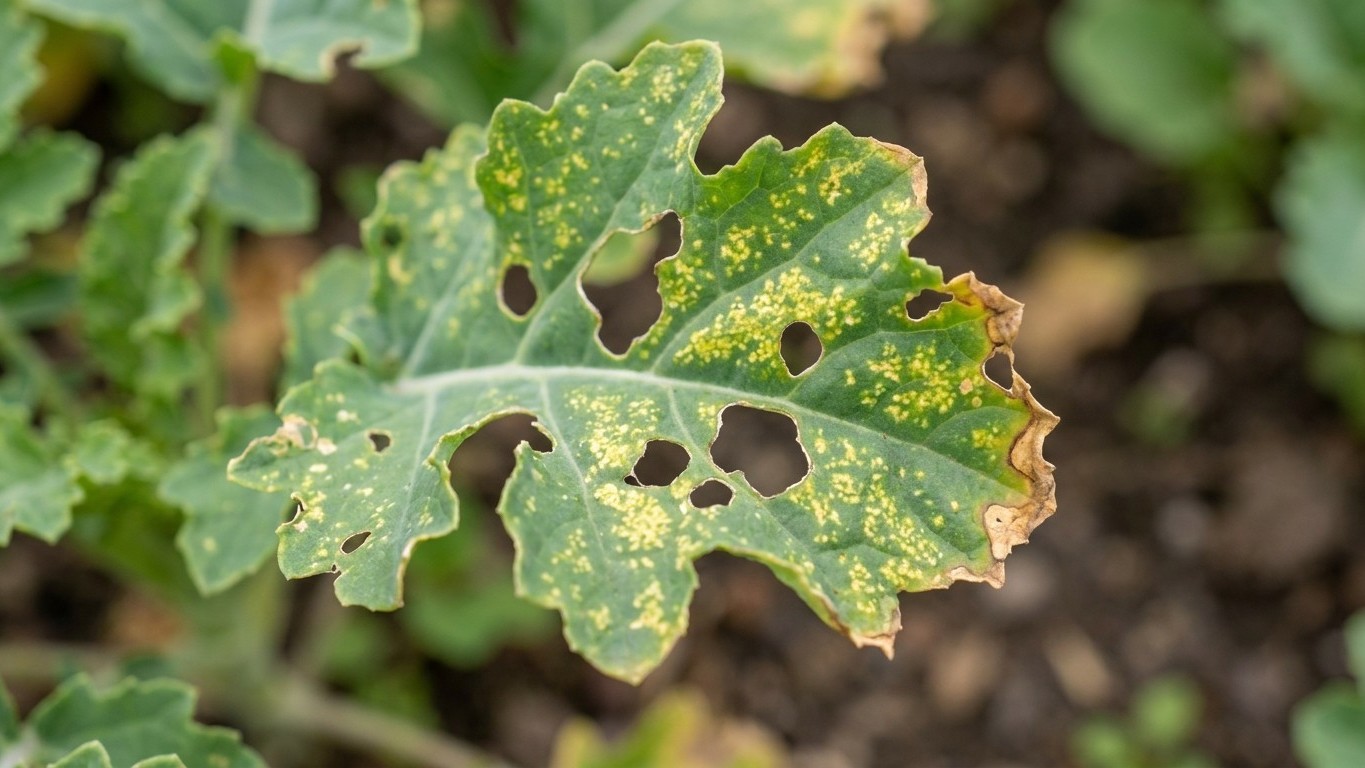
Three failures show up more than any others in Arkansas gardens, and none of them are really about the storage step at all. The University of Arkansas Division of Agriculture Cooperative Extension documents squash vine borer and squash bugs (Anasa tristis) as pests affecting this crop in the state, alongside aphids, whiteflies, stink bugs, scale insects, and Japanese beetles. Of that list, vine borer and squash bugs are the ones that actually end a summer squash season early, since a borer can hollow out a stem and collapse an entire vine within days, and squash bugs feeding in numbers can wilt young plants before they ever reach that 55-day harvest mark. Checking the base of stems for the sawdust-like frass borers leave behind, and turning leaves over to catch squash bug eggs before they hatch, catches both early enough to matter.
The third failure isn’t a pest at all, it’s math. A vigorous plant fruiting through a frost-free season stretching to late October, combined with a storage window capped at one week, produces more squash than most kitchens can use in real time. The fix isn’t a better storage spot, since one doesn’t exist for this crop. It’s harvesting on a schedule tight enough to keep fruit from piling up, and having a freezer or a pickling plan ready before the peak arrives rather than after. Skipping that planning is what turns a productive plant into a backyard full of oversized, woody squash nobody wanted in the first place.