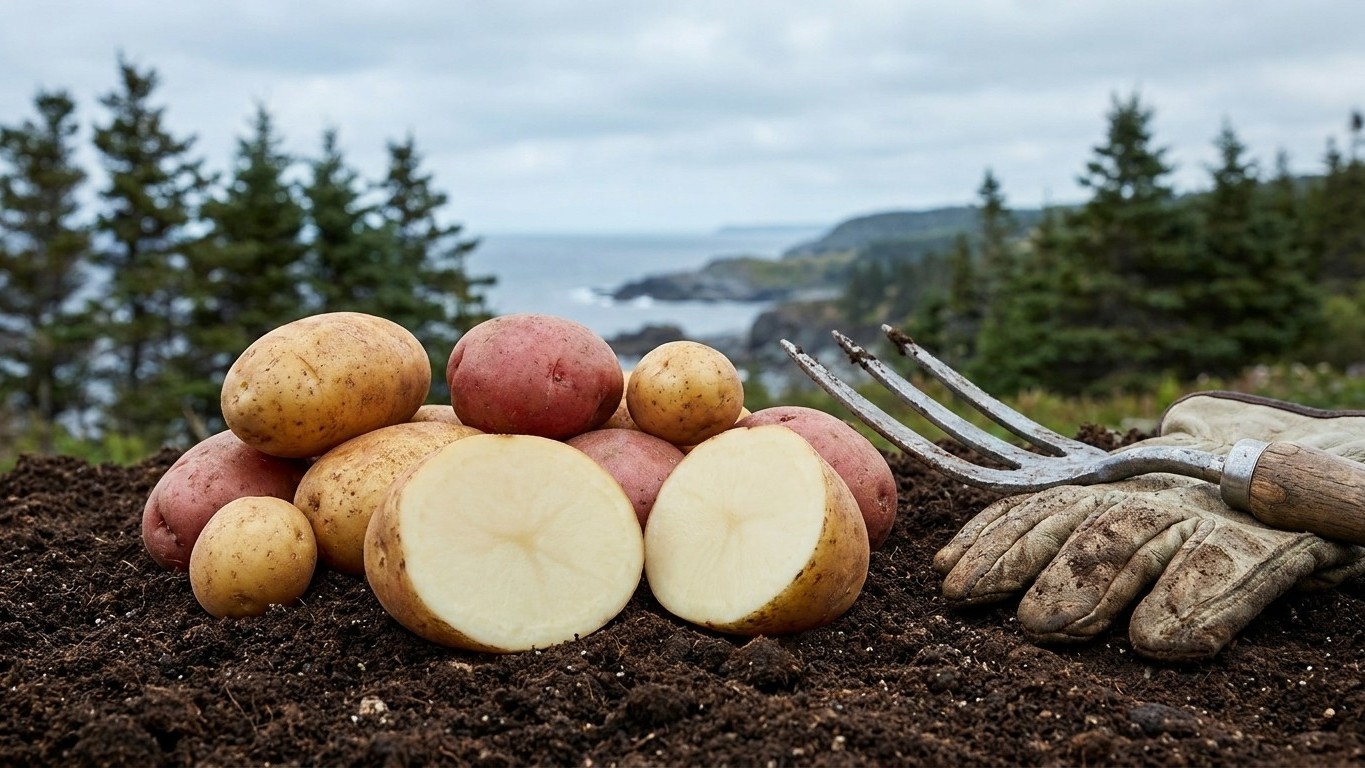

Two insects on Montana State University Extension’s documented list actually feed on potato plants: grasshoppers and thrips. The other three insects the service tracks in the state, brown marmorated stink bug, miller moths, and social wasps, show up in yards and gardens but don’t chew on potato foliage. Grasshoppers strip leaves through summer as grasses dry out; thrips leave silvery stippling that starts earlier, tied to the frost-free window opening between April 29 and May 10 near Billings.
Which pests attack potato in Montana
Montana State University Extension’s Urban IPM program documents five insects commonly reported around homes and gardens in the state: Brown marmorated stink bug, Grasshoppers, Miller moths, Social wasps, and Thrips. That’s the full list this service publishes for this territory, and it’s worth saying plainly that it’s a short one. There’s no benefit in padding it with pests that show up in other states’ extension bulletins.
Not every name on that list belongs on a potato plant. Brown marmorated stink bug feeds mainly on fruit trees and thin-skinned vegetables like tomatoes and peppers, piercing fruit rather than working over potato leaves, so it isn’t a documented potato feeder here. Miller moths are the adult stage of a moth that migrates through the state each year, and the adults feed on flower nectar, not foliage; they turn up in porches and window wells as a nuisance, not in the potato patch. Social wasps are predators and scavengers, useful for cleaning up other insects and picnic scraps, but they don’t chew plant tissue, so they have no business on a damage list either.
That leaves two candidates that genuinely eat potato plants: grasshoppers and thrips. Only two of the five insects this service documents in the state actually feed on potato foliage, which matters because a gardener who sees a stink bug on a potato leaf and assumes it’s the culprit behind chewed leaves is chasing the wrong insect. Grasshoppers are generalist feeders that will strip leaves from nearly anything green when their numbers build, potatoes included, and they tend to move in from field edges and dry grass margins. Thrips are tiny, slender insects that rasp the surface of leaves and drink the cell contents that leak out, leaving a silvery or bronze cast rather than actual holes.
Neither pest is unique to potato, and neither is guaranteed to show up in a given garden. What Montana State University Extension’s list tells a gardener is what’s been documented across the state, not what’s necessarily present in any one yard. That distinction matters more than it sounds, because a county with dry grassland nearby will see far more grasshopper pressure than one surrounded by irrigated cropland, and thrips populations swing hard from year to year depending on how the spring plays out.
When each one shows up, and what it does first
Timing in Montana runs off the frost-free window, not the calendar. Near Billings, the last spring freeze typically falls between April 29 and May 10, based on NOAA’s 1991-2020 climate normals for that station, and Billings sits among the milder valleys in the state. Mountain valleys elsewhere in Montana can see frost in any month, so a gardener planting at higher elevation should push these windows later, not earlier.
Thrips tend to appear first, often not long after potato plants have leafed out and the weather has settled into a dry stretch. The earliest sign isn’t a visible insect at all, it’s a change in leaf color: a silvery, slightly bronzed sheen on the upper leaf surface, sometimes with faint black flecks of excrement if you look closely. Because thrips are so small, most gardeners notice the leaf discoloration well before they spot the insect itself, and the damage tends to concentrate on younger leaves near the growing tips first.
Grasshoppers show up later in the season, building numbers through the warmer, drier stretch of summer as grasses in surrounding fields and roadsides cure out and lose moisture. That’s when they move into gardens looking for something still green and tender, and potato foliage qualifies. The first sign is usually ragged, irregular chewing along leaf edges rather than the stippled look thrips leave behind, and damage often starts at the edge of a garden closest to open grass or a field margin, moving inward as the population grows.
Neither pest reads a calendar the way people do. A cool, wet spring can push thrips activity later and knock grasshopper numbers down for the whole season, since grasshopper eggs overwintering in the soil don’t hatch as reliably in wet conditions. A hot, dry stretch does the opposite, favoring both insects at once. That’s part of why a fixed date on a chart is less useful here than watching the frost-free window and the weather that follows it.
Telling the damage apart from everything else
Chewed or discolored potato leaves get blamed on insects more often than they should. The detail that actually separates insect feeding from everything else is whether the damage is uniform or patchy, since nutrient problems and water stress tend to spread evenly across a plant or a whole row, while insect feeding shows up in uneven patches, often starting at one edge of the garden.
| What you see | Possible cause | What tells them apart |
|---|---|---|
| Silvery or bronze leaf surface | Thrips feeding | Damage concentrated on newer leaves; check undersides with a hand lens for tiny slender insects |
| Ragged edges, large chewed sections | Grasshoppers | Damage worse near garden edges closest to dry grass or fields, insects visible and easy to spot in daylight |
| Yellowing between leaf veins, whole plant affected evenly | Nutrient deficiency | Pattern is even across the plant, not patchy, and spreads plant to plant in the same row |
| Wilting despite normal watering, curling leaf edges | Water stress or heat | Improves within a day or two after a deep watering; insect damage does not reverse |
| Torn or bent stems, broken leaves near soil line | Mechanical damage (hail, tools, foot traffic) | Damage is on stems and lower leaves, not scattered across upper foliage the way insect feeding is |
A hand lens earns its keep here. Thrips are easy to mistake for nothing at all until you look closely at the underside of a stippled leaf in bright light. Grasshoppers, by contrast, rarely hide, so a garden with real grasshopper pressure usually shows the insects themselves during the day, not just the damage. When the pattern doesn’t match anything on this list, or when damage keeps spreading after conditions and watering both look normal, that’s the point to bring a sample or a clear photo to a local extension office rather than guessing further.
What actually works here, and what is a waste of time
On a growing season this short, timing does more work than any product could. A physical barrier put in place before the frost-free window even opens beats almost any treatment applied after damage is already visible, because by the time leaf stippling or chewed edges show up, the insects have already had a run of the plant.
For thrips, floating row cover laid over young plants right after emergence keeps adults from reaching the foliage in the first place, and it can come off once plants are established enough to tolerate some feeding without losing much yield. For grasshoppers, the more effective move is managing the garden’s edges: keeping grass and weeds mowed short along fence lines and field borders reduces the habitat that lets populations build up before they move into cultivated rows. Neither of these costs much, and both work with the season’s timeline rather than against it.
What tends to waste time is treating a problem that’s already run its course, or treating the wrong problem altogether. Spraying for thrips after leaves have already turned silvery doesn’t reverse existing damage, it only limits further spread, so the timing of any treatment matters more than the treatment itself. And because uncertified potato seed can carry viruses that produce leaf symptoms easy to confuse with insect feeding, starting with certified seed stock removes one entire category of guesswork before the season even begins. This site doesn’t recommend specific products or active ingredients, since what’s registered and legal to use changes by state and by year; that call belongs to a local extension office, which knows current label restrictions for Montana.
Where to check this for your own county
The next useful step is a call or visit to the local county office of Montana State University Extension, named exactly that, since the Urban IPM program that documents these five insects operates through those county offices and keeps closer tabs on what’s active in a given area than any statewide list can.
What’s documented for the state as a whole doesn’t describe every garden in it. A county with dry rangeland nearby will see grasshopper pressure that a county surrounded by irrigated farmland may barely notice, and thrips activity swings with local weather patterns that vary from one valley to the next. The frost-free window itself shifts by elevation, too, meaning a garden in a mountain valley could be weeks behind one in a lower, milder area like Billings.
A local extension office can also confirm a suspected pest from a sample or photo, which matters given how easily thrips damage gets mistaken for early virus symptoms or nutrient trouble. Bringing a few affected leaves, or a clear close-up photo showing both the damage and, if visible, the insect itself, gives an agent something concrete to work from rather than a description alone. That’s a more reliable path than matching symptoms to a chart from a different state, since only a Montana office knows what’s actually active on the ground this season.
Common questions
Do stink bugs damage potato plants in Montana?
Brown marmorated stink bug is documented in the state by Montana State University Extension’s Urban IPM program, but it feeds mainly on fruit trees and thin-skinned vegetables rather than potato foliage, so it isn’t considered a potato pest here.
Are miller moths a threat to a potato garden?
No. Miller moths are the adult stage of a migratory moth, and the adults feed on flower nectar rather than plant leaves, which is why they’re a nuisance around homes but not a documented potato pest.
How early should row cover go on to stop thrips?
Before damage appears, ideally right after plants emerge, since row cover works by keeping adult thrips off the foliage rather than reversing stippling that’s already there.
Why do grasshoppers get worse later in the season?
Their numbers build through summer as surrounding grasses and roadside vegetation dry out, pushing them toward whatever stays green, which often means garden edges closest to open fields or dry grass.