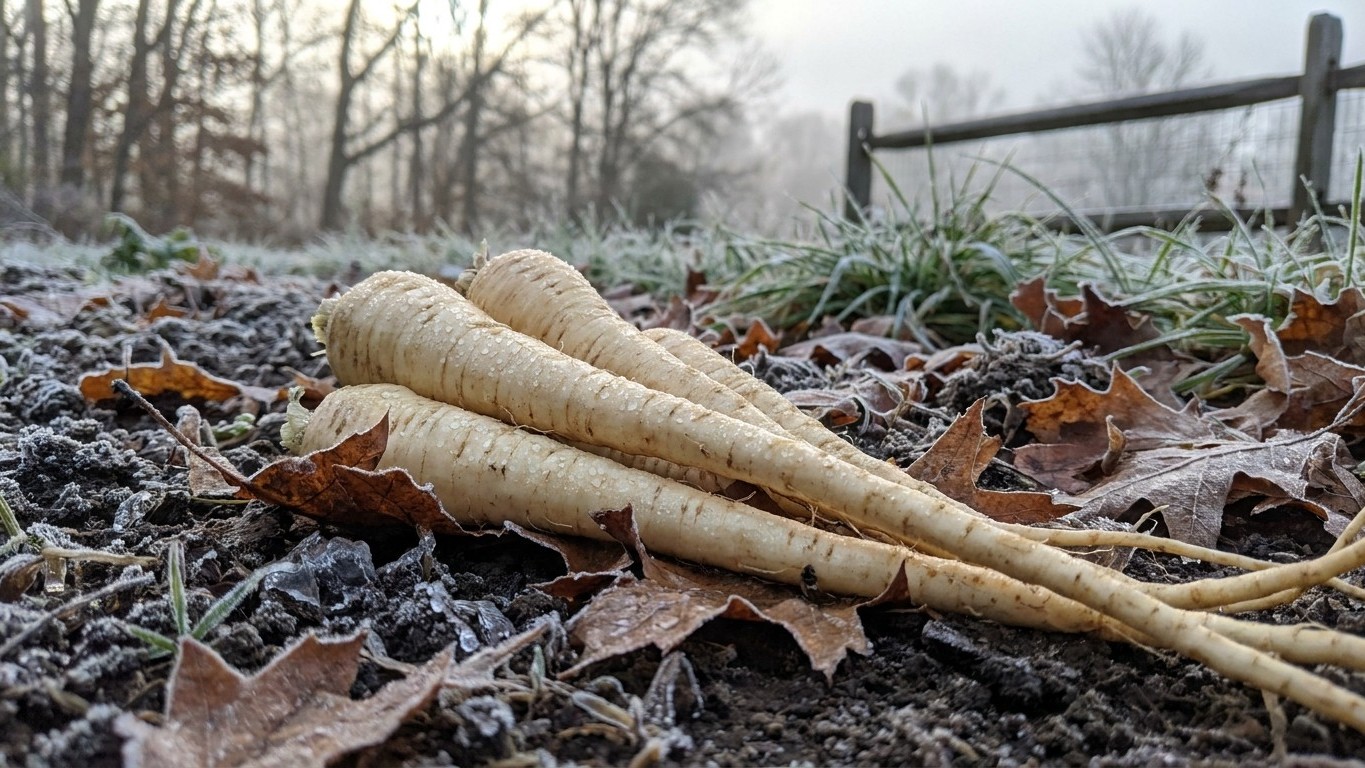

University of Nevada, Reno Extension documents four insects that actually turn up on parsnip foliage across the state: aphids, earwigs, Mormon crickets, and shield bugs (stink bugs). None of them are parsnip specialists, they feed wherever leaf tissue is soft and available, which for this crop means the weeks right after germination and again as the tops mature. Root damage almost never comes from insects at all; it usually traces back to the soil itself.
Which pests attack parsnip in Nevada
University of Nevada, Reno Extension lists nine insects that home gardeners across the state report and manage: Aphids, Cabbage moth, Earwigs, Elm leaf beetle, Japanese beetle, Mormon cricket (Anabrus simplex), Shield bugs (stink bugs), Squash bug (Anasa tristis), and Tomato hornworm. That’s the full documented list for this territory, the service doesn’t publish a longer one, and there’s no reason to pad it.
Half that list has nothing to do with a parsnip bed, and it’s worth saying why before anyone starts scouting for the wrong bug. Elm leaf beetle feeds on elm foliage, not garden vegetables, so it stays in the yard’s trees. Cabbage moth larvae target the brassica family, cabbage, broccoli, kale, and skip past the carrot-family foliage that parsnip grows. Squash bug is a cucurbit specialist, built for squash, pumpkin, and cucumber vines, and it doesn’t wander onto ferny parsnip tops. Tomato hornworm feeds on nightshades, tomato and its relatives, and has no reason to touch a root crop. Japanese beetle skeletonizes broad, flat leaves on roses, grapevines, and fruit trees; it’s rarely reported on the narrow, feathery foliage parsnip puts up, so it doesn’t belong on a parsnip watch list either.
That leaves four: Aphids, Earwigs, Mormon cricket (Anabrus simplex), and Shield bugs (stink bugs). All four are generalist feeders that will land on parsnip tops when nothing more attractive is nearby, which is exactly why they show up on a documented list without being parsnip specialists themselves. Parsnip’s own biology matters here too: the crop needs 100 to 120 days from seeding to reach harvest size, so foliage stays exposed to these insects for most of a growing season, not just a few weeks. A short list doesn’t mean low risk over that stretch, it just means the risk comes from a narrow set of insects rather than a long one.
When each one shows up, and what it does first
Timing here tracks the crop’s own growth stages rather than a calendar month, because parsnip is direct-sown in place and elevation across Nevada shifts planting dates by months between the low desert and the high valleys. Germination itself takes 14 to 21 days, and that window is when the first insect signs typically appear — dig up what looks like bare, ungerminated soil before that stretch is up and you’re just disturbing seed that hasn’t sprouted yet.
Earwigs are usually the first sign a gardener notices, because they feed at night on tender seedlings right as the first true leaves push through. The damage looks like ragged, irregular holes chewed into small leaves, sometimes enough to take a seedling down entirely if the population is heavy near the row.
As the young foliage fills in over the following weeks, aphids move in next. They cluster on the undersides of new leaflets and along stem tips, and the first visible sign is usually curling, yellowing growth rather than the insects themselves, since aphid colonies are small and easy to miss until the leaf distortion shows up.
Shield bugs (stink bugs) tend to arrive later, once the parsnip canopy is established and stems have thickened enough to pierce. Their feeding leaves pale, stippled patches on leaves and small puncture marks on stems, a different signature from the chewed holes earwigs leave behind.
Mormon cricket activity is the outlier on this list. It’s sporadic rather than seasonal in the usual sense, tied to regional population cycles rather than the parsnip patch’s own growth stage, and it shows up as fast, visible damage from insects moving across the ground in bands, most often in gardens near rangeland rather than in dense urban plantings.
Telling the damage apart from everything else
Not every problem in a parsnip bed has legs. A forked or split root has two separate possible causes here, and they don’t get merged into one diagnosis: heavy or stony ground that deflects the taproot, and overwatering that encourages branching roots instead of one straight one. Neither shows up on the foliage, which is the first clue that the cause isn’t an insect at all.
| What you see | Likely cause | What distinguishes it |
|---|---|---|
| Ragged holes in seedling leaves, worse at night | Earwigs | Check soil surface at dusk or dawn for the curled pincer-tail insects themselves |
| Curled, yellowing new leaflets with sticky residue | Aphids | Look for small clusters on leaf undersides; ants tending them is a strong secondary sign |
| Pale, stippled or silvery patches on mature leaves | Shield bugs (stink bugs) | Look for shield-shaped adults and puncture marks on the stems, not just the leaves |
| Whole planting damaged fast, insects moving in groups | Mormon cricket | Large flightless insects moving across the ground, most likely near open rangeland |
| Forked, split, or branched roots at harvest | Heavy/stony soil, or overwatering | No foliage damage present; a test hole shows soil texture, and a watering log shows the pattern |
| Pale, stunted foliage with no holes or spots | Possible nutrient issue, not a pest | No chewing or piercing marks anywhere on the plant |
None of this replaces a look from someone trained to identify what’s actually in the ground. If a sample doesn’t match anything on this list cleanly, that’s the point to send a photo or a physical sample to a local expert rather than guess.
What actually works here, and what is a waste of time
The window that matters most is the first three weeks after sowing, while seedlings are germinating and still tender enough for earwigs to take down. A floating row cover set over the row at sowing and left in place through early establishment blocks both earwig access and the winged aphids that colonize new growth, and it costs nothing to remove once the plants toughen up.
Handpicking works too, especially for shield bugs and isolated Mormon cricket bands in a small backyard bed, since these insects are large enough to see and slow enough to catch. Clearing garden debris and mulch piles near the row through the season also removes daytime hiding spots earwigs depend on, which cuts down on nighttime feeding without any product at all.
What doesn’t work: treating forked roots as a pest problem. Since that damage comes from soil texture or overwatering, no insect control touches it, and spraying foliage in response wastes time while the actual cause, compacted or stony ground, or a watering schedule that’s too generous, goes unaddressed. Heavy soil for a taproot crop should be double dug before sowing rather than corrected after the fact.
Beyond physical barriers and handpicking, anything involving a registered treatment is a question for University of Nevada, Reno Extension, not a general gardening article. What’s legally available and appropriate varies by product and by county, and a local office can match a specific insect and situation to something actually registered for use in the state.
Where to check this for your own county
University of Nevada, Reno Extension is the source for everything on this page, and its county offices are the next stop for anything specific to a particular garden. A statewide list doesn’t mean every county carries the same pressure from the same insect — elevation alone shifts the picture enormously between the low desert around Las Vegas and the higher valleys around Reno and Carson City, where growing seasons, frost timing, and insect activity all run on a different schedule.
That gap matters more for parsnip than for a lot of crops, because the 100 to 120 day maturity window means the plant is exposed to a full season’s worth of insect activity, and what shows up first in a low desert garden may show up weeks or months later at elevation. A county extension office can speak to the local pattern in a way a statewide list can’t.
The practical next step is to bring or photograph an actual sample, foliage, stem, or the insect itself if it’s still present, to the county office rather than trying to match symptoms to a description online. That’s what turns a documented statewide list into a specific answer for one garden.
Common questions
Does parsnip attract more pests in Nevada than carrots do?
There’s no published comparison between the two crops in the documented list, and both belong to the same plant family, so foliage-feeding insects like aphids and shield bugs treat them similarly. A county extension office is the place to ask about local differences between the two.
Will covering the soil fix a forked parsnip root?
Not directly. A forked root traces back to heavy or stony ground, or to overwatering, and a cover placed after the root has already formed does nothing for either cause. Loosening the soil before sowing and adjusting watering are the two levers, and they need to happen before the root develops, not after.
Is Japanese beetle worth watching for on a parsnip bed?
It’s documented in the state, but it targets broad-leaved plants like roses, grapevines, and fruit trees far more than the narrow, ferny foliage parsnip puts up. It’s not excluded from the state’s overall pest list, just from the short list of insects that actually feed on this particular crop.
When is the best time to first check a parsnip row for insects?
Right around the 14 to 21 day germination mark, since that’s when tender seedlings are most vulnerable to earwig feeding and the first real damage tends to appear. Checking again as true leaves fill in catches aphids before colonies get large enough to distort growth.