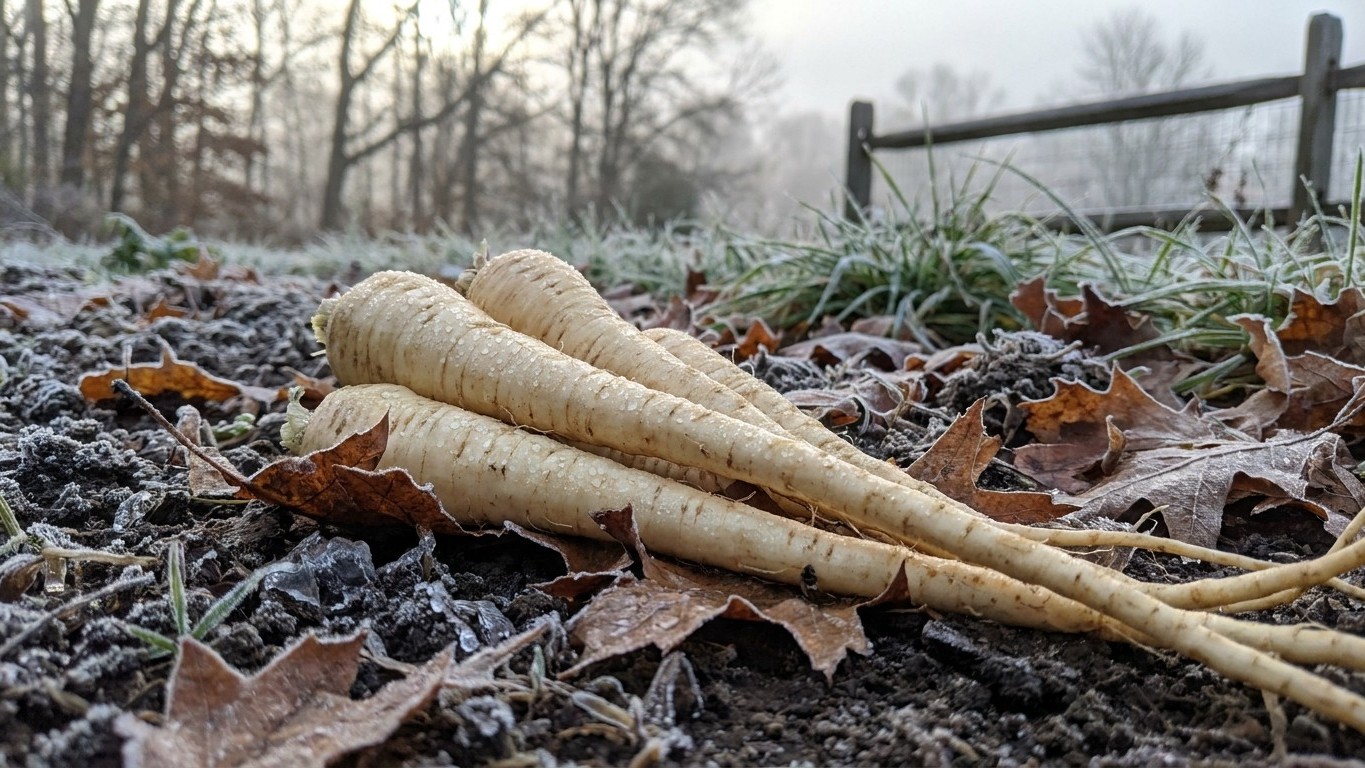

Flea beetles, Japanese beetles, and thrips are the parsnip pests documented for North Carolina, and they show up on foliage, not roots, once seedlings are a few inches tall. None of them threaten the crop before germination, and none of them explain a forked or stunted root later in the season.
Which pests attack parsnip in North Carolina
NC State Extension documents nine garden pests for this territory: cabbage looper, corn earworm, fall webworm, flea beetles, hemlock woolly adelgid, imported cabbageworm, Japanese beetle, striped cucumber beetle, and thrips. That is the full list this site can name here. It is short, and it does not need padding.
Sorting it for parsnip means throwing out most of it. Cabbage looper and imported cabbageworm feed on cabbage-family leaves, broccoli, kale, collards, not on carrot-family foliage like parsnip. Corn earworm goes after corn ears and tomato fruit, and parsnip has neither. Fall webworm builds silk nests in tree branches, it is a landscape-tree pest, not a vegetable-bed one. Hemlock woolly adelgid feeds exclusively on hemlock trees, a name that shows up on a lot of Piedmont property lists but has nothing to do with a root vegetable. Striped cucumber beetle wants cucumbers, squash, and melons, cucurbits, a different plant family entirely.
That leaves three that actually belong on a parsnip page. Flea beetles chew small foliage across many vegetable families, including carrot relatives, and parsnip tops are fair game. Japanese beetles are generalist leaf feeders that will skeletonize parsnip foliage along with dozens of other garden plants. Thrips rasp and feed on leaf surfaces and can distort new growth on umbellifers like parsnip, carrot, and celery. None of the three touch the root itself. The damage stays above ground, which matters for a crop grown for its root.
When each one shows up, and what it does first
Parsnip is sown in place, 100 to 120 days from seeding to harvest, and germination alone takes 14 to 21 days, so the earliest possible pest pressure lands well after that slow start, once true leaves are up. In the Piedmont around Charlotte, the last spring frost falls between March 23 and April 5, and gardeners sowing two to three weeks ahead of that date will see seedlings emerge into April. Flea beetles tend to appear first, as soon as tender leaves are exposed, and their signature is a scatter of tiny round holes across the foliage, sometimes called shothole damage, before the plant has even filled out.
Japanese beetles arrive later in the season, once temperatures have warmed through spring into early summer, and their feeding looks different: leaf tissue eaten between the veins, leaving a lacy, skeletonized look rather than small punctures. Thrips can show up anytime foliage is present but tend to concentrate during hot, dry stretches, and the first sign is usually a silvery or bronzed streaking on leaves along with slight curling at the growing tip, not holes at all.
Because parsnip needs its full 100 to 120 days plus a stretch of frosty weather afterward to sweeten, the growing window runs from a spring sowing straight through to the first fall frost, which lands between October 30 and November 8 in this same reference area. That means foliage is exposed to all three pests across most of the growing season, not a narrow window. Watching for the specific symptom, holes versus lace versus silvering, tells a gardener which one is present faster than trying to spot the insect itself, since all three are small and easy to miss on a quick pass through the bed.
Telling the damage apart from everything else
Parsnip foliage picks up a lot of blame that insects do not deserve. Heavy or compacted soil, uneven watering, and fungal disease all leave marks that get mistaken for pest feeding, and the reverse happens too, insect damage gets written off as a watering problem. The forked root that shows up at harvest has two separate possible causes here, heavy or stony ground that splits the taproot as it grows, and overwatering that encourages branching roots, and neither one is caused by any insect on the documented list.
| Symptom | Likely insect cause | What else it could be | What distinguishes it |
|---|---|---|---|
| Small round holes across leaves | Flea beetles | Hail damage, mechanical injury | Insect holes cluster on young leaves and multiply over days; hail damage is one-time and appears on all leaves at once |
| Lacy, skeletonized leaf tissue | Japanese beetle | Nutrient deficiency, sunscald | Beetle feeding leaves veins intact with tissue eaten between them; deficiency shows as uniform yellowing, not missing tissue |
| Silvery streaks, curled tips | Thrips | Herbicide drift, fungal leaf spot | Thrips damage is patchy and worsens in hot, dry weather; drift damage appears suddenly and uniformly after a spray event nearby |
| Forked or split root | Not insect-related | Heavy or stony soil, overwatering | Check soil texture and watering schedule, not foliage, since roots show no insect marks |
A gardener who is not sure which of these applies is better off with a photo and a call to the local office than a guess. Foliage symptoms photograph well and travel easily, root symptoms are harder to describe over the phone but easy to bring in a bag.
What actually works here, and what is a waste of time
Because the growing season here runs long and the pests arrive at different points across it, timing a physical barrier beats reaching for a spray after the fact. A floating row cover set over the bed at seeding, before the 14 to 21 day germination window even finishes, keeps flea beetles off tender leaves during the exact stretch when they do the most damage to small plants. That cover needs to come off once the plant is established enough to tolerate light feeding, since parsnip does not need pollinator visits the way flowering crops do, but leaving it on too long can trap heat and humidity that favor disease.
Japanese beetles are large enough to hand-pick in the early morning when they are sluggish, and dropping them into soapy water works without any product at all. Thrips are harder to manage physically because they are small and mobile, and a heavy thrips year often traces back to a hot, dry stretch rather than anything a gardener did wrong.
What does not work is spraying on a calendar instead of a symptom. Treating for flea beetles in July, well after the vulnerable seedling stage has passed, wastes effort on a pest that has already moved on or done its damage. Planting late to dodge early-season flea beetles also backfires, since it pushes the 100 to 120 day maturity date too close to the first fall frost and cuts into the frosty weeks the root needs afterward to develop sweetness. This site does not name specific products or active ingredients, since what is legal to use varies by state and changes over time. The county extension office is the source for what is currently labeled and appropriate for a home garden.
Where to check this for your own county
State-level documentation says a pest exists somewhere in North Carolina, it does not say it is in a specific backyard, and that gap is worth closing before treating anything. A garden in the coastal plain sees an earlier spring than one in the Piedmont, and a garden up in the Blue Ridge mountains can run several weeks behind both, which shifts the germination and pest windows described above without changing the underlying facts.
NC State Extension maintains county offices across the state, and that local office is the right next call for anyone trying to confirm which of these three pests, or something else entirely, is actually present in a given bed. They can also speak to conditions specific to that county’s soil and microclimate, details that a statewide list cannot capture.
Bringing a few affected leaves, or a photo taken close up, gives the office something concrete to work from rather than a description alone. For root symptoms like forking, digging up one affected plant and noting the soil type and recent watering pattern helps narrow it down faster than guessing which cause applies.
Common questions
Do parsnip pests in North Carolina attack the root or just the leaves?
All three documented pests, flea beetles, Japanese beetles, and thrips, feed on foliage. None of them are known to feed on the parsnip root itself, so root problems point somewhere else, usually soil or watering.
Can I still grow sweet parsnip if I never see a hard freeze?
The sweetening comes from several weeks of exposure to frosty weather after the root reaches size, not from the general hardiness of the area. A mild winter with few frosty stretches can still produce a fine parsnip that never develops the sweetness cool weather brings out.
Why do my parsnip seedlings seem to take forever to come up?
Parsnip germination runs 14 to 21 days, which is slow compared to most garden vegetables. Digging around in the bed before that window closes, thinking the seed failed, is a common reason gardeners disturb seedlings that were about to emerge on their own.
Is a forked parsnip root a sign of pest damage?
No documented pest here causes root forking. Heavy or stony soil and overwatering are the two known causes, and telling them apart comes down to checking soil texture and reviewing the recent watering schedule.