
Ready to pick? Look at the fruit, not the calendar. In Hawaii’s frost-free lowlands, summer squash comes off the vine whenever the skin turns glossy and the rind still gives under a fingernail, and that can happen almost any month of the year, roughly seven or eight weeks after planting. There’s no fall frost forcing a final harvest here. The real challenge isn’t timing the picking, it’s handling the pile that builds up fast, since summer squash barely stores at all.
When summer squash are ready in Hawaii
The reason there’s no fixed squash season in this state traces back to one line in the federal climate record. NOAA’s 1991-2020 Climate Normals for station USW00022521, the Honolulu reference point, list every freeze percentile as not computable and put average days at or below 32°F at zero for the year. That’s not a rounding artifact. It’s the flag NOAA uses when an event happens so rarely there’s nothing to calculate a normal date around. Lowland Hawaii simply doesn’t have a first or last frost, so there’s no frost-based calendar to hang a squash season on the way growers do across the other 49 states. Frost does exist in this state, but only above roughly 12,000 feet, on Mauna Kea, Mauna Loa and Haleakala’s summit, nowhere near a garden bed.
What actually decides timing is rainfall, elevation, and which side of an island a plot sits on. Windward slopes catch trade-wind moisture nearly daily; leeward gardens, sitting in the rain shadow, stay drier and hotter, closer to the pattern the Honolulu station records, where summer rainfall averages under two inches across June, July and August combined, driest in June at half an inch. That dryness helps squash, since a leaf that stays wet holds fungal spores far longer than a dry one. The tradeoff is heat: 18.7 days a year reach 90°F or hotter at the reference station, so a garden without irrigation stresses out fast during those stretches.
USDA places the state across hardiness zones 9a through 13a, a system built on winter minimum temperatures alone, and near sea level that number barely matters for a plant that would die in genuine cold anyway. What actually tells a grower it’s time to pick is the plant itself: skin still glossy rather than dulled, rind still soft enough to mark with a fingernail, seeds inside not yet swollen and hard. Wait past that point and the vine reads it as a stop signal, since a summer squash plant carrying one mature fruit slows production of the next one. The other useful number is time from seed: Clemson Cooperative Extension puts summer squash at about 55 days after planting to first harvest, a figure that holds regardless of season here, since without frost there’s no slow spring start or early fall cutoff to shift it.
Keeping them, and for how long
Summer squash does not store. That’s the finding, not a hedge. Clemson Cooperative Extension’s Home & Garden Information Center is direct about it: once picked, summer squash belongs in a plastic bag in the refrigerator “for up to 1 week.” Read that duration for what it is, a maximum reached only when the squash goes into the bag close to perfect: unblemished skin, no soft spots, picked before the seeds hardened. A fruit picked late, bruised in a harvest basket, or left on a counter overnight before refrigeration will fall well short of that week.
That single week separates summer squash from its winter cousins entirely. Winter squash, cured and stored right, keeps for months in a cool, dry space. Summer squash has thin, tender skin built for eating fresh, not for long storage, and no extension-approved trick changes that. Which means a real glut, the kind a long frost-free growing window in this state is good at producing, has exactly two useful answers: freeze it, or preserve it, before that week runs out.
What to do before the week is up
Freezing summer squash means blanching first, since raw squash frozen straight tends to go mushy and waterlogged on thawing. Blanched, cooled, and packed flat, it holds its texture far better for soups, stir-fries, and baked dishes made later. Shredding it before freezing works well for zucchini bread and fritters, since the texture change matters less once it’s already broken down. Pickling or making relish is the other route, and it solves a different problem than the fridge can: it moves the squash off that one-week clock entirely, onto a shelf-stable timeline measured in months, not days.
None of that changes what happens in the first seven days. Store it unwashed, dry, in a loosely closed bag, in the coldest part of the refrigerator, and check daily. The moment a spot turns soft or the skin looks sunken, that squash needs to be used today, not tomorrow.
Where in the house that actually is
Most homes in this state were built without a basement or root cellar, and there’s a simple reason: nothing about the climate ever demanded one. Frost protection never mattered here, so the below-grade cool storage common in colder states just isn’t part of the housing stock. That means the usual mainland advice, a cellar or an unheated back room, doesn’t translate. The only spot in a typical island house that gets anywhere near the cold summer squash tolerates is the refrigerator itself.
A garage doesn’t help either, and for the opposite reason it fails in cold states. A mainland garage runs cold and protects produce from freezing; a Hawaii garage runs warm and swings with the day’s heat, sitting closer to outdoor air temperature than to anything resembling refrigeration. A pantry or utility closet is worse still, since indoor spaces built without central heating or cooling track the outside heat load, including those 18.7 days a year above 90°F, more closely than a mainland pantry ever would.
That leaves the fridge’s crisper drawer as the only realistic option, and it’s worth checking that it’s actually doing its job. Refrigerators cycle, and a crisper drawer packed tight or left open too long can run several degrees warmer than the dial suggests. Confirm the actual temperature with an appliance thermometer rather than trusting the display, since a crisper running warm turns that one-week maximum into three or four days without anyone noticing until the squash is already soft.
What goes wrong here
Two failures show up more than others in this climate. The first is rot that starts before harvest, not after. On windward-facing plots, higher humidity keeps foliage and fruit skin damp longer, and a summer squash resting on wet soil develops soft spots the grower doesn’t see until it’s cut open. Raising fruit off the ground with mulch or a simple trellis for vining types keeps the rind dry enough to make it into the kitchen intact.
The second failure is the glut itself, and it’s really a harvest-timing problem. A summer squash plant left unpicked for even a few extra days keeps swelling one or two fruits into oversized, seedy specimens while slowing new fruit set, so a garden that looks under-productive is often just picked too rarely. Picking every two to three days, even taking fruit that feels slightly undersized, keeps the plant producing steadily instead of dumping a single overwhelming batch every couple of weeks.
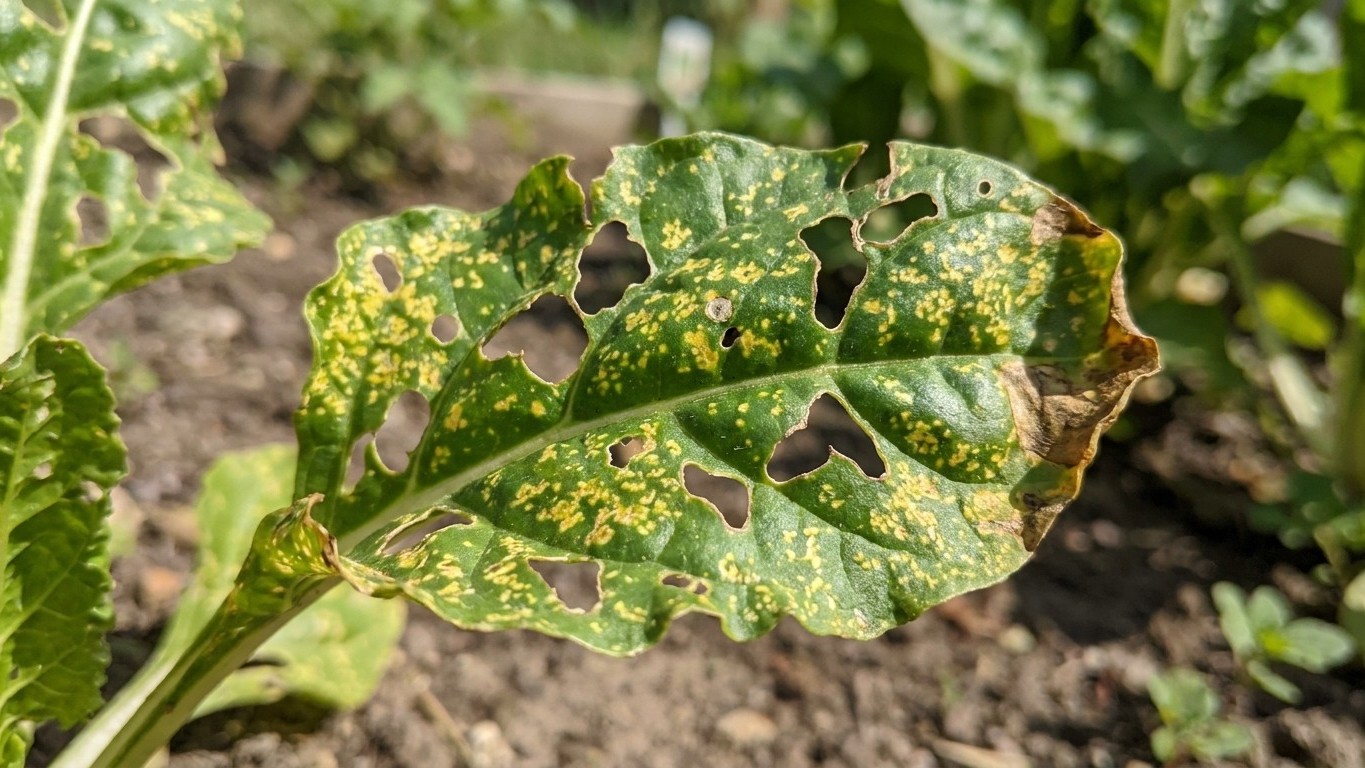
Pests round out the list of likely trouble, and University of Hawaii CTAHR Extension documents several that target squash and related crops in this state: melon fly, whiteflies, aphids, leafminers and bean fly, and Southern green stinkbug and mites. Melon fly in particular attacks the fruit itself, not just foliage, so a squash that looks fine outside can be compromised inside. Checking young fruit for small puncture marks and removing any damaged ones promptly keeps a localized problem from spreading through the rest of the planting. For pest identification and current management guidance specific to this state, the University of Hawaii’s CTAHR extension office, listed at ctahr.hawaii.edu, is the resource built for exactly this kind of question.