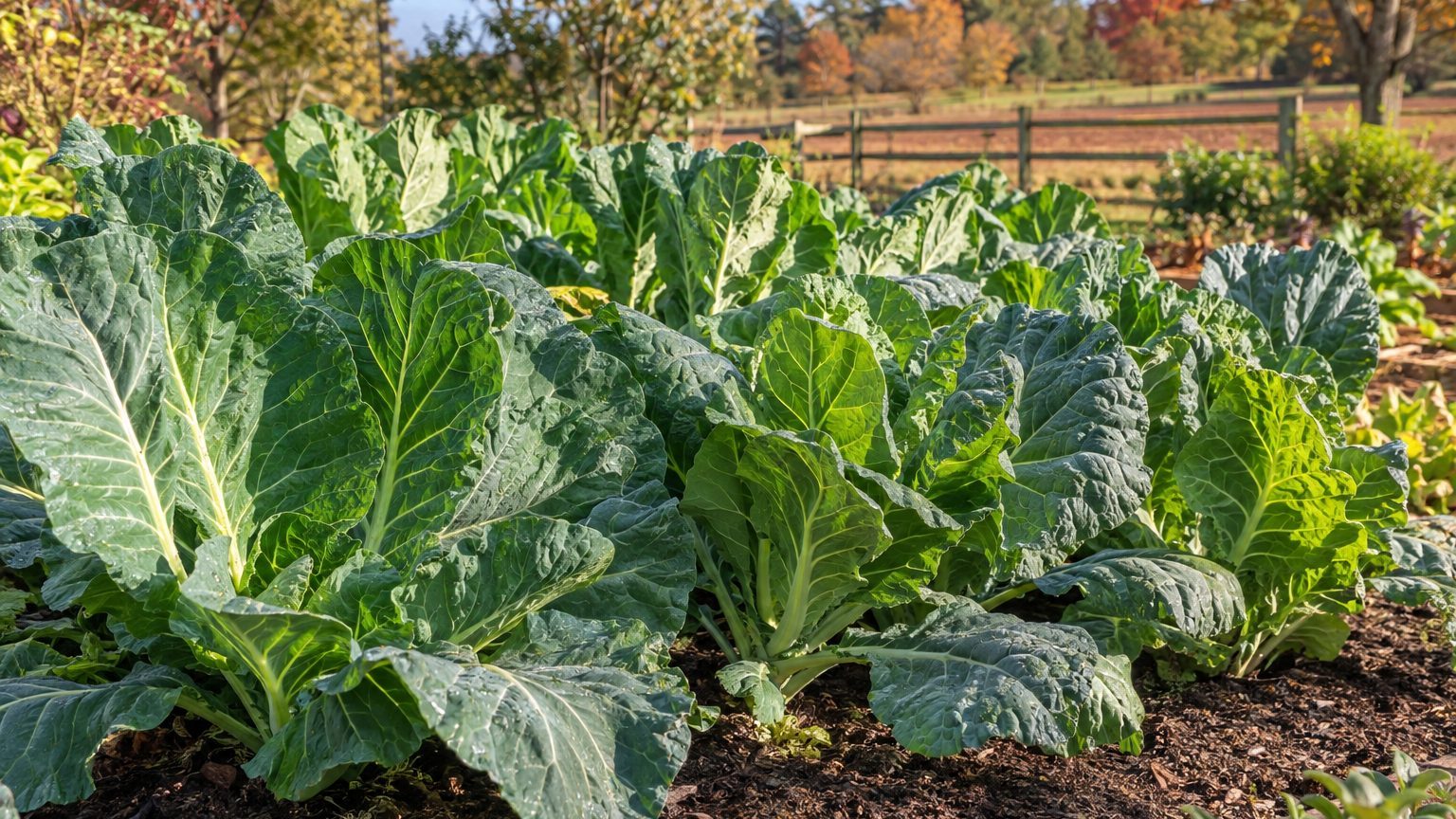

For most Michigan gardens, The Best Collards are a standard, cold-hardy, open-pollinated type, started from transplants and harvested mainly from late summer into fall. Cool nights and October frosts sweeten the leaves instead of ruining them. Slow southern heirlooms can work in the warmer southeast, but they run out of season farther north. Kale and mustard greens fill the gaps around them.
The short answer for Michigan
Choose a standard, cold-hardy collard such as Vates or Champion, set out as transplants, and plan to harvest from midsummer through the first hard freezes. Where the season is short, add a quick hybrid such as Flash and lean on kale and mustard greens. That is the decision by type, and the reasoning starts with the frost calendar.
The last spring frost falls around April 30 in the Detroit area and in early to mid May across most of the Lower Peninsula, according to MSU Extension’s frost-free dates. The first fall frost arrives between October 6 and October 21 in zone 6a. Those dates are averages, which means a frost on either side of them still happens in some years. Between them lies a growing season long enough for a transplanted collard to reach full size. It is not so long that a 90-day dawdler can be started carelessly.
The heat helps here too. Michigan summers are warm enough to grow collards but rarely brutal for long, so the plants keep producing instead of stalling. Fall is the payoff, because leaves that mature in cooling weather turn tender and sweet. Our guide to Growing Collards in Michigan covers the full season, and When to Plant Collards in Michigan gives the sowing windows in detail.
| Type | Examples | Fit for Michigan |
|---|---|---|
| Standard, cold-hardy, open-pollinated | Vates, Champion | Best all-round choice, steady in fall cold |
| Fast hybrid | Flash | Useful in short-season areas or for a late start |
| Large southern heirloom | Georgia Southern | Worth a try in the warmer southeast, with early transplants |
| Companion greens | Kale, mustard, turnip greens | Quicker harvests and insurance if collards lag |
What will not work here

Overwintering fails first. The mean daily minimum of the coldest month at the Detroit reference station is 19.2°F, and that is an average of nights, not the worst one. Cold snaps go well below it, and collards are not a dependable perennial in that kind of winter. A mulched plant may limp through a mild year, but treat collards as a crop that ends with the season, and do not build a plan around a second-year harvest.
Slow varieties fail next. A large heirloom needs a long run of warm weather to fill out, and the frost-free stretch between early May and early to mid October is shorter than the stretch where those types were developed. Set out late, or in the cooler north, they are still small when October frost arrives. Small plants stop growing as days shorten and nights cool, and they never catch up. Gardeners who love the heirloom taste should start transplants early and accept a smaller yield from them.
Late planting follows the same logic. Collards set in the ground in August have little time before light and temperature drop. A transplant that goes in as the season peaks has a chance. A seed sown directly in midsummer may give you a few small leaves and little else.
Tight spacing is the quieter failure. Michigan summers are humid enough that crowded leaves stay wet after rain and dew, which invites leaf spot and gives cabbage worms plenty of cover. Space plants so neighboring leaves do not touch at full size. It feels wasteful when the seedlings are small, but it is far cheaper than losing a planting to mildew and chewing pests.
Finally, planting everything in one early flush backfires. A big batch set out right at the average last frost date can meet a hard freeze while the transplants are still tender. Collards take a light frost well once hardened off, but unhardened seedlings are another matter. Stagger the planting, keep a row cover handy for cold nights in late April and May, and you avoid betting the whole crop on a single week.
What changes across Michigan
Michigan is not one garden. The state spans USDA hardiness zones 4a to 6b, three full zones, so no single recommendation covers everyone. The USDA system is built on one variable, the average annual extreme minimum temperature, and the 2023 map uses 1991-2020 normals. Detroit sits in zone 6a, which is why the frost dates above are a good reference for the southeast and a rough guide elsewhere.
North of the reference city, expect colder winters, later spring frosts and earlier fall ones. The first fall frost window of October 6 to 21 belongs to zone 6a, and colder zones see frost earlier. In the Upper Peninsula and the northern Lower Peninsula, the extra weeks of fall that make heirlooms workable in the southeast are gone. Gardeners there should choose the faster collard types, start transplants indoors a few weeks before setting them out, and use row cover or a low tunnel at both ends of the season. Kale, which handles cold well, is a strong partner crop.
The Great Lakes also bend the map. Shoreline gardens often get a milder fall, because the water holds summer heat and delays frost, while sites a few miles inland can freeze sooner. The same zone number can hide a frost date that differs by a couple of weeks.
To find your own zone, look it up on the USDA Plant Hardiness Zone Map by ZIP code rather than assuming from the nearest big city. Then treat the zone as one input. It describes winter cold, not season length, so two gardens in the same zone can still need different planting dates.
Where to check this for your own county
A county recommendation beats a state one, and what you are reading is the state version. Michigan’s weather differs enough between the Detroit suburbs, the thumb, the west coast and the north woods that an average across all of them will miss your yard in some direction.
Start with MSU Extension, the state’s land-grant extension service, and find your county office. Two things are worth looking for there. The first is a local planting calendar, which will give frost-based dates for your area instead of a statewide spread. The second is any list of vegetable varieties trialled in your county or a similar one, including how collards and other greens performed. A variety that sailed through trials one county over is a better bet than any generic list.
Ask the office staff or the master gardener volunteers a few direct questions. When do local gardeners usually set out collard transplants in spring, and when for fall? Which cabbage worm or flea beetle pressures tend to show up first? Are there any known soil or drainage problems in the area that affect brassicas? Their answers are built on years of local conditions, not on a statistical average.
Keep the frost-date numbers on the page as a starting frame, and let the county calendar overwrite them wherever the two disagree.
Checking this against your own garden
Your own observation outranks every date in this article. Three things are worth watching, and none needs equipment.
- Soil warmth by feel. Push your hand a few inches into the bed. If it feels cold and clammy, or the soil clumps and sticks, wait. Soil that crumbles and feels neutral or slightly cool is ready for hardened-off transplants. A bed that warms early tells you that you have a sheltered or south-facing microclimate and can plant a little ahead of your neighbors.
- The first true leaves. On seedlings you start indoors, the first set after the rounded seed leaves signals that the plant is on its way. Wait until a few true leaves have formed and the stem is sturdy before hardening off. Seedlings that stay leggy and pale are telling you they need more light.
- Frost on the ground at dawn. Walk the yard on a clear, cold morning in spring and fall. Where the white lingers longest is your cold pocket, and where it never forms is your warm spot. Put tender early transplants in the warm spot and let the cold pocket host the cold-hardy fall plantings.
Keep a few notes from one year to the next, dates and results next to each other. After two seasons you will know your yard better than any chart does.
Common questions
Which collard variety is the most reliable for Michigan?
A standard, cold-hardy, open-pollinated type such as Vates or Champion is the safest starting point. They size up in the time Michigan gives them and handle fall cold well.
Can I grow Georgia Southern collards in Michigan?
Yes, in the warmer southeast, if you set out transplants early and give them room. In the north the season is often too short for the plants to reach full size.
Will collards survive a Michigan winter?
Not dependably. The coldest month averages a nightly low of 19.2°F at the Detroit reference station, and real cold snaps run lower. Treat collards as a crop that finishes with the season.
What other greens pair well with collards here?
Kale handles cold even better than collards, and mustard and turnip greens grow quickly. Together they give you harvests before the collards size up and insurance if a planting stalls.