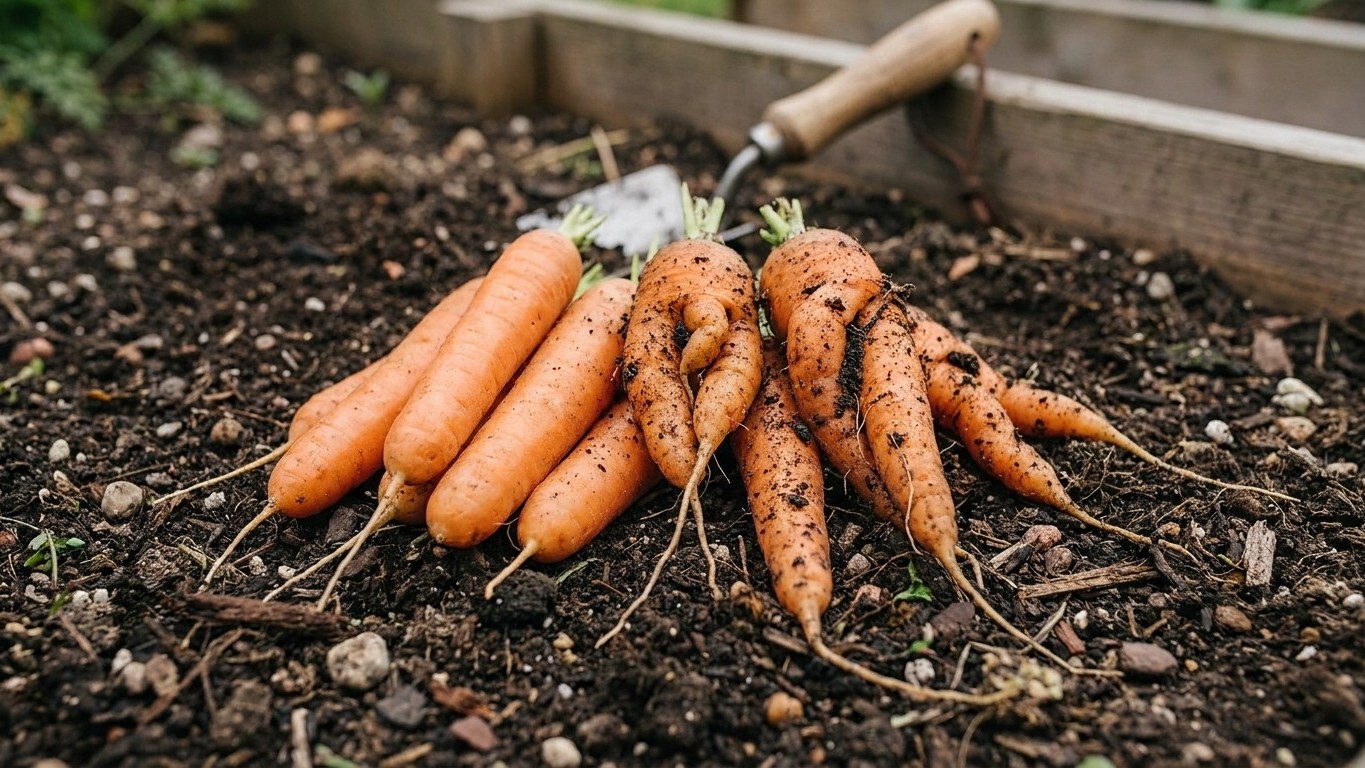

New Mexico’s own extension record does not carry a named, state-specific list of insects that feed on carrot roots or foliage. Rather than guess at species that have not been documented here, this page uses what has actually been verified: how the state’s typical soil behaves, what carrots need to grow straight roots instead of forked or stunted ones, and which county office can identify what is actually chewing on your plants.
Which pests attack carrot in New Mexico
No state-published, species-level pest list for carrot turned up in the verified extension sources gathered for this page. That gap matters more than it might seem. A lot of what gardeners in New Mexico blame on insects, forked roots, stunted growth, cracked shoulders, actually traces back to the ground itself, not to anything with legs.
New Mexico’s representative soil series, the Penistaja series, is an Aridisol: alkaline, with a surface pH around 7.5, and on the sandy side at 69 percent sand, 15 percent clay, and 16 percent silt. Organic matter sits around 1.4 percent, and drainage is good. That texture is actually favorable for carrots, which need deep, loose, well-drained ground to push a straight taproot down. Heavy or rocky soil is what makes a carrot fork, not an insect underground.
A soil test on the actual bed, not a state average, is what decides whether forking is a texture problem or something else entirely. The Penistaja figures describe a mapped surface horizon across the state, not the dirt in any one backyard. A yard built on fill, a raised bed trucked in from elsewhere, or ground near a river bottom can behave nothing like the state series.
Since no verified species list exists for this state’s carrot crop, this page will not name insects it cannot source. What it can do is help sort out damage that looks like a pest problem from damage that is not, and point toward the office that can confirm an actual identification from a sample in hand.
When each one shows up, and what it does first
Without a sourced list of species, there is no verified timeline of which insect appears at which week for this state. What the record does confirm is the carrot’s own growth calendar, and that calendar is the frame problems tend to fall into, whatever is causing them.
Carrots are sown directly into the bed; there is no transplant date to count from. The root develops over roughly 70 to 100 days from seeding, with harvest typically falling 65 to 75 days after planting. That stretch breaks into rough windows worth watching, regardless of the cause behind any damage.
In the first two to three weeks after seeding, the seedling stage, problems tend to show up as gaps in the row or seedlings that vanish overnight, which points toward something at soil level rather than something on the leaves. Once true leaves fill in and the plant builds its canopy, chewed or ragged foliage becomes the visible complaint, and that is the stage where a grower is most likely to actually spot something moving on the plant. As the root bulks up through the middle of the season, damage shifts underground and is invisible until harvest, when a forked, tunneled, or cracked root finally surfaces the problem.
The last window, the one growers forget, is storage. A root that looked clean at harvest can still soften or sprout weeks later, and that has nothing to do with anything that fed on it in the garden. Storage at 33°F with high humidity is what holds a bunched carrot for 10 to 14 days; anything warmer shortens that clock fast. Because no confirmed species list exists for New Mexico, this page cannot say which stage belongs to which insect. It can say that a symptom’s timing, seedling loss, foliage chewing, or a root problem found only at harvest, is the first clue worth describing when you call your extension office.
Telling the damage apart from everything else
Most of what gets reported as a “pest problem” on carrot is not a pest at all. Sorting that out before reaching for anything is the single most useful step available here, especially with no confirmed species list to check against.
A forked or stubby root is almost always the soil talking, not an insect. Heavy, compacted, or rocky ground makes the taproot split or stop, and that happens even in soil that looks fine on the surface. Cracked shoulders on an otherwise straight root usually trace back to uneven watering, a dry stretch followed by a heavy soak, rather than anything feeding on the plant.
| Symptom | Likely cause | What settles it |
|---|---|---|
| Forked or stubby root | Heavy, rocky, or compacted soil | Pull the root and check the bed’s texture; a soil test confirms it |
| Cracked or split shoulders | Irregular watering | Check watering log against recent weather, not the plant itself |
| Wilting foliage in heat | Water stress or shallow roots | Soil moisture check a few inches down before assuming disease or insect damage |
| Chewed leaf margins with visible insects present | Feeding insect | Bring a sample to the county extension office for identification |
| Root soft or sprouting after storage | Storage temperature too warm, or tops left on | Check storage against the 33°F, high-humidity standard |
The rule that actually protects a garden here is simple: never assume a species is responsible without seeing it or having it identified. A grower who treats forking as an insect problem wastes a season and never fixes the actual issue, which is almost always sitting in the soil profile, not on the plant.
What actually works here, and what is a waste of time
With no confirmed pest species for this state’s carrot crop, the honest answer is that the most effective step available is not a treatment at all. It is getting the growing conditions right so that soil-driven problems stop being mistaken for insect damage in the first place.
Deep, loose, well-drained soil rich in organic matter is what a carrot actually needs, per Utah State University Extension guidance. Heavy soil calls for compost worked in and double digging before seeding, not a product applied after the root has already forked. Since New Mexico’s representative soil runs sandy and well-drained already, many gardens here start with an advantage on texture, though rocky pockets, compacted fill, or heavy clay lenses can still undo that in a single bed.
Timing the harvest matters more than most people expect. Pulling roots close to the 65 to 75 day window avoids the extended exposure that comes with leaving carrots in the ground past maturity, and it limits the chance of splitting from late-season watering swings. At harvest, cutting the tops off before storage is the step that actually prevents loss: leaves keep pulling moisture out of the root even after pulling, which is why a bunched carrot with tops on lasts only 10 to 14 days while a trimmed one keeps for months at 33°F.
What is a waste of time here is applying any treatment before an actual insect has been seen and identified. No species list exists to justify one, and treating soil-caused forking or watering-caused cracking as a pest problem changes nothing about the actual cause. This page names no product and no active ingredient, because the office that knows what is legally labeled for use in New Mexico is the county extension office, not a general gardening article.
Where to check this for your own county
A state-level soil series or a general growing guideline tells you what tends to happen across New Mexico. It does not tell you what is living in your own garden bed, three miles or three hundred miles from where a soil survey happened to sample.
The next concrete step, if you find actual insect damage or an insect itself on a carrot plant, is a sample brought or described to your county’s New Mexico State University Cooperative Extension Service office. That office can confirm an identification against current, local records in a way a general article cannot, and it is the correct source for whatever treatment is actually labeled for use in the state, if one is even warranted.
Pest presence varies inside a single state, sometimes inside a single valley. A soil series mapped as representative of New Mexico, the Penistaja series in this case, describes an average across dozens of components, not the bed behind a specific house. The same caution applies to insects: documentation at the state level says almost nothing about what is or is not present in one particular garden.
Before assuming anything is a pest, pull a root, check the soil texture by hand, and review recent watering. If a chewed leaf or a visible insect remains unexplained after that, that sample, not a guess from an article, is what belongs on the desk of the local extension office.
Common questions
Why do my carrots keep coming out forked instead of straight?
Forking is almost always a soil issue, most often heavy, rocky, or compacted ground blocking the taproot. Carrots need deep, loose, well-drained soil; heavy soil needs compost and double digging before seeding, not a treatment after harvest.
How long after seeding should I expect to pull my carrots?
Carrots are sown directly into the bed, with no transplant date involved. Expect roughly 65 to 75 days from seeding to harvest, within a broader 70 to 100 day maturity window depending on conditions.
How should I store carrots so they don’t go soft?
Cut the tops off before storing. Trimmed roots keep for months at 33°F with high humidity, while carrots left with tops on draw moisture out through the leaves and last only 10 to 14 days.
Is New Mexico’s state soil the same as what’s in my garden?
Not necessarily. The Penistaja series describes a representative surface horizon mapped across the state, not any single yard. Fill dirt, river bottoms, and disturbed ground can differ completely, so a soil test on your own bed is what actually settles the question.