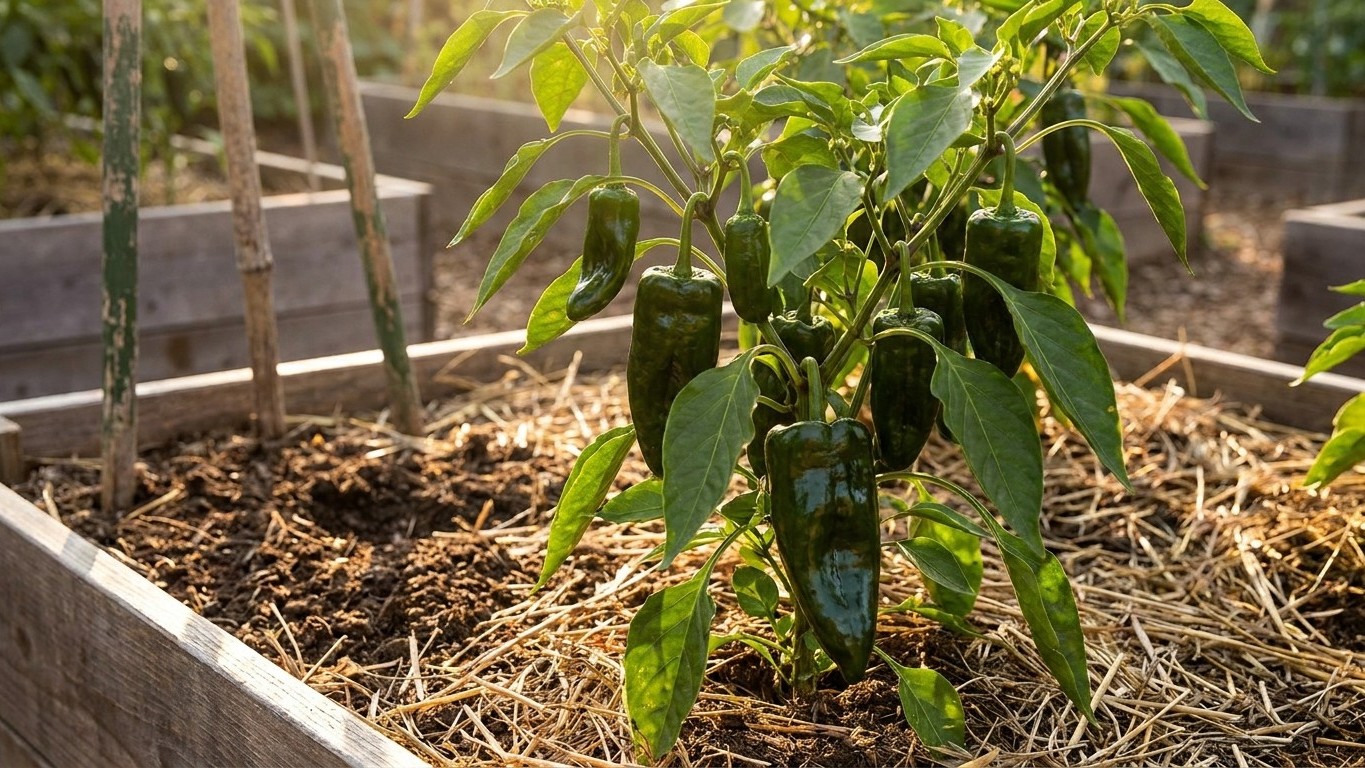

Nevada’s verified pepper data doesn’t name a single insect species as the state’s top threat. What the sourced facts behind this page document instead is heat: pepper fruit set fails once nights drop below 55°F or days climb past 90°F, and the Las Vegas reference station averages 131.3 days a year at or above that mark (NOAA NCEI Climate Normals, 1991-2020). That thermal math decides more of a Nevada pepper crop’s fate than any single bug, and it’s the first thing to rule out before blaming an insect.
Which pests attack pepper in Nevada
Search for “pepper pests Nevada” and you’d expect a rundown of aphids, hornworms, flea beetles. The verified sources behind this page don’t hand over that list. No state entomology bulletin naming specific pepper-feeding insects for Nevada shows up in the sourced facts here, and this page won’t invent one just to fill the gap. What the data does carry, sourced and specific, is the climate physiology that decides whether a pepper plant sets fruit at all, and for most Nevada gardens that turns out to matter more than any one insect.
Pepper fruit set fails at both ends: nights below 55°F stall it, and so do days above 90°F, according to Utah State University Extension. In the low desert valleys around Las Vegas, that upper limit isn’t rare. The reference station there averages 131.3 days a year at or above 90°F (NOAA NCEI Climate Normals, 1991-2020), better than four months of the year sitting past the point where a pepper plant stops making fruit, regardless of what’s on the leaves. A gardener who sees blossoms drop and empty stems in midsummer is often watching heat, not an insect.
That doesn’t mean insects never touch a Nevada pepper patch. It means this page isn’t the place to name them without a source, and a reader chasing a specific culprit (hornworm holes, aphid clusters on new growth, small pinholes across a leaf) needs to take that question to a local extension office rather than a generic list. Pest pressure in Nevada swings hard between the irrigated low desert around Las Vegas and the higher, cooler valleys around Reno and Carson City. A pest common in one is often absent in the other, and a statewide article can’t sort that out.
What’s worth ruling out first is the plant’s own physiology. Pepper transplants need 8 to 10 weeks indoors before they go in the ground, and they shouldn’t go outside until the soil hits 60°F and frost has passed. Skip that step and a plant that looks stunted or “eaten” may simply be a transplant that went out too early, stalled in cold soil rather than losing tissue to any pest.
When each one shows up, and what it does first
Because this page can’t name specific pests for Nevada with a source behind it, the timeline that matters most here is the plant’s own calendar, not an insect’s. Frost sets the start line, and it varies enormously across the state. At the Las Vegas reference station, the last spring freeze runs from January 7 to February 1, but that figure is a documented urban heat-island extreme, not a statewide planting guide. Reno, Carson City, and anywhere at elevation freeze weeks or months later in spring, and again weeks or months earlier in fall. A gardener in a mountain valley planting by a Las Vegas frost date will lose the crop.
Once seedlings go outdoors, only after the soil reaches 60°F, the first weeks are about establishment, not attack. A stalled, purplish, or slow-to-branch plant in that window is more often cold soil or transplant shock than anything feeding on it.
Flowering is the next milestone worth watching closely, because fruit typically needs 35 to 45 days after flowering, not after sowing or transplanting, to size up (Utah State University Extension). If flowers form and then drop without setting fruit, check the thermometer before checking the leaves. That drop is the classic signature of nights under 55°F early in the season, or days over 90°F once summer heat sets in, both documented failure points for pepper fruit set. The cool-side threshold is something every grower has to track for their own yard; it isn’t something this page can infer from where a garden sits on a map.
Chewing damage, when it does appear, tends to show up on foliage before fruit, simply because there’s more leaf surface than fruit for most of the season. But this page doesn’t have a sourced species to attach to that pattern in Nevada, and guessing the insect from a description alone is a common way to misdiagnose. That’s a job for a local extension office with a sample in hand, not a general article.
Telling the damage apart from everything else
Most of what looks like pest damage on a Nevada pepper plant is something else, and the biggest single confusion is heat stress mimicking insect feeding or disease.
| What you see | Likely cause | What separates it |
|---|---|---|
| Flowers drop before setting fruit | Heat or cold stress on fruit set | Check recent nights and days against the 55°F and 90°F thresholds; no chew marks or webbing present |
| Stunted, slow-growing transplant | Cold soil at transplant | Soil was likely under 60°F when the plant went in |
| Soft, pitted fruit after storage | Chilling injury | Fruit was likely held below about 45°F, such as in a standard refrigerator |
| Holes or missing leaf tissue | Possible insect feeding | Needs an in-person or extension identification; not confirmable from a description alone |
That third row deserves its own warning: a standard refrigerator is too cold for peppers. Clemson Cooperative Extension puts optimal storage at 45 to 50°F with 80 to 90 percent humidity, good for two to three weeks under those specific conditions, and that window is a ceiling under near-perfect handling, not a guarantee for a fridge drawer. A home refrigerator usually runs colder than 45°F, and peppers held below that pit and soften, a texture problem gardeners often blame on rot or insects when the cold is what actually did it.
None of this replaces an actual look at the plant. A gardener who suspects insects, after ruling out heat, cold soil, and storage temperature, should bring a sample or a clear photo to their county extension office rather than trying to match a symptom to a name online.
What actually works here, and what is a waste of time
On a season bracketed by both heat and cold like Nevada’s, timing beats almost any treatment. The single highest-value move is holding transplants until soil reaches 60°F and frost risk has passed for that specific location, not a statewide date. That one decision prevents the stalled, stressed plants that end up more vulnerable to just about everything, insects included, than a healthy plant growing on schedule.
Physical barriers, like floating row cover put on at transplant and removed once flowering starts (covered plants can’t be pollinated), work well for a lot of early-season leaf feeders and cost nothing in chemical exposure. Timing decides whether this helps or hurts: cover too late and whatever’s already established stays trapped against the plant; leave it on too long and flowers never get pollinated.
Consistent watering does more here than most people expect. A plant under drought stress during a run of 90°F-plus days is already fighting to hold its flowers. Add insect feeding on top of that and it has nothing left in reserve. Steady soil moisture doesn’t stop insects, but it keeps the plant able to tolerate ordinary feeding pressure without losing the whole fruit set.
What’s a waste of time: guessing at a treatment for an unidentified pest. Without a confirmed culprit, a gardener risks treating heat stress, chilling injury, or cold-soil shock with a product meant for a different problem entirely, spending money and effort on something that was never an insect to begin with. Any product decision, and what’s actually registered for use on peppers in Nevada, belongs to the local extension office, not a general gardening article.
Where to check this for your own county
Nevada’s growing conditions swing from the low, hot valleys near Las Vegas to the high, cool ones near Reno and Carson City, and pest presence swings right along with them. A species that’s a routine problem in one part of the state may be rare or absent a few hundred miles away, and the sourced facts behind this page don’t break that down county by county.
The reliable next step is a call to the county office of University of Nevada, Reno Extension, with a sample or clear photo of the damage in hand if possible. That office can confirm what’s actually present locally, something a general state-level article can’t do, and can point to what’s registered for use in Nevada specifically.
Before that call, it helps to have already answered the questions this page can address: was the soil at least 60°F at transplant, has the plant seen recent nights under 55°F or days over 90°F, and was any harvested fruit stored above 45°F rather than in a standard refrigerator. Ruling those out first makes for a faster, more useful conversation with an extension agent than starting from a symptom alone.
Common questions
Does Nevada publish a list of insects that eat pepper plants?
Not in the sourced facts behind this page. The verified data here covers pepper physiology and storage, not an itemized state pest list, so any specific insect identification should go through a county extension office.
What temperature stops a pepper plant from setting fruit?
Fruit set fails at both ends: nights below 55°F and days above 90°F, per Utah State University Extension. The Las Vegas reference station averages 131.3 days a year at or above 90°F, though summer night lows aren’t tracked on this page and need to be watched locally.
Can I store harvested peppers in the refrigerator?
A standard fridge runs colder than the 45 to 50°F that Clemson Cooperative Extension recommends, and peppers held below about 45°F pit and soften from chilling injury. The 45 to 50°F range holds fruit for two to three weeks at best, not indefinitely.
When should I transplant peppers outdoors in Nevada?
Once soil reaches 60°F and frost risk has passed for that specific location, after 8 to 10 weeks growing indoors. Frost timing varies by hundreds of miles and thousands of feet of elevation across Nevada, so a county extension office is the source for a local date, not a single statewide window.