
Nevada gardeners face a narrow pepper window: fruit set breaks down once nights drop below 55 F or days climb past 90 F, and the low desert logs 131.3 days a year at or above that 90 F mark. Add a spring frost calendar that shifts by weeks depending on elevation, and the real task becomes matching your county’s actual conditions to a plant that needs a steady 55-to-90 F band to hold its blossoms.
The short answer

Start with the heat load, because it’s the number this site actually tracks: the reference station used for Nevada climate normals logs 131.3 days a year at or above 90 F. That’s not an average summer temperature, it’s a count, and it matters because pepper flowers abort when daytime highs push past that 90 F ceiling for any stretch. A plant can look healthy, full of foliage, plenty of blossoms, and still drop nearly every flower it sets during a July or August heat spell. If your garden sits in a low, hot valley where triple-digit stretches are common, you should expect a chunk of your growing season to produce foliage and flowers but not much fruit, no matter how well you water or fertilize.
The other end of the failure range is nighttime cold, and it’s just as damaging as the heat, even though it gets less attention. Peppers stop setting fruit when nighttime lows fall below 55 F, according to Utah State University Extension. Pollen becomes unviable, blossoms drop, and the plant sits in a holding pattern until nights warm back up. This threshold catches gardeners at elevation especially hard, because a summer night in the high desert or in a mountain valley can slide into the low 50s even when the daytime reading is comfortably warm.
Here’s where this guide has to be honest about its limits: this site carries the heat-side number (days at or above 90 F) for Nevada territories, but it does not carry summer night minima. That figure isn’t published here, and no latitude-based guess should stand in for it. A garden in Las Vegas, one in Reno, and one in a high valley in Elko County can have wildly different nighttime lows even on the same calendar date, and elevation swings that difference by a lot more than a few miles of distance would suggest. If you garden anywhere outside the low desert basins, the practical move is to track your own overnight lows with a simple min-max thermometer through June and July, rather than assume your nights match anyone else’s.
Put those two thresholds together and the picture for pepper growing in Nevada gets clearer: the crop wants a corridor between 55 F nights and 90 F days, and that corridor opens and closes at different times depending on where in the state you’re standing. Low desert gardeners fight the top end for a big chunk of summer. Higher-elevation and northern gardeners fight the bottom end deep into what should be peak season. Either way, the fix isn’t a different plant so much as timing your transplant and your expectations to when that window is actually open where you live.
When to start seed here
Working out a seed-starting date for peppers means counting backward from two moving targets: your last frost and your soil temperature, then subtracting the indoor growing time the plant needs before it can handle the outdoors. Utah State University Extension puts that indoor stretch at 8 to 10 weeks, and says the transplant date itself should wait for two things to both be true: the frost danger has passed, and the soil has warmed to 60 F. Skipping either check, even if the calendar says it’s “late enough,” tends to stall young pepper plants rather than help them.
- Find your local last spring frost date first, not a statewide figure. Nevada’s frost timing swings enormously by elevation and location. The Las Vegas area, sitting in a strong urban-heat-island desert basin, sees very early spring frost-free conditions, but that figure is a documented extreme and doesn’t translate to the rest of the state. Reno, Carson City, and anywhere at elevation see frost linger far later into spring and return far earlier in fall. Rather than borrow a low-desert date, call your county extension office or check their published local frost data for your specific area.
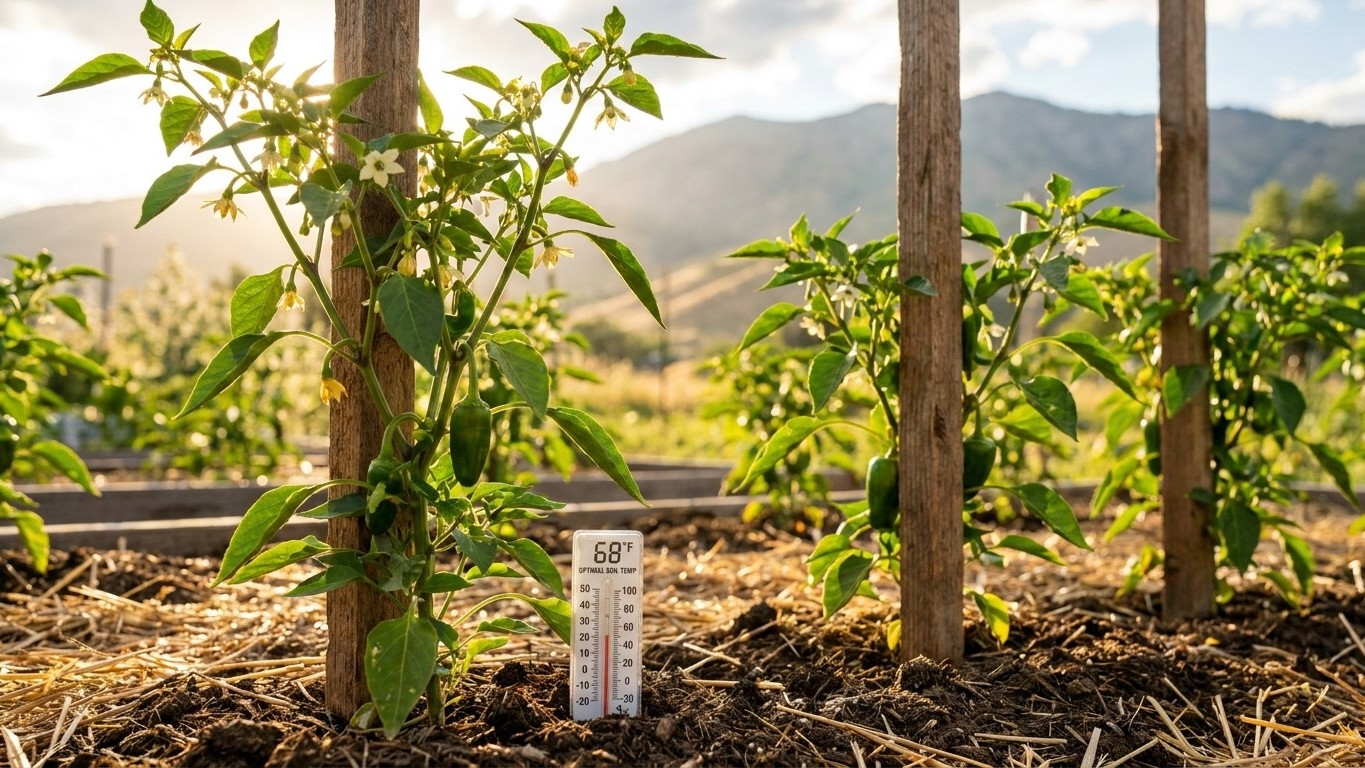
- Wait for 60 F soil, not just an air-temperature guess. Air can feel warm on a sunny afternoon while the soil a few inches down is still cold from months of winter. A basic soil thermometer, checked in the morning before the sun warms the surface, gives a more honest read than eyeballing the weather.
- Confirm both conditions are met on the same date. Your transplant date is whichever comes later: the day frost risk has passed, or the day soil hits 60 F. In many Nevada locations, especially at elevation, the soil lags behind the frost date, so soil temperature ends up being the deciding factor.
- Subtract 8 to 10 weeks for indoor start. Once you have a transplant date, count back 8 to 10 weeks to get your seed-starting date. If your local transplant date lands, for example, in a given week of a chosen month, your seed-starting window falls 8 to 10 weeks earlier, adjusted for your own calendar rather than a generic one.
- Re-check the arithmetic against your elevation. Because Nevada frost dates vary so widely by site, the same seed-starting formula produces very different calendar dates for a low desert valley versus a mountain-adjacent town. Redo the count for your own county rather than borrowing a neighbor’s schedule from a different part of the state.
This backward-counting method is more reliable than any single fixed date, because it forces you to check actual soil conditions and your actual local frost history instead of a statewide assumption that may not apply to your yard at all.
What goes wrong here
- Blossom drop during a heat spell. When daytime highs push into the 90s for several days running, pepper flowers abort before they can set fruit. This is the direct consequence of the 131.3 days a year the low desert spends at or above that threshold. The remedy is timing, not intervention: use afternoon shade cloth over plants during the hottest stretches, keep soil moisture even so the plant isn’t stressed on two fronts at once, and accept that fruit set will pause during the worst of summer and resume once temperatures ease.
- Blossom drop from a cool night. The flip side hits when nighttime lows slide under 55 F, which can happen even in a warm-feeling week at higher elevation. Flowers form but don’t hold. There’s no fix for the cold itself beyond season timing, but tracking your own overnight lows with a simple thermometer tells you when the plant has entered (or left) that failure zone, so you’re not troubleshooting a healthy plant that’s simply waiting out a cold stretch.
- Sunscald on exposed fruit. Nevada’s strong, direct sun can scorch pepper fruit that loses its leaf cover, whether from pruning, wind damage, or a plant that simply didn’t fill out enough foliage. Scalded spots turn pale, then leathery, and the fruit often doesn’t recover. Leaving foliage intact rather than aggressively pruning, and using light shade cloth during the most intense sun exposure, keeps fruit covered without blocking the light the plant needs to keep producing.
- Blossom-end rot. Dark, sunken patches on the bottom of the fruit point to inconsistent watering disrupting calcium uptake, not a soil calcium deficiency in most cases. Peppers that dry out between waterings and then get soaked are especially prone to this. Even, regular watering on a set schedule, rather than a flood-and-drought pattern, is the most reliable fix.
Common questions
Can I plant peppers earlier if I use a greenhouse or cold frame?
A cold frame or greenhouse can protect young plants from frost, but it doesn’t change the two hard limits on fruit set: nights under 55 F and days over 90 F. Season-extension tools help you start plants earlier and finish later, but the actual fruit-producing window still depends on your local temperature swings, which you’ll need to track yourself.
Why do my pepper plants have flowers but no fruit?
This is the classic sign of one of the two failure thresholds documented by Utah State University Extension: nights below 55 F or days above 90 F. Check which one applies to your recent weather. If daytime highs have been near or above 90 F, that’s almost certainly the cause in low desert areas. If nights have been unusually cool for the season, especially at elevation, that’s the more likely culprit.
Does elevation matter more than I’d expect for pepper growing in Nevada?
Yes, significantly. Nevada’s frost dates and likely night temperatures shift a great deal between low desert basins and higher-elevation towns, more than the distance between them would suggest. This site doesn’t carry summer night minima by location, so rather than guess based on how far north or south a spot sits, track your own overnight lows through the growing season.
How many weeks before transplant should I start pepper seeds indoors?
Utah State University Extension recommends 8 to 10 weeks indoors before transplanting, with the transplant date itself set for after frost risk has passed and once soil has reached 60 F. Count backward from your own local transplant date, since that date varies widely across Nevada depending on elevation and location.