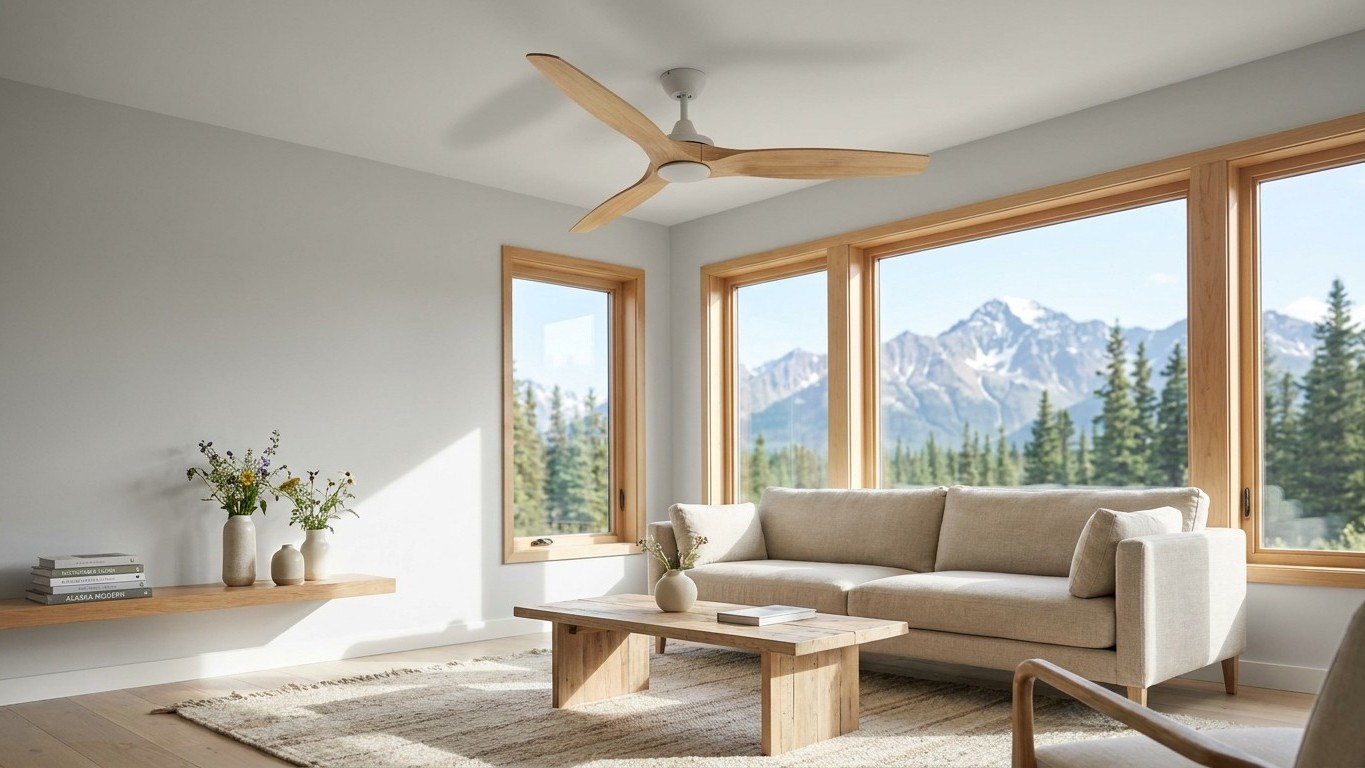

Tennessee homes cool almost entirely with air conditioning: 93% of homes run some form of AC equipment, 86% of them on a central system, and 16% on an individual unit such as a ductless mini-split, a window or wall unit, or a portable. Another 81% keep ceiling fans running alongside whatever cools the air.
What homes in Tennessee actually cool with
Start with the numbers as the U.S. Energy Information Administration’s Residential Energy Consumption Survey publishes them for Tennessee: 93% of homes use air-conditioning equipment of some kind, 86% use a central air-conditioning unit, and 16% use an individual unit, whether that’s a mini-split, a window box, or a portable machine wheeled from room to room. Ceiling fans show up in 81% of homes, which tells you cooling here rarely relies on one method alone.
Add 86% and 16% together and you get 102%, which is higher than the 93% of homes that report having AC at all. That’s not a typo and it’s not sloppy survey math. It means a meaningful number of Tennessee households run both a central system for the whole house and a supplemental window or mini-split unit for one room, maybe a bonus room over the garage, a converted attic, or a sunroom the main ductwork never reached well. Central cooling here is the backbone, and individual units patch the gaps rather than replacing the system entirely.
That pattern is worth noticing because it doesn’t hold everywhere. In some states the gap between “has air conditioning” and “has central air” is the whole story: Connecticut reports air conditioning in 90% of homes but a central unit in only 34%, meaning most of that state cools room by room. Alabama, closer to Tennessee’s profile, runs 94% with AC and 81% central. Tennessee’s 86% central share puts it firmly in the group of states where ducted, whole-house cooling is the default and window units are the exception rather than the rule.
Why the split matters for a homeowner
What’s installed in a state follows what was affordable and standard when the housing stock went up, not what any expert would recommend today. A high central share usually means a lot of the housing stock already had ductwork in place, often from a furnace installed for winter heat, and adding central air onto an existing duct system costs less than starting from nothing. That history is baked into these percentages. It says nothing about which system runs best in any single house, only about what got built.
How much cooling the year actually asks for
NOAA’s climate normals put Nashville, the reference station for the state, at a mean of 40.0 days a year reaching 90°F or higher. That’s a count of days at one weather station over the 1991-2020 normal period, not an average summer temperature and not a figure that applies uniformly across every corner of the state. It’s the best available proxy for how hard cooling equipment has to work through a typical year here.
Forty days above 90°F is a real, sustained heat load, not an occasional spike. That’s roughly a day in nine across the warm season where outdoor temperatures push well past the point where a house needs mechanical help to stay livable. A furnace-and-window-unit combination struggles to keep pace with that kind of stretch; a whole-house system built for continuous run time handles it more evenly.
This is where the equipment mix and the heat load line up rather than working against each other. Some states run mostly on window units despite brutal summers, usually because the housing stock is older or built without ducts. Tennessee isn’t one of them. An 86% central-air share paired with 40 days a year above 90°F reads as a state where the cooling installed roughly matches the cooling the climate demands: enough sustained heat to justify a whole-house system, and enough homes with the ductwork already there to make installing one straightforward. That alignment isn’t guaranteed everywhere, which is exactly why this pair of figures needs checking together rather than assumed.
Wet heat or dry heat, and what it changes
Summer rainfall at the same reference station averages about 12.3 inches across June, July, and August, out of 50.5 inches for the full year. June brings 4.36 inches, July 4.16, and August, the driest of the three, still gets 3.79 inches. That’s inches of precipitation, measured and nothing else. It says nothing about relative humidity or dew point on any given afternoon, and it shouldn’t be read as either.
What it does tell you is that Tennessee summers are wet ones by national standards. Better than four inches falling in each of three straight months means the ground rarely dries out for long, and that has a direct mechanical consequence for anything running air conditioning. A cooling system does two jobs at once: it drops the temperature of the air, and it pulls moisture out of it as that air passes over a cold coil. Removing moisture takes time. The compressor has to run long enough for the coil to stay cold and for condensation to keep forming and draining away.
In a dry climate, a unit’s job is almost entirely about temperature, and a system that cools a room quickly and shuts off is doing its job well. In a wet one, a unit that cools fast and stops never runs long enough to finish the dehumidifying part of its work, which is how a room ends up at the right number on the thermostat and still feeling damp. Tennessee’s summer rainfall pattern puts it in the second category, and that changes what’s worth prioritizing.
- Run time over speed. A system sized to run in longer, steady cycles removes more moisture than one that blasts cold air and shuts off quickly.
- Fan setting matters. Running the fan on “auto” rather than “on” lets moisture that’s collected on the coil drain away between cycles instead of blowing back into the room.
- Resist oversizing. A bigger unit isn’t a safety margin here. It’s the direct cause of the cold-and-clammy result a wet-summer state is most prone to.
Sizing a room unit, from the published chart
For the 16% of Tennessee homes running an individual unit, whether as the main cooling source or as backup for a central system, ENERGY STAR publishes a starting chart matching room area to cooling capacity. It applies to window, wall, and portable units, not to whole-house systems.
| Area to be cooled (sq ft) | Capacity needed (BTU per hour) |
|---|---|
| 100 up to 150 | 5,000 |
| 150 up to 250 | 6,000 |
| 250 up to 300 | 7,000 |
| 300 up to 350 | 8,000 |
| 350 up to 400 | 9,000 |
| 400 up to 450 | 10,000 |
| 450 up to 550 | 12,000 |
| 550 up to 700 | 14,000 |
| 700 up to 1,000 | 18,000 |
| 1,000 up to 1,200 | 21,000 |
| 1,200 up to 1,400 | 23,000 |
That chart, from ENERGY STAR’s room air conditioner guidance, is a starting point, not a load calculation. It doesn’t account for ceiling height, sun exposure, or how many people typically use the room, and ENERGY STAR doesn’t publish adjustments for those factors, so none should be invented here. It also doesn’t apply to Tennessee’s more common case, the 86% of homes on central air, which need a proper load calculation from a contractor rather than a square-footage lookup.
The chart matters most for the room that a central system doesn’t reach well, the converted attic or the sunroom mentioned earlier. Given the state’s wet summer pattern, the temptation to round up to the next capacity tier for “extra cooling power” works against the room, not for it. An oversized unit here cools that bonus room fast, shuts off, and leaves it cold and damp rather than genuinely comfortable.
What actually needs looking after here
With central air running in 86% of Tennessee homes, ductwork is the piece of maintenance most households actually have to think about, alongside the filter that every system, central or not, depends on.
ENERGY STAR is direct about the filter: “Inspect, clean, or change air filters once a month in your central air conditioner, furnace, and/or heat pump.” That’s monthly, covering all three types of equipment together, not a seasonal chore and not something to stretch to “every few months” because the air looks clean. A dirty filter restricts airflow, and ENERGY STAR notes that “airflow problems can reduce your system’s efficiency by up to 15 percent,” a loss that happens even when every other part of the system is working correctly.
For the majority of Tennessee homes running ductwork, there’s a second, larger source of waste. ENERGY STAR states that “in a typical house, however, about 20 to 30 percent of the air that moves through the duct system is lost due to leaks, holes, and poorly connected ducts.” That’s air cooled at real cost and lost before it ever reaches a vent, often into an attic or crawlspace. A room that never quite gets cool enough isn’t always a sign of a failing system; sometimes it’s a sign the air never arrived. This caveat doesn’t apply to a household running only window units, since there’s no duct system to leak from.
- Check or change the filter monthly, for every central AC unit, furnace, and heat pump in the house, not just once a season.
- Have ductwork inspected for leaks and poor connections, particularly in older homes built before energy codes tightened.
- Confirm the fan is set to auto rather than continuous run, especially useful given how wet Tennessee summers run.
- For any window, wall, or mini-split unit, size it against the ENERGY STAR chart rather than rounding up.
Details specific to each piece of equipment, from central systems to mini-splits to window units, are covered in the individual guides on this site rather than repeated here.