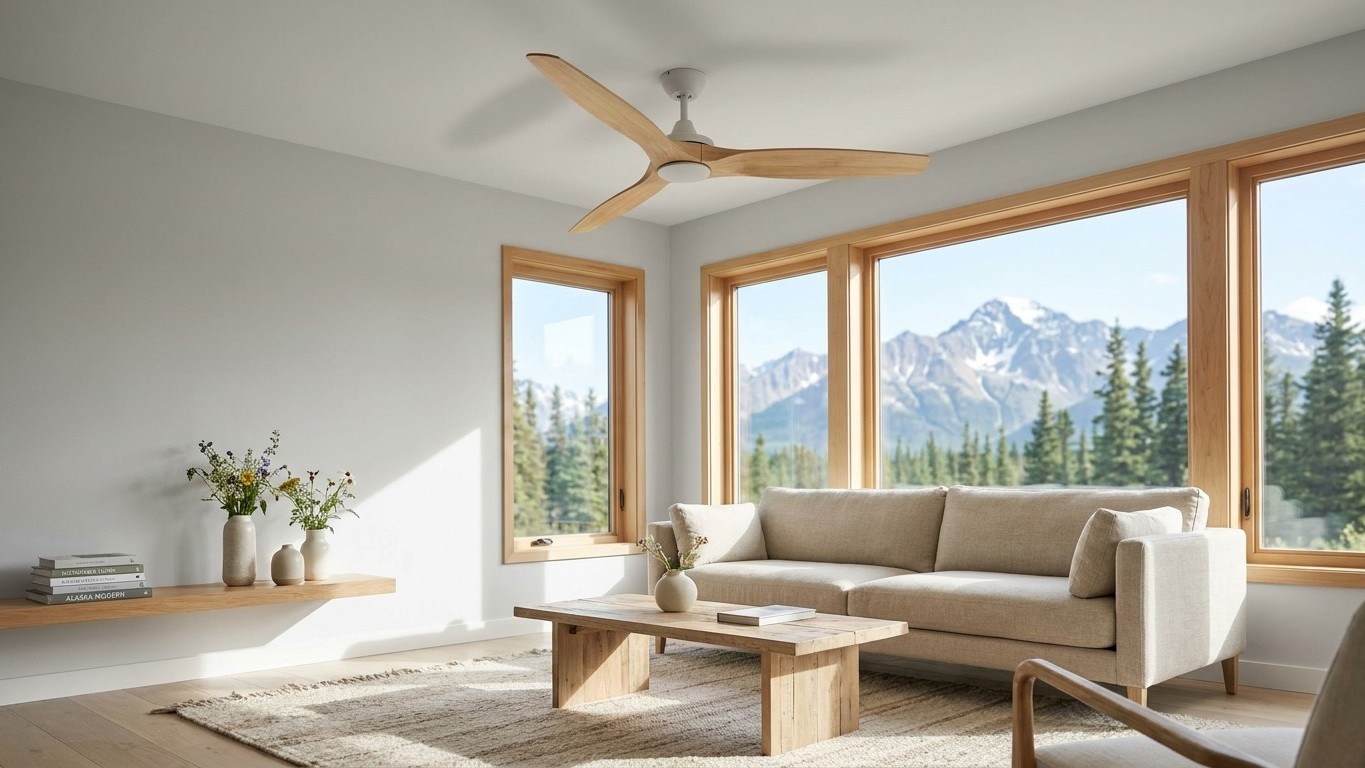

Pennsylvania homes cool with a mix that leans central but leaves plenty of room for something else. Of the state’s homes, 91% use some kind of air-conditioning equipment, 54% run a central air-conditioning unit, and 43% rely on an individual unit, a ductless mini-split, a window or wall unit, or a portable. Ceiling fans back up 69% of homes as well.
What homes in Pennsylvania actually cool with
Those three numbers from the U.S. Energy Information Administration’s Residential Energy Consumption Survey (RECS 2020) tell a more layered story than a single “yes, we have AC” figure ever could. Ninety-one percent of Pennsylvania homes report having air-conditioning equipment of some kind. Fifty-four percent are on a central system, the kind tied to ductwork and typically installed with the furnace or as part of a heat pump setup. Forty-three percent are running an individual unit instead.
That gap between “has air conditioning” and “has a central unit” is worth sitting with. It is not a rounding error or a data quirk, it’s the share of the state cooling itself room by room rather than house by house. Forty-three percent of Pennsylvania homes cool with an individual unit, and that share is the whole story in some other states in a way it isn’t quite here. Connecticut, for comparison, has air conditioning in 90% of homes but central in only 34%, meaning more than half its air-conditioned homes are on individual equipment. Alabama runs 94% and 81%, meaning almost everyone with AC there has it built into the house. Pennsylvania sits closer to the middle: a genuine split between whole-house and room-by-room cooling.
That split follows the age and layout of the housing stock more than it follows preference. A lot of Pennsylvania’s older row houses, especially around Philadelphia and Pittsburgh, were built with steam or hot-water heat and no ductwork at all. Retrofitting a full central system into a house like that means finding somewhere to run ducts that was never designed for them, which is expensive and sometimes structurally awkward. A window unit or a ductless mini-split sidesteps that problem entirely, which is likely a big part of why 43% of the state still cools that way even as central systems dominate newer construction.
None of this is a verdict on which setup is better. A share like this describes what got installed, which followed what was affordable and practical when the house went up, not what a homeowner today would necessarily choose from scratch. A 1920s twin house on window units and a 2005 colonial with central air can both be doing exactly what makes sense for their structure.
How much cooling the year actually asks for
The equipment mix only tells half the story. The other half is how hard the summer actually pushes that equipment, and Pennsylvania’s answer comes from a specific place: the Philadelphia reference station, tracked by NOAA’s Climate Normals for 1991-2020. That station recorded a mean of 24 days a year reaching 90°F or higher. That is a count of days, not an average temperature and not a statewide figure, it is what one benchmark location experiences in a typical year, and it stands in as the heat-load reference for the state’s cooling needs.
Twenty-four days above 90°F is a moderate load, not a punishing one. It’s enough heat to make air conditioning genuinely useful for a real stretch of the summer, but nowhere near the three- and four-month stretches of 90-plus days that states across the Gulf Coast or the Desert Southwest post every year.
Here’s where it gets interesting, because equipment mix and heat load don’t automatically line up. A state can run hot and still lean heavily on individual units, or run mild and still be almost entirely central, because what’s installed follows construction era and existing ductwork, not the thermometer. Pennsylvania is a case where the two roughly track each other: a moderate heat load paired with a genuinely mixed, roughly even equipment split rather than an extreme tilt toward either central or individual systems. Neither figure is doing the driving alone. The moderate 24-day heat load doesn’t force every home into a heavy-duty central system, and it doesn’t push everyone toward a single window unit either, it leaves room for both, and the state’s varied housing stock, old row houses next to newer suburban builds, fills that room with a genuine split rather than a landslide.
Wet heat or dry heat, and what it changes
Summer here is a wet one. The Philadelphia-area reference station logs about 12.7 inches of rain across June, July and August, out of 44.1 inches for the full year, with June the driest of the three summer months at 4.04 inches, July at 4.38, and August at 4.29. That figure measures precipitation, not humidity and not dew point, but a summer that wet does mean the air an air conditioner is working with carries real moisture, month after month, rather than arriving dry.
That distinction matters because an air conditioner does two separate jobs at once: it lowers the air’s temperature, and it pulls moisture out of it. Removing moisture takes run time, not just cold coils. A unit that’s sized to hit its target temperature fast and then shut off never runs long enough to do the drying part of its job properly. That’s the mechanism behind a house that feels cold and clammy at the same time, the temperature dropped, but the moisture never left. In a genuinely dry summer, a system’s job is almost entirely about temperature, and that failure mode barely shows up. In a wet one like Pennsylvania’s, it’s a real risk, especially with a unit that’s oversized for the space.
Given that, three things matter more here than they would in a drier climate:
- Let the system run longer cycles rather than sizing for the fastest possible temperature drop, since run time is what actually removes moisture from a humid summer.
- Keep the fan setting on “auto” rather than “on” during humid stretches, so moisture that collects on the coil during a cycle can drain away instead of getting blown back into the room between cycles.
- Size deliberately rather than generously. An oversized unit in a wet summer is the setup most likely to leave a room cold and damp instead of comfortable.
Sizing a room unit, from the published chart
For anyone cooling with a window unit, a portable, or a single mini-split head, ENERGY STAR publishes a straightforward starting chart matching room area to cooling capacity in BTU per hour:
| Area to be cooled (square feet) | Capacity needed (BTU/hour) |
|---|---|
| 100 up to 150 | 5,000 |
| 150 up to 250 | 6,000 |
| 250 up to 300 | 7,000 |
| 300 up to 350 | 8,000 |
| 350 up to 400 | 9,000 |
| 400 up to 450 | 10,000 |
| 450 up to 550 | 12,000 |
| 550 up to 700 | 14,000 |
| 700 up to 1,000 | 18,000 |
| 1,000 up to 1,200 | 21,000 |
| 1,200 up to 1,400 | 23,000 |
This table is a starting point published by ENERGY STAR for a single room unit, and nothing more. It does not size a central system, which needs a proper load calculation that accounts for the whole house, its insulation, its window area and its orientation, not just square footage. In a state where 54% of homes already run central air, most Pennsylvania households will never need this chart at all. But for the 43% cooling room by room, often in exactly the older, un-ducted housing described earlier, this table is the practical reference.
The one instinct worth resisting is rounding up “to be safe.” An oversized room unit is a fault, not a margin: it chills the air fast, shuts off, and never runs long enough to pull the humidity described above out of the room. Matching the chart’s actual bracket, rather than the next size up, does more for comfort in a wet Pennsylvania summer than extra capacity ever will.
What actually needs looking after here
Maintenance in Pennsylvania should follow the equipment mix rather than a generic checklist, because a house on window units and a house on central air are looking after genuinely different things.
Across both, one piece of advice applies without exception. ENERGY STAR states plainly: “Inspect, clean, or change air filters once a month in your central air conditioner, furnace, and/or heat pump.” That covers all three pieces of equipment together, which matters for anyone assuming filter care is a furnace-only chore. Skipping it isn’t a minor lapse either, ENERGY STAR notes that “Airflow problems can reduce your system’s efficiency by up to 15 percent,” which means a perfectly functional system can still be quietly underperforming all summer over something as simple as a clogged filter.
For the 54% of Pennsylvania homes on central air specifically, ducts are the added concern, and it’s a bigger one than most homeowners expect. ENERGY STAR reports that “In a typical house, however, about 20 to 30 percent of the air that moves through the duct system is lost due to leaks, holes, and poorly connected ducts.” That’s air conditioned at real cost, leaking into an attic or crawlspace before it ever reaches a vent. This caveat has no bearing on the 43% of homes running window units, wall units, or portables, since there are no ducts to leak in the first place, but for a state split close to evenly, it’s worth flagging early rather than as an afterthought.
A practical seasonal pass for Pennsylvania looks like this:
- Check or change filters monthly through the cooling season, on whichever equipment is doing the work, central, mini-split, or window unit.
- Before the first 90-degree stretch, have ductwork inspected for the leaks ENERGY STAR describes, if the home runs central air.
- Confirm the fan setting stays on auto rather than continuous run, to keep moisture draining rather than recirculating during Pennsylvania’s genuinely wet summer months.
- Re-check sizing on any room unit against the ENERGY STAR chart before replacing it, rather than defaulting to a bigger number.
For equipment-specific detail, from mini-split care to central system troubleshooting, the heating and cooling guides elsewhere on this site cover each setup in depth rather than repeating it here.