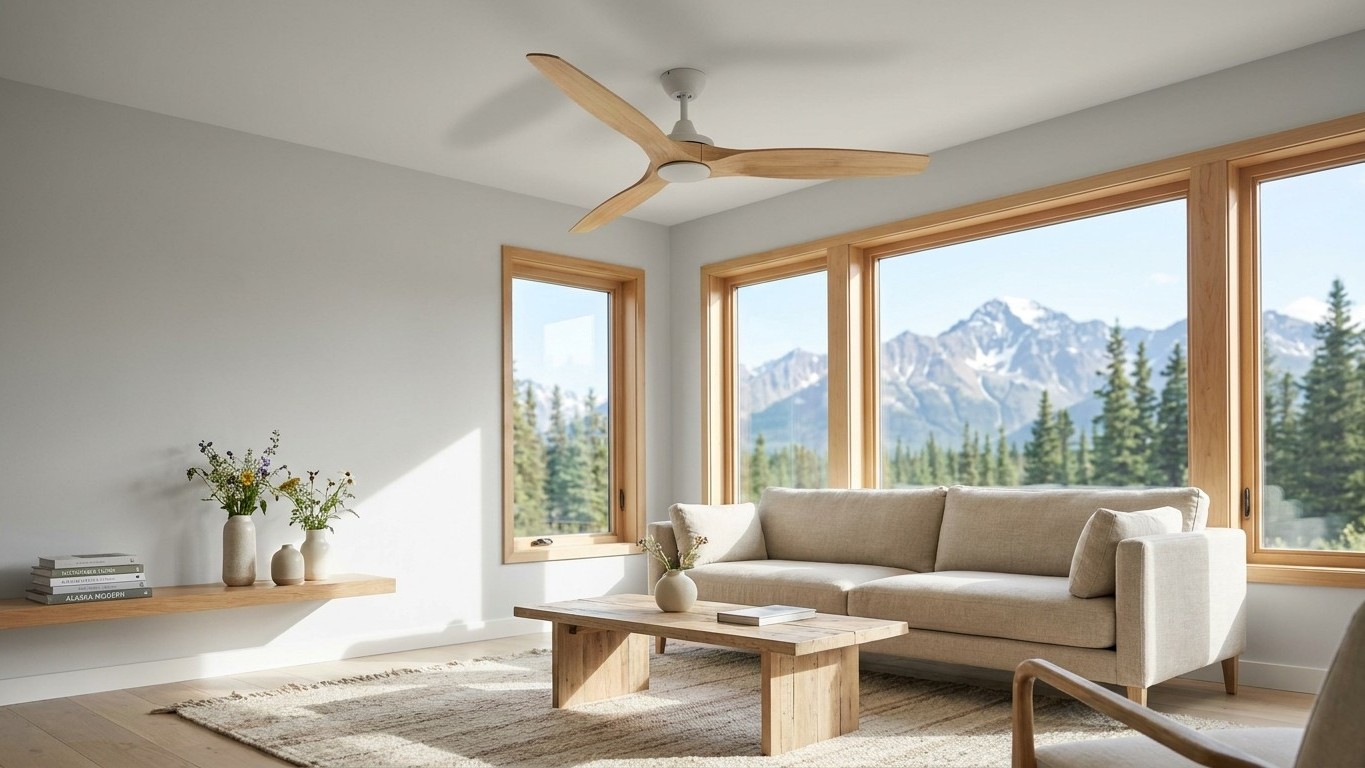

North Carolina homes cool mostly with central air. Eighty-four percent of homes run a central air-conditioning system, and 91% use some form of air-conditioning equipment overall. The remaining slice, about 7 percentage points, runs on individual equipment: window units, wall units, mini-splits, or portables. Ceiling fans back up 83% of homes. Whether that mix fits a given house depends on how it was built and how hard the summer actually pushes.
What homes in North Carolina actually cool with
Ninety-one percent of North Carolina homes use air-conditioning equipment of some kind, according to the U.S. Energy Information Administration’s Residential Energy Consumption Survey. Eighty-four percent of those homes cool with a central air-conditioning system, the kind tied to ductwork running through the attic or crawlspace. That leaves a gap of roughly 11 percent, the survey’s own figure for homes running on individual equipment: a ductless mini-split mounted on a wall, a window unit propped in a sash, a wall sleeve, or a portable unit rolled from room to room.
That gap matters more in some states than others. In Connecticut, 90% of homes have air conditioning but only 34% run it through a central system, meaning most Connecticut homes lean on individual units room by room. Alabama runs the opposite pattern: 94% with air conditioning and 81% central, a housing stock built with ducts already in the walls. North Carolina’s 84% central share sits closer to Alabama’s pattern than Connecticut’s, which tells you something about when and how the state’s homes went up: mostly during decades when central systems were already standard equipment, not retrofitted room by room into older housing.
Eighty-three percent of homes also use ceiling fans, which don’t lower a thermostat reading but do let a room feel a few degrees cooler by moving air across skin, often letting a central system’s setpoint sit a notch higher without anyone noticing the difference.
None of this is a recommendation. A survey share describes what got installed, which follows what a builder or homeowner could afford and what the house already had in the walls when the equipment went in, not what any individual home in Raleigh or Asheville actually needs today.
How much cooling the year actually asks for
The reference station at Charlotte reaches 90 degrees Fahrenheit or higher on an average of 35.0 days a year, based on NOAA’s 1991-2020 climate normals. That’s a count of days at one weather station, not a statewide average and not a summer-long temperature reading. It’s the figure that tracks heat stress, cooling demand, and how hard a compressor works over a season, and it says nothing at all about how hot a single afternoon feels in Wilmington or Boone.
Thirty-five days above 90 is a real, sustained load, not a handful of freak afternoons. It’s the kind of number that shows up as a July electric bill rather than a single spike.
Here the equipment mix and the heat load actually line up. A state with 35 days a year above 90 and 84% of homes on central air looks like a housing stock that was built assuming real summer heat and installed ductwork to match, unlike a state where a milder climate still carries a heavy individual-unit share because the housing predates central air altogether. North Carolina is a state where the numbers agree with each other: real heat, and equipment built for it. That’s worth knowing before assuming a window unit will do fine in a house that was designed, decades ago, around a central system moving air through every room.
Wet heat or dry heat, and what it changes
Summer here runs wet. The Charlotte-area reference station logs about 12.1 inches of rain across June, July, and August, out of 43.6 inches for the full year, meaning close to a third of the year’s precipitation lands in the three hottest months. June brings 3.99 inches, July drops slightly to 3.74 (the driest of the three), and August climbs back to 4.35. That’s a measure of rainfall, not humidity, and not a dew point reading. Whether a given afternoon feels sticky is a separate question this figure doesn’t answer, but a wet summer generally travels with damp air, and an air conditioner has to deal with both.
An air conditioner does two jobs at once: it drops the temperature, and it pulls moisture out of the air as it runs. Removing that moisture takes run time, not just cooling capacity. In a dry-summer state, nearly all of a unit’s work is temperature, and a slightly oversized system barely matters. In a wet one, a meaningful share of the job is dehumidification, and an oversized unit chills the air fast, satisfies the thermostat, and shuts off before it’s pulled the moisture out, leaving a room that reads cold on the thermostat and feels clammy to a person standing in it.
In a state with a wet summer like this one, that changes what to prioritize:
- Favor a system sized to run longer at a lower capacity rather than one that blasts cold air and cycles off quickly.
- Use the “auto” fan setting rather than “on” continuous, so the blower stops between cycles and lets condensation drain instead of re-evaporating into the room.
- Resist rounding up on unit size “to be safe.” Here, oversizing is the more common mistake, not undersizing.
Sizing a room unit, from the published chart
ENERGY STAR publishes a starting-point chart for sizing a room air conditioner by square footage:
| Area to be cooled (sq ft) | Capacity needed (BTU/hr) |
|---|---|
| 100 up to 150 | 5,000 |
| 150 up to 250 | 6,000 |
| 250 up to 300 | 7,000 |
| 300 up to 350 | 8,000 |
| 350 up to 400 | 9,000 |
| 400 up to 450 | 10,000 |
| 450 up to 550 | 12,000 |
| 550 up to 700 | 14,000 |
| 700 up to 1,000 | 18,000 |
| 1,000 up to 1,200 | 21,000 |
| 1,200 up to 1,400 | 23,000 |
This chart sizes a single room served by a window, wall, or portable unit. It does not size a central system, which is sized through a load calculation that accounts for insulation, window area, orientation, and duct layout, not square footage alone. In a state where 84% of homes run central air, that distinction matters: this table is the wrong tool for most North Carolina houses, and the right one for the smaller share, about 11%, running individual equipment in a bonus room, a garage conversion, or an add-on that never got tied into the main ductwork.
Buying the next size up “to be safe” is the mistake to avoid here: an oversized room unit cools the air fast, clicks off, and never runs long enough to pull humidity out of a room, in a state where summer humidity is already part of the job.
What actually needs looking after here
With most North Carolina homes running central systems, the upkeep that matters most is the upkeep central systems need. ENERGY STAR is direct about the first one: “Inspect, clean, or change air filters once a month in your central air conditioner, furnace, and/or heat pump.” That’s once a month, covering all three pieces of equipment together, not a furnace-only chore, and not something to stretch to “every few months” because the air still feels cool.
Skipping that filter has a measurable cost. ENERGY STAR also states that “airflow problems can reduce your system’s efficiency by up to 15 percent,” which means a system that’s otherwise in perfect working order can still run harder and cost more to operate simply because air isn’t moving through it the way it should.
For the central systems that dominate this state’s housing stock, there’s a second issue worth checking beyond the filter: the ducts themselves. ENERGY STAR notes that “in a typical house, however, about 20 to 30 percent of the air that moves through the duct system is lost due to leaks, holes, and poorly connected ducts.” That’s air conditioned at real cost and then lost into an attic or crawlspace before it ever reaches a vent, which is why a room that never quite cools down isn’t always a broken compressor. This caveat applies to ducted central systems only; it has no bearing on the smaller share of North Carolina homes running window units or mini-splits, since there are no ducts to leak.
A simple seasonal pass covers most of it:
- Check or change the filter monthly during cooling season, for central systems and heat pumps alike.
- Have ductwork inspected for leaks and loose connections before peak summer heat sets in.
- For the smaller share running mini-splits or window units, clean or replace the unit’s own filter on the same monthly schedule.
For equipment-specific detail, the site’s guides on central air conditioning, ductless mini-splits, and window units go further into installation and troubleshooting for each option.