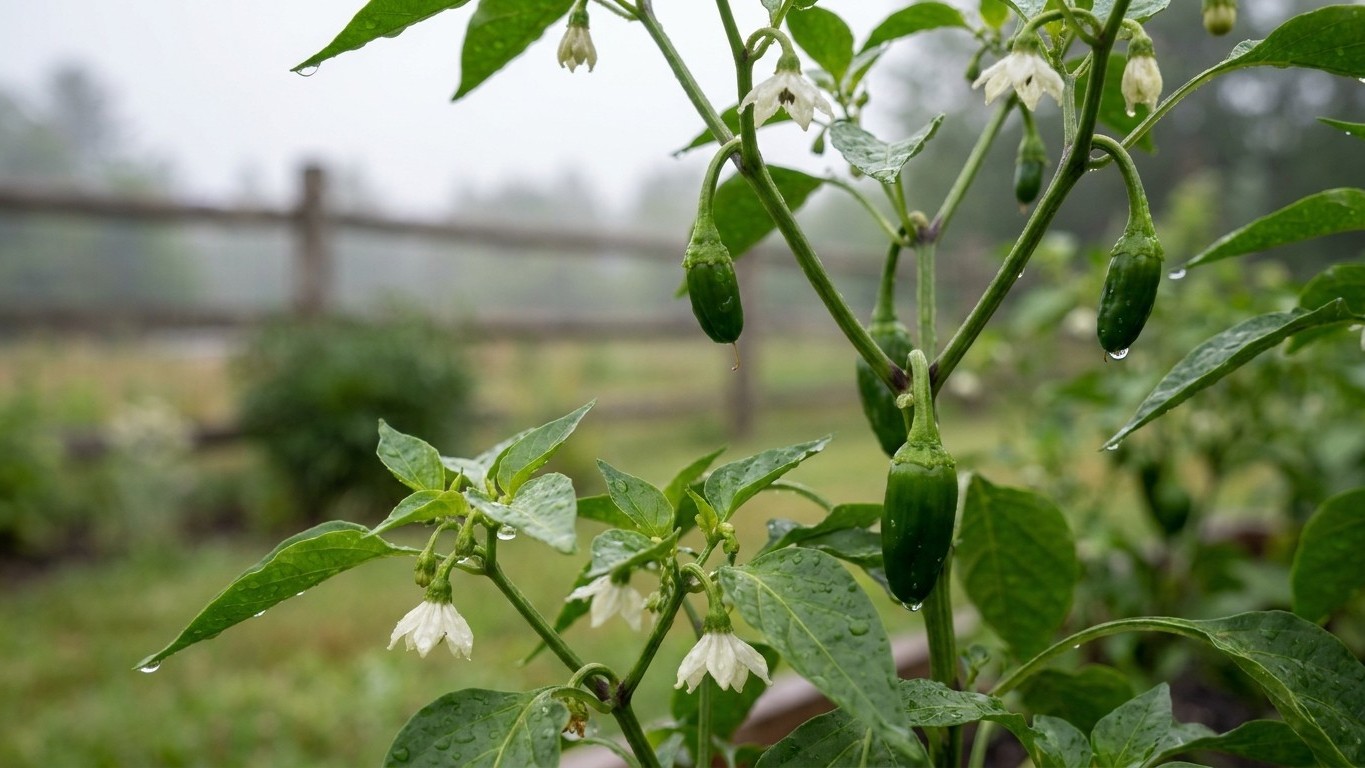

Straight answer: the verified data behind this page doesn’t point to one insect chewing through pepper plants in New Hampshire. It points to temperature. The state’s short growing season and its swings between cool nights and hot days do more damage to a pepper crop than any single bug, and the numbers below show exactly where the failure points sit.
Which pests attack pepper in New Hampshire

Here’s the honest part: the sourced facts available for this page don’t carry a list of insect species documented by an entomology service for pepper in New Hampshire specifically. No aphid count, no hornworm record, no weevil advisory tied to this state shows up in the verified sources this article draws from. Rather than fill that gap with pest names pulled from national gardening lore, this page sticks to what’s actually measured here: temperature thresholds that determine whether a pepper plant sets fruit at all.
That matters more than it sounds. According to Utah State University Extension, pepper fruit set fails at both ends of the thermometer: nights below 55°F and days above 90°F. New Hampshire’s Manchester reference station averages 10.9 days a year at or above 90°F, per NOAA NCEI Climate Normals for 1991-2020. That’s not a heat wave state. But it’s enough hot days, stacked in the wrong week, to shut down blossom-to-fruit conversion on a plant that was doing fine the week before.
Why heat and cold outrank a bug list here
An insect problem is local: one garden gets flea beetles, the next one over doesn’t. A temperature threshold is not local in the same way. If nights in a given week drop below 55°F, or a stretch of days pushes past 90°F, every unprotected pepper plant in that yard feels it, regardless of whether pests are present. That’s the mechanism worth tracking first, because it explains blossom drop that gets blamed on insects when no insect is involved.
This site does not carry summer overnight low temperatures for New Hampshire, only the count of days reaching 90°F or hotter. So the cool-end threshold, the 55°F night, is something a gardener has to watch directly in their own yard rather than assume from the calendar or from how far north they live. A thermometer left outside overnight tells you more than a guess based on the month.
When each one shows up, and what it does first
New Hampshire’s last spring frost, measured at the Manchester reference station, runs April 16 to April 27. Suburban and rural gardens typically see frost end later than that, sometimes by one to two weeks, and later still at elevation, so treat that window as a starting point rather than a guarantee for a specific yard. Transplants need 8 to 10 weeks of indoor growing before that date and should not go into the ground until soil temperature reaches 60°F, after the frost risk has passed, per Utah State University Extension.
The first sign of trouble in a young transplant usually isn’t a chewed leaf. It’s a stall: a plant that sits at the same height for two weeks after going into cold soil, doesn’t branch, and produces yellowing lower leaves. That’s cold-soil stress, not pest damage, and it shows up before any insect activity would.
Once the plant is established and flowering, the next thing to watch is blossom drop during any stretch of days at or above 90°F, or during a run of nights below 55°F. Flowers form, then fall off without setting fruit, over a 35 to 45 day window measured from flowering, not from the sowing or transplant date. A grower who counts from transplanting instead of from first bloom will misjudge when the plant should start producing.
By late summer, attention shifts to harvest and storage. Fruit ready 70 to 85 days after transplanting, per Clemson Cooperative Extension, and the first sign that storage conditions are wrong isn’t rot, it’s pitting: small sunken, water-soaked spots on the skin that show up within days of cold storage.
Telling the damage apart from everything else
A wilted, spotted, or stalled pepper plant gets blamed on insects more often than it deserves. The single most useful habit is checking the thermometer and the calendar before checking for bugs. The table below sorts common complaints by what actually causes them.
| What you see | Likely cause | What tells them apart |
|---|---|---|
| Flowers fall off, no fruit forms | Nights below 55°F or days above 90°F | Check overnight and daytime temps for the prior week before assuming a pest or disease |
| Transplant stalls, doesn’t grow | Soil below 60°F at planting | Soil thermometer reading; recovers once soil warms, unlike pest damage |
| Sunken, soft, water-soaked skin spots after harvest | Chilling injury from storage below 45°F | Appears within days of cold storage; not present on freshly picked fruit |
| Yellowing lower leaves early in the season | Cold-soil stress or transplant shock | Limited to lower/older leaves, plant otherwise upright and not chewed |
What none of this table can do is confirm or rule out a specific insect in a specific garden. If leaves show chew marks, holes, or visible insects alongside these symptoms, that’s a different question, and the reliable path is a photo and a call to the local extension office, not a guess made from a website. Diagnosing pest identity from a description alone is exactly the kind of guesswork that leads to the wrong fix.
What actually works here, and what is a waste of time
Timing is the tool that costs nothing and works every season. Waiting until soil hits 60°F and frost risk has passed before transplanting avoids the stall described above entirely, and starting seed 8 to 10 weeks ahead means the plant is ready to go in the ground the moment conditions allow, rather than sitting in a pot too long or going out too early.
Physical protection, a floating row cover or similar barrier placed over young transplants during a late cold snap or ahead of an early heat spike, does real work on a short New Hampshire season because it buys the plant a few extra degrees at both ends without chemical input. It’s cheap, it’s reusable, and it directly addresses the 55°F and 90°F thresholds that actually limit fruit set here.
What’s a waste of time: applying any pest treatment without a confirmed pest, since the verified data for this page doesn’t document a specific insect problem for New Hampshire pepper in the first place. This site doesn’t name products, active ingredients, or dosages, because that’s a question for the state’s Cooperative Extension, which knows what’s currently labeled for use in New Hampshire. Equally wasteful: storing harvested peppers in a home refrigerator. A domestic fridge runs colder than the 45°F to 50°F range Clemson Cooperative Extension recommends, and below about 45°F peppers pit and soften from chilling injury, the opposite of what refrigeration is supposed to prevent. Two to three weeks of storage life at 80- to 90-percent humidity is a maximum under those optimal conditions, not a promise at fridge temperature.
Where to check this for your own county
Every figure in this article comes from a state-level or national reference station, not from a survey of individual New Hampshire gardens. What’s documented for the state doesn’t describe what’s happening in one specific yard, and that gap matters more for pests than for temperature, since insect pressure can vary sharply from one county, or one garden, to the next even when the thermometer reads the same.
For anything specific to a property, an actual insect on an actual leaf, a soil test, a question about what’s currently labeled for use on vegetables in the state, the right move is a call or a photo sent to the University of New Hampshire’s Cooperative Extension county office. County educators handle exactly this kind of question and can identify what a state-wide climate normal cannot.
The next useful step for anyone with a pepper plant already in the ground is simple: check the overnight low for the coming week against 55°F, check the forecast against 90°F, and if a symptom shows up that doesn’t match a temperature explanation, take a photo and send it to the county extension office before applying anything.
Common questions
Can pepper plants be transplanted before the last frost date in New Hampshire?
Not safely, according to Utah State University Extension, which recommends transplanting only after frost has passed and soil temperature has reached 60°F. The Manchester reference station’s last spring frost runs April 16 to April 27, though most yards see it later.
Why did all my pepper flowers fall off without producing fruit?
Fruit set fails at both temperature extremes: nights below 55°F or days above 90°F, per Utah State University Extension. Check the prior week’s temperatures before assuming a pest or disease is responsible.
Is it safe to store harvested peppers in the refrigerator?
No. Clemson Cooperative Extension recommends 45°F to 50°F for storage, which is warmer than most home refrigerators run. Below roughly 45°F, peppers develop pitting and soften from chilling injury.
Does New Hampshire have a documented list of insect pests specific to pepper?
Not in the sourced data behind this page. For a confirmed pest identification and current guidance, contact the University of New Hampshire Cooperative Extension office for your county.