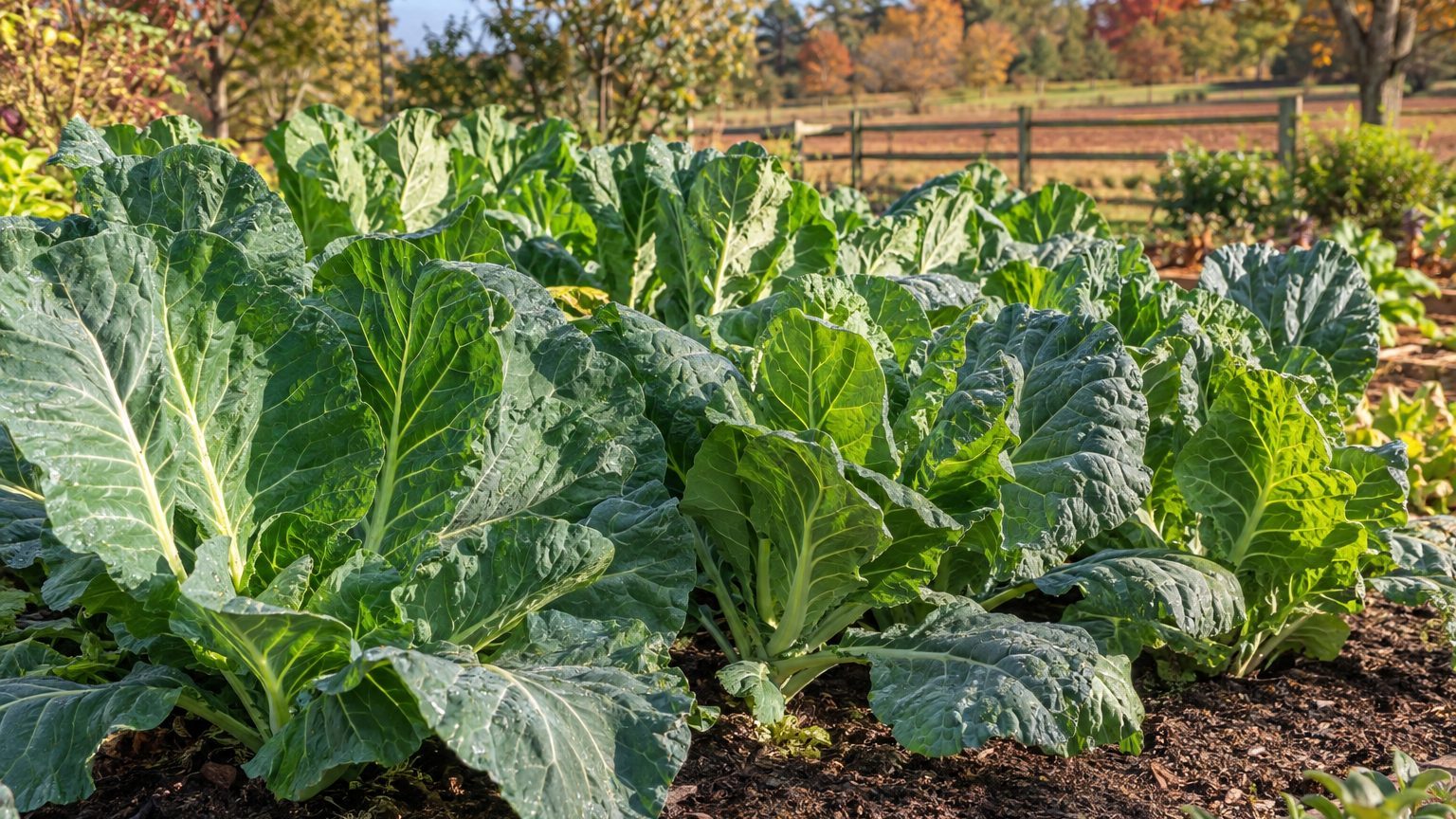

Arizona’s real challenge with collards isn’t cold, it’s the opposite: months of heat so intense that cool-season greens simply shut down. The best varieties here are the fast, bolt-resistant types (Vates, Champion, Georgia types) grown in the cooler half of the year, with timing shifted by elevation rather than by any frost date.
The short answer for Arizona
In the low desert around Phoenix, frost is nearly irrelevant to how you plant collards. NOAA’s 1991-2020 normals list the frost-free season there at 365 days, and the station record shows a freeze happened in only six of the past thirty springs. That number changes everything about how a variety decision should be made. You’re not choosing collards to survive a freeze. You’re choosing collards to survive summer, when the mean daily minimum even in the coldest month sits at a mild 45.3°F, and daytime heat for half the year makes cool-season greens bitter, tough, or quick to bolt.
That reframes the “best variety” question by type rather than by name. Compact, quick-to-mature types (Vates and similar heading types) fit Arizona’s low desert because they can be sown, grown, and harvested inside the cool window between fall and spring without lingering into the heat that ruins flavor and triggers early flowering. Georgia-type collards, historically grown across the humid South, also perform reasonably in Arizona’s dry heat because their tolerance for warm conditions was bred into them long before backyard gardeners in the Southwest started planting them. Champion and similar slow-bolting selections give a little more cushion if a warm spell arrives early, which happens often enough in low-desert springs to matter.
Above the low desert, in the transition and high-country zones, the calculus shifts back toward something more familiar to gardeners in cooler states: a genuine frost season, a shorter but milder summer, and more flexibility to grow slower, larger-leaved heirloom types without racing the thermometer. But that’s a different climate inside the same state line, and it needs different timing, not just a different variety.
What doesn’t change is the core logic: in Arizona, the decision is driven by heat tolerance and speed to harvest, not by frost hardiness. Any variety you pick should be evaluated on how well it holds quality once the days start warming in spring, because that’s the failure point here, not a freeze in January.
What will not work here

Slow-maturing heirloom collards, the kind that take a long stretch of mild weather to size up, run into trouble in the low desert because that mild window is short and closes fast once spring heat arrives. A variety bred for a gradual Southeastern spring, with weeks of 60s and 70s before summer sets in, doesn’t get that grace period in Phoenix or Yuma. The jump from cool to hot can happen in a matter of weeks, and a slow variety caught mid-cycle will bolt, turn bitter, or simply stall before it produces a full harvest.
Weekly watering is another quiet killer. Collards are shallow-rooted, moisture-hungry plants, and the extended summer heat that defines Arizona’s low desert (the real limiting factor here, as opposed to any frost date) will dry out that root zone far faster than a once-a-week schedule can replace. This isn’t unique to collards, but it’s worse for leafy greens than for deeper-rooted crops, because there’s no reserve to draw on between waterings. A collard patch left on a weekly irrigation habit through even a mild Arizona summer will show stress, then bitterness, then bolting, in that order.
Tight spacing is often recommended in humid-climate growing guides as a way to shade the soil and suppress weeds, but that logic works against you in a dry state. Arizona’s problem isn’t fungal pressure from humidity, it’s evaporation and heat stress, and crowding plants close together increases competition for the limited soil moisture available rather than protecting it. Wider spacing, with room for air movement and for a reader to get water directly to each root zone, does more good here than it would in a humid Southern garden where the same spacing advice originated.
Finally, treating the near-absence of frost as an invitation to Plant Collards year-round doesn’t work either. The mild winter that lets you skip frost worries is exactly why summer becomes the enemy: without a true dormant cold season, growers who ignore the heat window end up fighting bolting and off flavors for a large part of the year instead of working with the two comfortable growing seasons the climate actually offers.
What changes across Arizona
The USDA Plant Hardiness Zone Map places Arizona across a startling range, from 4b to 10b. That’s not a small spread. It covers everything from high-elevation country that freezes hard and regularly, to the low desert basin where a freeze is a rare event rather than a seasonal certainty. A single planting recommendation for “Arizona” as a whole doesn’t hold up against a gap that wide, and this page can’t collapse it into one answer.
The reference figures used above, the 45.3°F coldest-month minimum and the 365-day frost-free season, describe the Phoenix area specifically. Move up in elevation toward Flagstaff and the high country, and both of those numbers change substantially: real winter cold arrives, the frost-free window shrinks, and the growing calendar starts to resemble states with a conventional spring-to-fall vegetable season rather than Arizona’s low-desert fall-to-spring pattern.
That has a direct effect on which collard varieties make sense. A high-country garden has more room to grow a slower, larger-leaved heirloom variety, because the mild growing season lasts long enough without the low desert’s abrupt swing into extreme heat. A low-desert garden needs the opposite: something quick and heat-tolerant that can finish before summer punishes it.
Because this state spans that much variation in one hardiness system, there’s no single sowing date or single “best” variety that applies from the Colorado River valley to the Mogollon Rim. A reader working out where their own property falls on that 4b-to-10b range should check the current USDA Plant Hardiness Zone Map directly rather than assume the low-desert figures in this article describe their own yard.
Where to check this for your own county
Everything above describes Arizona at the state level, built from one reference station and one hardiness map. That’s useful for understanding the pattern, but it’s not a substitute for what your own county extension office already knows about your specific microclimate, soil, and local growing history.
The University of Arizona Cooperative Extension, at extension.arizona.edu, is the right next stop. Once there, look for two specific things rather than browsing generally. First, the local vegetable planting calendar for your county, which will translate the state-level heat and frost pattern discussed here into actual sowing windows for your elevation and soil type. Second, look for any variety trial results or master gardener recommendations specific to collards and other brassica greens in your county, since extension offices frequently publish which specific cultivars performed well in local trial plots, information no state-level overview can offer with the same precision.
This matters because a county-level recommendation will always outrank a state-level one. This page works from statewide normals and a single reference station in Phoenix. Your county’s extension office works from soil surveys, local trial gardens, and years of questions from gardeners growing in your exact conditions. If the guidance you find there differs from anything written above, follow the county source. That’s not a hedge, it’s how extension systems are designed to work: state pages establish the pattern, county offices refine it to the ground you’re actually gardening on.
Reach out to your local office directly if the published calendar doesn’t cover collards specifically. Extension agents field these questions regularly and can usually point to the closest analogous crop’s timing if collards aren’t separately listed.
Checking this against your own garden
No planting calendar, state or county, replaces what your own garden tells you directly, and Arizona’s wide swing between low desert and high country makes that especially true here.
Start with the soil itself. Before sowing, press a bare hand into the bed a few inches down. If it feels warm and slightly dry rather than cold and damp, your soil has crossed into the range where collard seed germinates reliably. This matters more in Arizona’s varied elevations than any calendar date, because a high-country bed and a low-desert bed can hit that same soil feel weeks apart even in the same season.
Next, watch for the first flush of male flowers on any collard plants already growing from a previous planting. That flowering is the plant’s response to lengthening days and rising heat, and it’s the clearest early warning that bolting is coming. Seeing it early in the season is a strong signal that this particular bed, with its exposure and soil, runs warmer than average and that your next planting window should shift earlier to beat the heat.
Finally, track how quickly seedlings put out their first true leaves, the second set that appears after the initial rounded seed leaves. A quick transition to true leaves suggests warm, active soil and a garden primed for fast growth. A sluggish one, especially at the same time of year a neighbor’s bed is already thriving, points to a cooler microclimate, maybe from shade, elevation, or exposure, that argues for a slightly later cool-season planting or a different variety altogether.
Together, these three observations (soil feel, the first male flowers, and the speed of true-leaf emergence) tell you more about your specific patch of ground than any statewide figure can, and they’re the details worth writing down season after season.