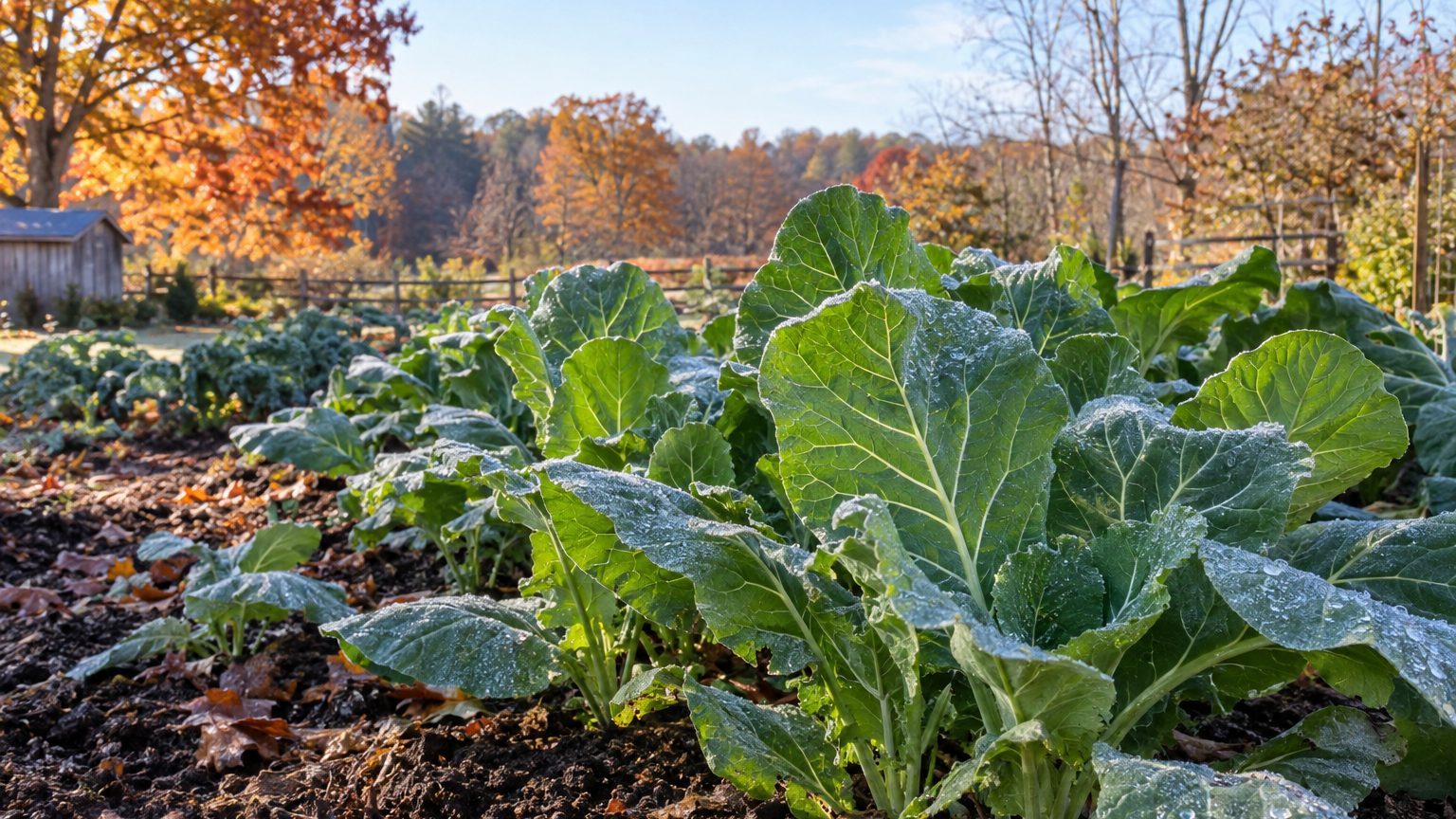

North Florida gardeners get two real windows: set out spring transplants once the last frost risk clears between February 16 and March 7, or sow the more forgiving fall crop before the first freeze arrives between November 26 and December 13. Central and south Florida don’t follow this calendar at all, their frost-free winters flip the whole schedule.
The short answer for Florida
Those frost dates come from NOAA’s 1991-2020 Climate Normals at the Jacksonville airport station (USW00013889), and they describe a 30-to-70 percent probability band for a 32°F freeze, not a guarantee. In plain terms: some years the last freeze hits closer to mid-February, some years it lingers into early March, and about one year in ten the whole freeze risk skips town completely. Three of the last thirty falls at that station saw no freeze at all. That’s the number that should make you treat these dates as a planning range, not a countdown clock.
For a north Florida garden, that means spring-sown collards go in the ground once you’re past that early-March mark, giving seedlings a shot at maturing before the ground heats up hard in early summer. But the better move, and the one most north Florida growers actually lean on, is the fall sowing: get plants established well ahead of that November 26 to December 13 frost window, since collards tolerate a light freeze better than almost anything else in the garden bed and actually sweeten after a cold snap.
The coldest month here averages a daily minimum of 42.9°F, which tells you something important: this isn’t a region where collards need row cover or cold frames to survive winter. That mean minimum is mild enough that a fall-planted crop can often run right through winter and into early spring without protection, especially since collards handle temperatures well below that average without dying back.
None of this applies south of the Jacksonville area the same way. Florida’s hardiness zones run from 8b up through 11b, and once you’re in the frost-free stretches of the peninsula, the entire premise of “last spring frost” and “first fall frost” stops being useful, because there often isn’t one worth planning around. That’s addressed further down, but the short version: this page’s dates are built on a north Florida station, and they’re the wrong tool for a central or south Florida garden.
What will not work here

The most common failure in north Florida isn’t cold, it’s timing a single spring planting and expecting it to carry through summer. A mean coldest-month minimum of 42.9°F tells you winter here is genuinely mild, so freeze damage isn’t the threat most years. The threat is trying to stretch a March-sown crop into June and July, when long days and heat push collards toward bolting and bitter leaves regardless of how well they were watered. A slow-maturing variety sown right at the edge of that early-March window is especially exposed, because it’s racing the calendar from day one.
Watering on a weekly schedule is another quiet failure point, particularly for anything sown close to that spring frost deadline. Newly transplanted collards in a Florida spring establish roots in soil that’s already warming fast, and a once-a-week watering habit leaves shallow roots stressed between soakings. That stress shows up as tough, off-flavor leaves even when the plant technically survives.
Overcrowding causes a different kind of trouble. Florida’s humidity, especially through the coastal and inland lowland areas near that Jacksonville reference station, keeps foliage damp longer after rain or dew than drier regions ever experience. Collards planted at tight spacing in that kind of air trap moisture between leaves, and that’s exactly the condition that lets fungal leaf spot and downy mildew take hold. Wider spacing than a gardening book written for a drier climate would suggest isn’t optional here, it’s the difference between a clean harvest and a bed full of spotted leaves by midsummer.
Ignoring the fall window entirely is probably the biggest missed opportunity. Gardeners who treat collards as a spring-only crop, the way they might in a harsher-winter state, skip the season when this region’s mild cold and shorter days actually favor the plant. For a full walkthrough of managing that longer season, Growing Collards in Florida covers the bed prep and succession approach that fall planting rewards.
What changes across Florida
Florida’s hardiness zone range runs from 8b to 11b, and that spread is wide enough that no single sowing calendar covers the state. The Jacksonville-area dates above sit near the cooler end of that range, in zone 8b to 9a territory. Move further south and the picture changes fast.
| Region (general) | Typical zone range | Winter character |
|---|---|---|
| North Florida (Jacksonville area) | 8b-9a | Occasional freeze, defined frost dates |
| Central Florida | 9b-10a | Rare freeze, mild winter |
| South Florida (Keys, southern coast) | 10b-11b | Effectively frost-free |
In the central and southern stretches of that range, winter stops being the obstacle and becomes the main growing season instead. Summer takes over as the hard part, since heat and humidity there run long and hard enough that the frost-driven calendar in this article simply doesn’t apply. A reader gardening in one of those frost-free zones needs a summer-heat strategy, not a frost-date strategy, and that’s a different set of facts than what this page covers for the Jacksonville reference point.
This is exactly why zone alone can’t tell you what to do. The 8b-11b range printed on Florida’s USDA hardiness map spans roughly three and a half zones, built from average annual extreme minimum temperatures, not from frost dates or summer heat. Two gardens can share a hardiness zone number and still face opposite growing calendars depending on how close they sit to the coast, how much elevation they have, or simply how far south they are on the peninsula. Check the USDA Plant Hardiness Zone Map for your own location before assuming the north Florida dates above apply to you.
Where to check this for your own county
This page is built on a single weather station in north Florida. Your county almost certainly has its own numbers, and the University of Florida’s cooperative extension network is where those live. Start at sfyl.ifas.ufl.edu, which is the UF/IFAS Extension directory covering every Florida county office.
Once there, look specifically for two things. First, the county’s own vegetable planting calendar, which will list collards alongside other cool-season crops with dates built from local frost data rather than the Jacksonville station used here. Second, look for any variety trial results or recommended cultivar lists specific to your county’s extension office, since heat tolerance and disease resistance can shift meaningfully between the panhandle, the peninsula’s interior, and the coastal counties.
A county-level recommendation will always outrank a state-level one, and this page is deliberately the state-level one. It’s built to explain the mechanism, the frost windows, the zone spread, so that a county recommendation makes sense when you find it, not to replace it. If your county’s extension office publishes a specific sowing date that’s a week or two off from the range given here, trust the county office. They’re working from data closer to your actual garden.
The extension office is also worth a call or visit for one more reason: they can tell you which collard varieties have actually performed well in trial plots near you, information that a general state guide can’t responsibly provide since performance varies so much across Florida’s zone range. That local trial data is exactly the gap between a state overview and a garden that actually produces.
If you follow the almanac, here is when to plant collard greens by the moon. It is a tradition, not a proven method.
Checking this against your own garden
Every date on this page is a regional average built from thirty years of station data. Your own soil, your own yard’s sun exposure, and your own local drainage will always tell you more than any calendar can. Three things are worth watching directly.
Soil warmth by feel is the first check. Before sowing a spring crop, dig down two or three inches and feel the soil rather than checking a thermometer you may not own. If it feels cool and slightly damp rather than cold, that’s a decent sign the frost risk in your specific yard has passed, even if the calendar date hasn’t quite arrived yet.
The first flush of male flowers, the yellow clusters that appear when a plant starts to bolt, is the second signal. If you see that happening well before you expected based on this page’s timeline, it’s telling you your particular garden runs hotter or the plants were sown later than ideal for that spot, and next season’s sowing should shift earlier.
First true leaves, the second set that appears after the initial round of seed leaves, mark the point where a transplant is ready to handle real garden conditions. Watch how fast they show up after sowing. A noticeably slow pace compared to what you’d expect suggests your soil or microclimate runs cooler than the regional average, and a later fall sowing date than the state range might actually suit your yard better than following this page’s window to the day.