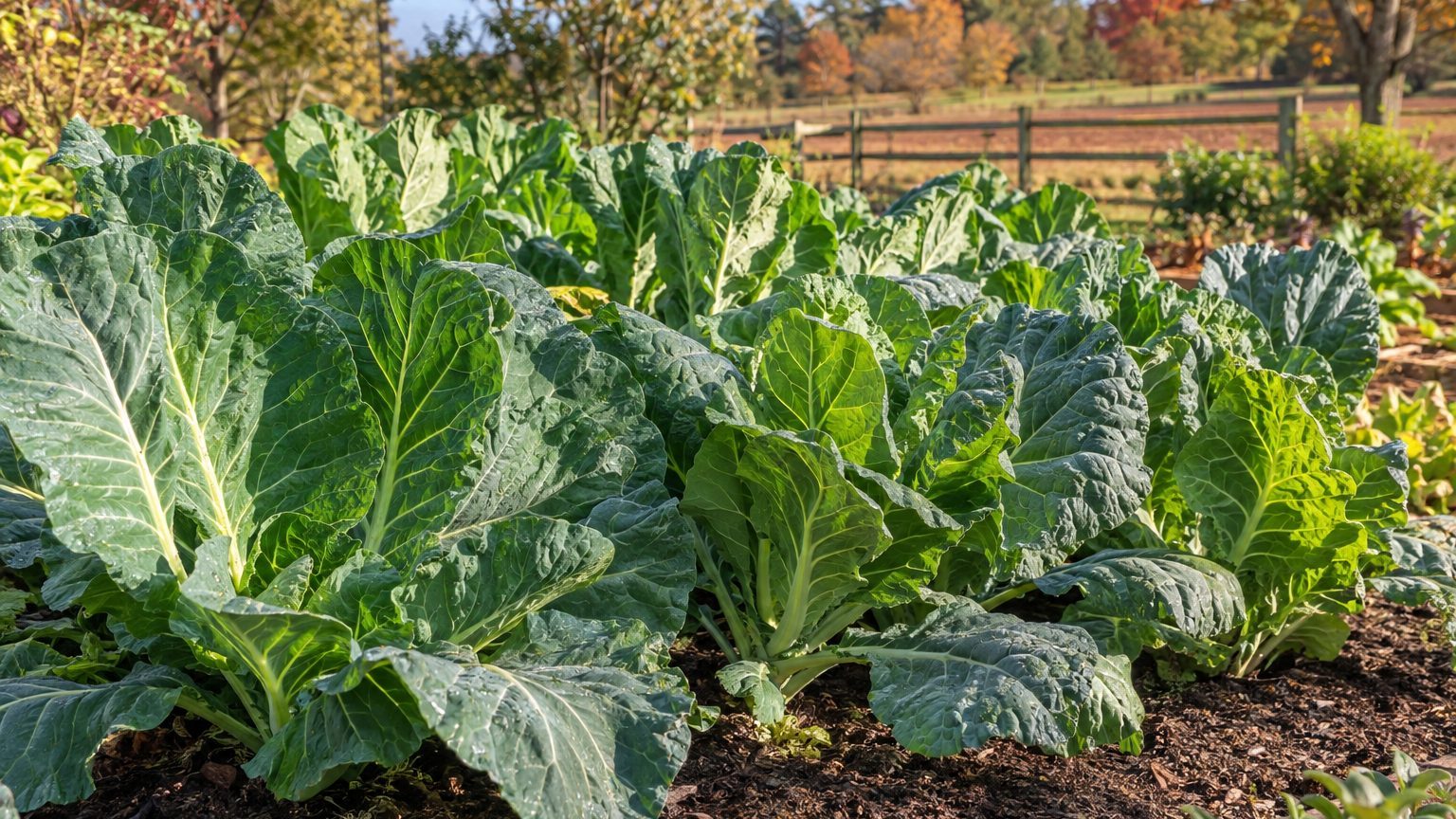

Georgia’s long, humid growing season favors heat-tolerant, slow-bolting collards over the fast-maturing types bred for shorter northern seasons. Georgia Southern and Vates handle the state’s warm shoulder seasons best, while Champion and Morris Heading round out a solid fall lineup for most counties.
The short answer for Georgia
Georgia’s frost-free window runs from a last spring freeze of March 11 to March 29 down to a first fall freeze of November 13 to December 1 at the Atlanta reference station, which means most of the state has somewhere between seven and eight months of workable growing weather in a typical year. That length matters more for deciding when to plant than which variety survives winter, because the mean daily minimum of the coldest month sits at 35.6°F, a temperature nearly every collard cultivar shrugs off without trouble.
The real decision by type comes down to how each variety handles Georgia’s heat rather than its cold. Georgia Southern, developed for exactly this climate, holds leaf quality and resists bolting through the warm stretches that bracket both planting windows. Vates stays compact and slow to bolt, which makes it forgiving if a spring planting runs into an early heat spike. Champion offers similar heat tolerance with a slightly more upright habit that some gardeners find easier to harvest from without bruising leaves.
Morris Heading is worth naming separately because it heads up tighter than the loose-leaf types, giving a different texture that some Georgia cooks specifically request for holiday meals. It tolerates the state’s humidity reasonably well but does better with a bit more spacing than the loose types, a point that matters later in this piece.
None of these varieties need special treatment to survive a Georgia winter. The coldest-month minimum of 35.6°F barely dips below freezing on an average night, so winter kill is rarely the reason a collard crop fails here. The failures that do happen trace back to summer heat, bolting timing, and disease pressure from humidity, not frost. For the county-level mechanics of when to actually get seed or transplants in the ground, the When to Plant Collards in Georgia calendar breaks down the specific windows tied to these same frost dates.
What will not work here

The mistake most often made in Georgia gardens is treating collards like a strictly cool-season crop and ignoring how fast the state’s early summer heat arrives. A slow variety planted too late in spring, expecting a long cool ramp-up like a northern garden would get, instead runs straight into 90-degree days while still small. The plant responds by bolting, sending up a flower stalk and turning leaves bitter well before harvest size. This is less about variety choice and more about timing, but some varieties handle that heat spike far better than others, which is exactly why Georgia Southern earned its name and its reputation here.
Weekly watering is another approach that quietly fails across most of the state. Georgia’s growing season includes stretches of dry heat, particularly in July and August, when a shallow-rooted collard planting on a once-a-week schedule shows stress within days. The coldest-month minimum of 35.6°F tells you winter isn’t the threat; the summer dry spells are, and a watering routine built for a milder climate leaves plants wilting and leaves toughening before they’re worth picking.
Humidity changes the spacing math
Close spacing that might work fine in a drier state invites trouble in Georgia’s humid air. Collards packed tight hold moisture on their leaves longer after rain or dew, which sets up conditions for the fungal and bacterial leaf spots that show up on crowded plantings statewide. Morris Heading in particular, with its tighter head habit, suffers more than loose-leaf types when spacing is skipped to fit more plants into a bed. Giving each plant real air movement around it does more to prevent disease here than any variety choice.
Finally, a fast-bolting, short-season variety bred for a place with a much shorter frost-free window simply wastes the extra months Georgia offers. Planting something designed to rush to harvest in a six-week window, when the state’s own frost dates leave room for a full fall season that starts around late July to early August for a harvest before the first freeze, gives up flavor and yield for no reason tied to this climate.
What changes across Georgia
Georgia is not one garden, and the hardiness zone spread proves it. The state runs from USDA zone 6a in the far north to 9b along the coast and southern tip, a five-zone range within a single state’s borders, according to the USDA Plant Hardiness Zone Map built on 1991-2020 climate normals. That is one of the widest internal spreads of any state on the map, and it changes both timing and variety choice depending on where in Georgia a garden sits.
| Region | Approximate zone range | Practical shift needed |
|---|---|---|
| North Georgia / mountains | 6a-7a | Frost arrives weeks earlier in fall than the Atlanta reference dates; plan fall plantings sooner |
| Central Georgia (Atlanta area) | 7b-8a | Closest to the reference frost dates used on this page |
| Coastal plain / far south | 8b-9b | Winters run milder; harvest windows stretch longer into winter |
The caution behind these numbers matters as much as the zones themselves. Atlanta’s airport station sits in an urban heat island, so its frost dates run milder than the surrounding countryside. North Georgia and the mountain counties typically freeze several weeks earlier in fall than the Atlanta dates suggest, while the coastal plain runs milder still. A gardener planning a fall collard crop around the state’s November 13 to December 1 first-frost window needs to shift that earlier if they’re in the mountains, or can push later if they’re near the coast.
This is exactly why a single statewide planting date doesn’t serve every county well. The spread across zones means a variety and timing combination that works perfectly in Savannah could bolt or freeze out entirely on the same calendar date in Blairsville. Rather than guess which end of the range applies, check the USDA hardiness zone map directly for a specific county before locking in a planting date.
Where to check this for your own county
This page describes Georgia as a whole, and Georgia’s climate is too varied for a state-level answer to substitute for a county one. The University of Georgia Cooperative Extension, part of the USDA’s land-grant university network, publishes county-specific guidance that accounts for local frost timing, soil, and variety trials in a way this page cannot.
The extension service is reachable at extension.uga.edu, and it’s worth going there before finalizing a planting plan built only on state-level frost dates. Two things are worth looking for specifically. The first is a local planting calendar, since county offices often adjust the state’s general frost-date range based on local station data rather than relying solely on the Atlanta airport figures used here. The second is any list of varieties that county agents have actually trialed in local demonstration gardens, since regional soil and disease pressure can favor one collard variety over another in ways a statewide list can’t capture.
A county extension office can also answer questions this page deliberately avoids, like which exact hardiness zone a specific address falls into, since that answer depends on precise location and elevation in a way a statewide article shouldn’t guess at. If a county recommendation conflicts with anything written here, follow the county recommendation. State-level guidance is a starting point built for breadth, not a replacement for the site-specific data a local extension agent has on hand. For general growing steps once a variety and timing are settled, the Growing Collards in Georgia guide covers the rest of the season.
Checking this against your own garden
Frost dates and hardiness zones describe averages built from decades of data at one weather station. A single garden, especially one with different soil, slope, or tree cover, can run noticeably warmer or cooler than the nearest official reading, and that gap is worth checking before trusting any calendar date over what’s actually happening in the bed.
Soil warmth by feel is the first and simplest check. Collard seed germinates reliably once the soil has warmed past a cool, damp chill; a gardener who digs a finger a couple inches down and finds the soil still cold and clammy, even weeks after the calendar says spring planting should start, is looking at a microclimate running behind the regional average. That’s useful information no frost-date table can provide.
The second thing to watch is the first flush of male flowers on any collard plant left in the ground too long. Once a plant begins bolting and sends up that early flower stalk, it’s signaling that heat has arrived faster than expected for that specific spot, regardless of what the calendar predicted. A gardener who sees this happen consistently early, year after year, in the same bed has learned something about that bed’s exposure that overrides the general seasonal timing described earlier in this page.
The third marker is the appearance of the first true leaves after germination, distinct from the small rounded seed leaves that show up first. Their timing, measured against when seed actually went into the ground, tells a gardener how fast their own soil and light conditions push early growth compared to the general pace assumed by any regional planting guide. Tracking that gap for a season or two builds a far more reliable personal calendar than any statewide date range, including the ones cited on this page.