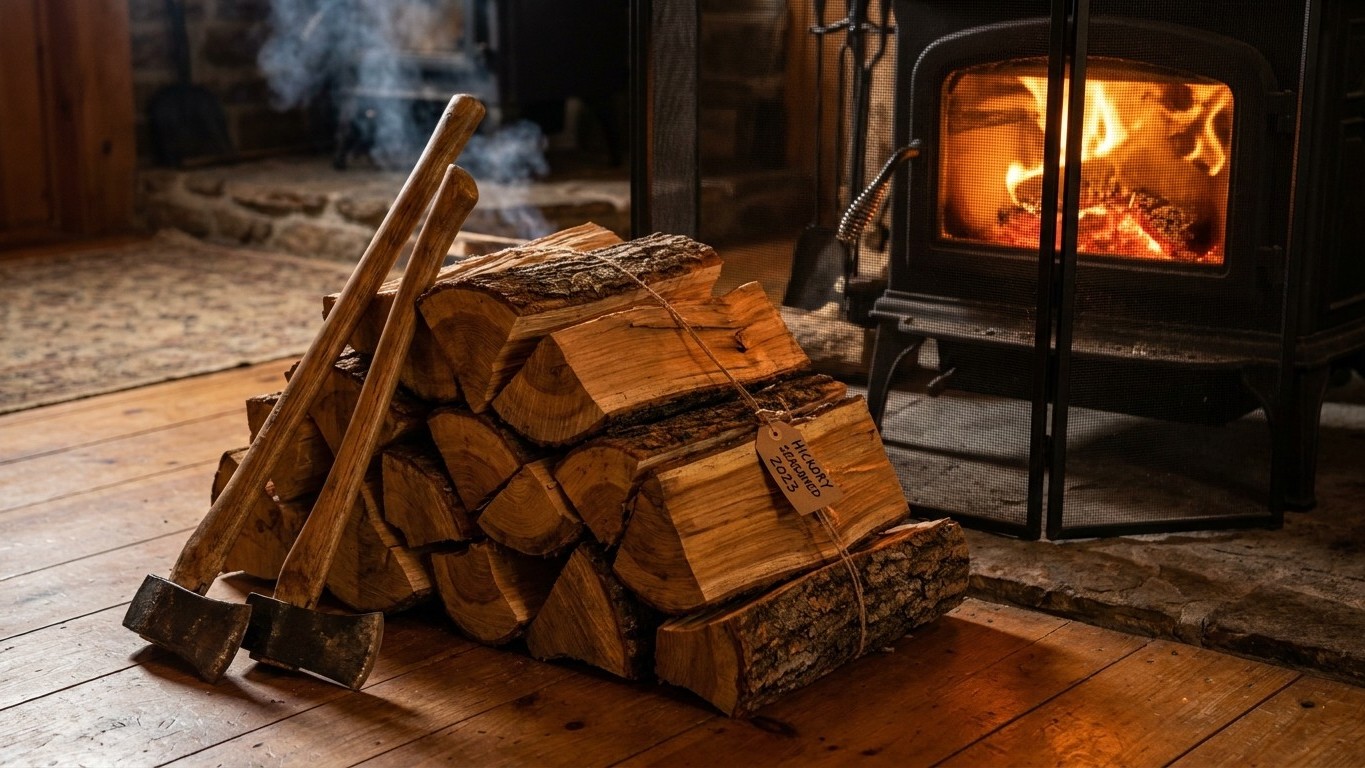

Hickory burns hotter than almost any wood you can put in a stove or fireplace, tops out around 29.1 million BTUs per cord according to the Missouri Department of Conservation, and throws sparks aggressive enough to demand a solid screen. It splits like a bear once it’s dry, but green hickory will fight you with every swing of the maul. That combination, high heat output paired with real physical stubbornness, is why this wood earns a reputation as both a prize and a chore.
How Much Heat Hickory Actually Puts Out

A full cord of dry hickory delivers somewhere between 24 and 27.7 million BTUs, depending on the species and how well it was seasoned. Shagbark hickory, the variety most commonly sold as firewood, sits near the top of that range. For comparison, red oak produces around 24 million BTUs per cord, and a softwood like white pine barely clears 14 million. That gap matters in practical terms: a stove loaded with hickory can hold a bed of coals through a cold January night, while pine burns fast and needs constant feeding.
This density also means hickory logs weigh a lot. A single split piece feels noticeably heavier than the same size chunk of ash or maple. That extra mass is stored energy, but it also means you’re hauling more weight per armload, and a truckload of hickory will weigh more than the same volume of a lighter species.
What to Expect From the Smoke
Properly seasoned hickory produces a clean, moderate smoke output, similar to oak, without the thick white haze that comes off wet or unseasoned wood. The smoke carries a sweet, slightly nutty smell, which is exactly why hickory chips and chunks show up in smokehouses and backyard barbecue setups across the South. That aroma is pleasant in small doses but can become overpowering if you’re smoking large cuts of meat for hours, so pitmasters often blend it with milder woods like apple or pecan.
The catch is moisture content. Hickory’s dense grain holds water longer than lighter species, so unseasoned rounds can smolder and produce heavy, acrid smoke instead of burning clean. A moisture meter reading above 20 percent is a reliable sign the wood isn’t ready, and burning it anyway contributes to creosote buildup in the flue. That’s not a hickory-specific problem, but because the wood is so dense, it takes noticeably longer to reach a safe moisture level than something like ash or ash’s leaner cousin, poplar.
Sparks: The One Real Downside
Hickory has a reputation for popping and throwing sparks more than most hardwoods, especially when it still carries a bit of internal moisture or when bark is still attached. The dense fibers trap small pockets of sap and gas that expand rapidly under heat, and when they rupture they send embers a few feet from the firebox. That’s a manageable trait indoors with a good spark screen or glass door on a wood stove, but it’s worth real caution around an open fire pit, particularly if there are dry leaves, a wood deck, or curious kids and pets nearby.
Fully seasoned hickory, split down to consistent 4 to 6 inch pieces, sparks noticeably less than green or partially dried rounds. If you’re burning it in an open fireplace without a screen, giving it an extra season to dry out past the standard six-to-twelve-month window can cut down on the fireworks considerably.
Splitting and Seasoning: Where the Effort Goes
Green hickory is famously tough to split by hand. The interlocking grain that makes the wood so strong for tool handles and ax hafts works against you at the chopping block, and a dull maul will bounce right off a fresh round instead of biting in. Once dry, though, hickory splits far more predictably along cleaner grain lines. Most people who burn a lot of hickory recommend splitting it green, right after cutting, rather than waiting for it to season first. A hydraulic log splitter makes quick work of even large-diameter rounds, and it’s the more practical choice if you’re processing more than a cord or two a year.
Seasoning takes patience. Because of its density, hickory generally needs a full 12 months of covered, well-ventilated storage to drop below the 20 percent moisture threshold that makes for efficient, clean combustion. Stack it off the ground on pallets or rails, top-covered but with the sides open to airflow, and give it a full spring, summer, and fall before burning. Wood split and stacked in March won’t be ready for the following winter if you’re cutting from freshly felled trees; plan on burning this year’s hickory next season, not this one.
Where Hickory Fits Best
Hickory earns its keep in a wood stove or insert built to handle high heat output, where its long, hot burn and dense coal bed shine during the coldest stretches of winter. It’s also the wood of choice for overnight burns, since a full firebox of well-seasoned hickory can hold coals for eight hours or more, letting a stove reload with minimal kindling in the morning. For an open fireplace, it works fine but the spark issue means a screen isn’t optional.
Outside of home heating, hickory has a second life as a flavor wood. Chunks and chips are a staple for smoking pork shoulder, ribs, and brisket, and the wood is sold in smaller cut sizes specifically for that purpose at hardware stores and butcher shops throughout the year. If you’re buying firewood for heat, look for full-length splits sold by the cord or half-cord; if you want it for the grill or smoker, bagged chunks are the more practical buy.
One more detail worth knowing: not all hickory is identical. Shagbark and shellbark hickory rank among the highest BTU firewoods available, while pignut and bitternut hickory burn hot too but split even harder due to tighter grain. If a supplier can’t tell you which species they’re selling, the weight of a dry split is a rough clue. The heavier it feels for its size, the closer it likely sits to shagbark’s dense end of the spectrum.