
Honeylocust burns hot, splits with a bit of a fight, and throws off fewer sparks than you’d expect from a tree covered in thorns. As firewood, it lands in the same tier as hard maple: dense enough for long overnight burns, clean enough to not choke your chimney with creosote, and forgiving enough for backyard fire pits.
Heat Output: Where Honeylocust Ranks

Honeylocust (Gleditsia triacanthos) is a heavy hardwood, and that density translates directly into heat. According to SDSU Extension, seasoned honeylocust provides 24 million BTUs per cord, putting it just below black locust and shagbark hickory, and roughly in line with sugar maple and white oak. That’s meaningfully more heat per cord than ash or red oak, and nearly double what you’d get from a cord of white pine or aspen.
What that means in practical terms: a wood stove loaded with honeylocust will run longer between reloads than one stuffed with a soft wood, and it holds a bed of coals well into the night. For anyone heating a home through a Midwest or Northeast winter, that coaling quality matters as much as the raw BTU number. A stove that still has live coals at 6 a.m. is a stove that doesn’t need kindling and a lighter to get going again.
Seasoning and Moisture: Patience Pays Off
Fresh-cut honeylocust holds a lot of water in the trunk, and it needs real time to dry down to the 20 percent moisture content that burns clean. Expect 9 to 12 months of covered, well-ventilated seasoning for rounds split to standard size, a bit longer if the pieces are thick or the stacking spot gets little sun and wind. Splitting green, right after cutting, speeds this up considerably because it exposes more surface area to air.
Skipping that seasoning period is where most of the bad experiences with this wood come from. Burn honeylocust too green and you’ll get a hissing, sizzling fire that struggles to reach temperature, along with a smoky chimney that builds creosote faster than it should. A moisture meter is cheap insurance here: split a fresh piece, press the pins into the freshly exposed face, and don’t burn it indoors until the reading sits at 20 percent or below.
Splitting Difficulty
This is the wood’s one real inconvenience. Honeylocust grain tends to twist and interlock rather than run straight, which means a maul doesn’t always sail through a round the way it would with ash or basswood. Rounds with knots or forks from branch unions are the worst offenders. Splitting the wood while it’s still green, before the fibers dry and toughen, makes the job noticeably easier. A hydraulic splitter handles gnarly rounds without much drama; for anyone splitting by hand, a heavier maul and a bit of patience go further than brute force.
Smoke, Sparks and Safety at the Hearth
Once properly seasoned, honeylocust burns clean, with a moderate amount of smoke and a mild, slightly sweet smell that’s far less assertive than hickory or mesquite. That mildness is actually a downside for anyone hoping to use it for smoking meat: it works, but it won’t deliver the bold, distinctive flavor that pitmasters chase with stronger woods. As a heating fuel, though, low smoke output is exactly what you want, since it means less residue building up in the flue over a season.
Sparking is low to moderate, similar to other dense hardwoods and far tamer than pine, spruce, or other resinous softwoods. That makes it a reasonably safe choice for an open fire pit, though “reasonably safe” still means using a spark screen and keeping a garden hose or extinguisher within reach, since no hardwood is entirely spark-free once it hits a hot coal bed and pops. Indoors, in a stove or insert with a closed door, sparking isn’t a concern at all.
Creosote buildup tracks closely with moisture content rather than species alone, but well-seasoned honeylocust, burned in a properly drafted stove, produces less soot and glaze than a wet, unseasoned load of almost any wood. Anyone burning honeylocust regularly should still schedule the same annual chimney inspection recommended for all wood-burning setups; the Chimney Safety Institute of America recommends yearly sweeping and inspection regardless of species burned, since creosote risk comes from combustion conditions as much as wood type.
Handling the Wood: The Thorn Problem
Wild honeylocust trees are famous for their thorns, and not the decorative kind. Clusters can run three to eight inches long, branching and needle-sharp, growing directly out of the trunk and lower limbs. Anyone cutting a wild tree (as opposed to the thornless cultivars, marketed as var. inermis, that dominate street plantings and yards) needs heavy gloves, eye protection, and a slow, deliberate approach to bucking the trunk. Thorns embedded in bark can puncture tires, boots, and hands long after the tree is down, and they don’t show up until someone steps or leans on the wrong log.
Here’s the reassuring part: once the wood is split and stacked, the thorns are gone along with the bark and outer wood, and the firewood itself burns exactly like any other honeylocust, with no lingering hazard. The thorn issue is a felling and bucking problem, not a burning problem. If buying honeylocust firewood from a dealer, this distinction rarely matters since the wood arrives already split and clean.
How Honeylocust Stacks Up Against Other Firewoods
Compared with red or white oak, honeylocust burns slightly hotter and seasons a bit faster, since oak is notorious for needing a full two years to dry properly. Against ash, honeylocust wins clearly on BTU output, though ash remains easier to split and is famous for burning even when not fully seasoned, a reputation honeylocust doesn’t share. Measured against black locust, the two are close cousins in heat value, but black locust edges it out slightly and is often considered the gold standard among common firewood species in the eastern and midwestern United States.
Against soft maple, hackberry, or box elder, honeylocust is a clear upgrade for anyone trying to maximize heat per cord and minimize the number of trips out to the wood pile on a cold night. And compared with softwoods like pine or fir, there’s no real contest: honeylocust delivers roughly twice the heat, produces less resinous soot, and won’t leave the same sticky pitch buildup in a chimney over a season of burning.
Identifying Honeylocust in the Wood Pile
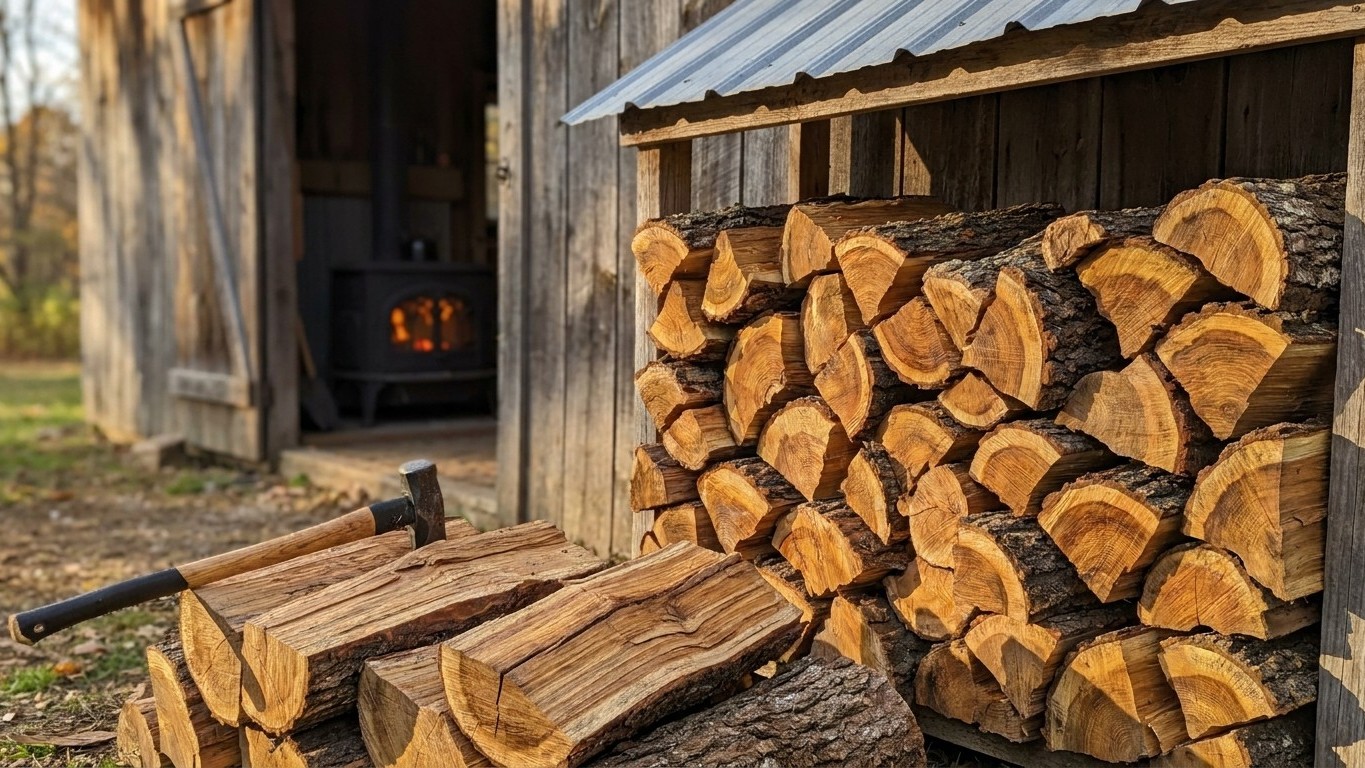
Freshly split honeylocust shows a yellowish to light brown heartwood that darkens toward reddish-brown with age and exposure, wrapped in a thin, grayish-brown outer bark with long, narrow furrows. The grain often has a mild swirl or twist visible on the split face, a holdover from the interlocking fiber structure that makes the wood tricky to split. It’s noticeably heavier than a same-sized chunk of pine or basswood when picked up, a rough field test that separates the dense hardwoods from the lightweights before a single log ever hits the splitter.
One detail worth flagging for anyone sourcing wood locally: honeylocust is planted widely as a street and shade tree because of its light, filtered canopy and drought tolerance, which means municipal tree removal crews and utility line clearing operations often generate a steady supply of it. That makes honeylocust firewood more available in urban and suburban areas than its natural forest range might suggest, and it’s frequently sold or given away by tree services at a lower price than harder-to-source species like hickory or black locust.