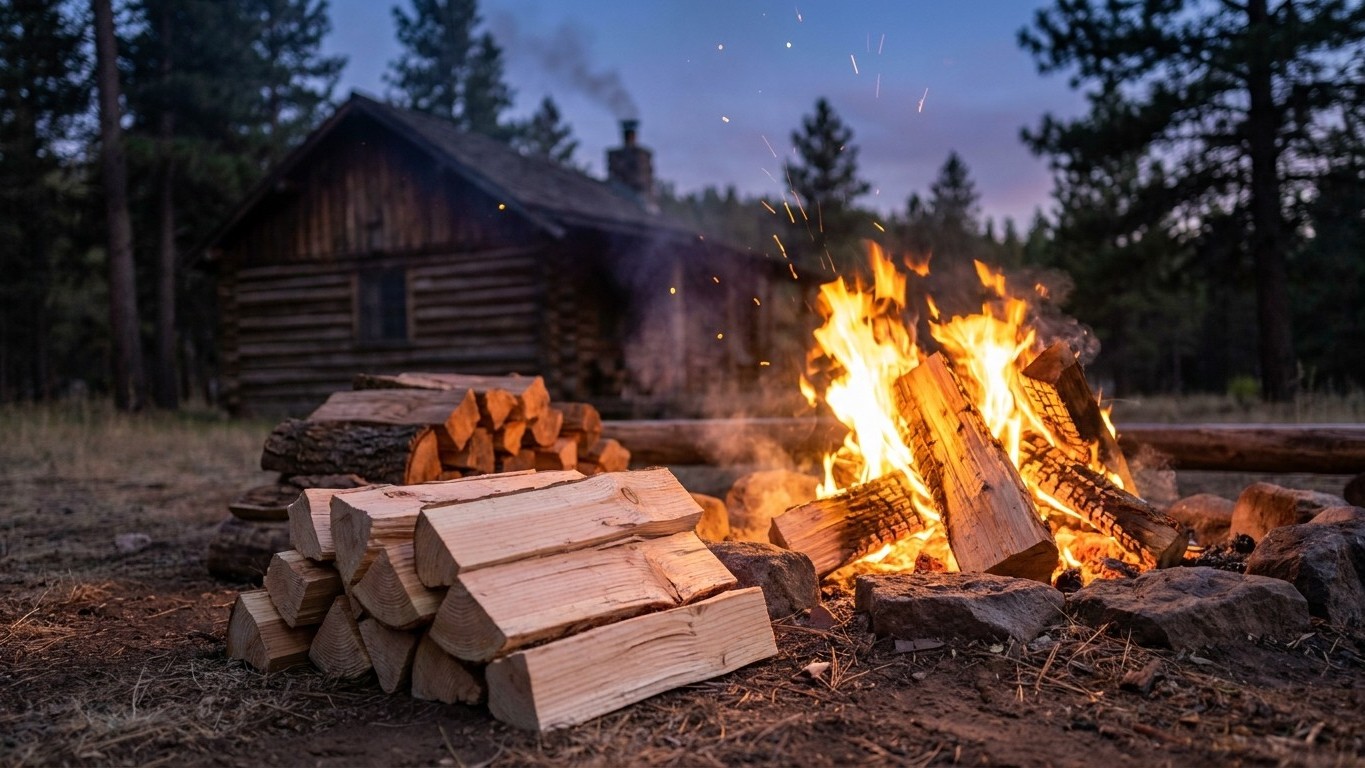

Ponderosa pine burns hot and fast, but it won’t hold a coal bed like oak or hickory, and its resin content means more pops, more sparks, and a real creosote risk if you burn it before it’s fully dry. It’s a solid shoulder-season wood or camp fire choice, not the wood you want stacked for a long January night unless it’s mixed with something denser.
How Much Heat Does Ponderosa Pine Actually Produce?

According to SDSU Extension, a full cord of seasoned ponderosa pine delivers around 15 million BTUs. That puts it in the same rough category as other Western softwoods like lodgepole pine or Douglas fir on the lower end, but well below the 24 to 30 million BTU range you get from oak, hickory, or hard maple. In practical terms, you’ll burn through a stack of ponderosa faster than you’d burn through the same volume of ash or locust to get the same amount of heat in your living room.
That lower density is also why it lights so easily. Ponderosa pine weighs less per cord than hardwoods, roughly 2,000 pounds green versus 3,800+ pounds for a cord of dense oak. Less mass means less energy stored, but it also means faster ignition and a quicker path to a hot fire, which is exactly why campers and cabin owners keep a stash of pine on hand for starting things up.
Where It Fits Compared to Other Common Firewoods
Think of ponderosa pine as the middle child of Western firewood. It beats aspen and cottonwood on heat output, sits close to Douglas fir, and lags well behind oak, black locust, or Osage orange. If you live in the Rockies, the Black Hills, or the Southwest where ponderosa stands are common, it’s often what’s cheap and local, and that counts for something when hauling hardwood in from three states away adds real cost to your firewood bill.
Smoke, Resin and the Creosote Problem
Here’s where ponderosa pine earns its reputation. The wood carries noticeably more resin than hardwoods, and that pitch is what makes pine kindling so good at catching flame in wet conditions. It’s also what makes unseasoned or smoldering pine fires produce thick, sooty smoke loaded with unburned hydrocarbons.
Those hydrocarbons condense on cooler chimney surfaces as creosote, the tarry buildup responsible for a large share of residential chimney fires every year. The risk isn’t unique to pine (any wood burned green or at low temperatures builds creosote) but the higher resin content in ponderosa makes the margin for error smaller. Burn it wet, burn it in a smoldering, air-starved fire, and you’re accelerating buildup in a way you wouldn’t with a well-seasoned piece of oak.
The fix is straightforward: burn ponderosa pine hot, keep the airflow open, and never let it smolder overnight in a closed-down stove. A hot, active flame burns off most of the volatile compounds before they hit the flue. A choked-down fire sends them straight up the chimney to condense. If you’re running a wood stove full-time on pine through the cold months, plan on inspecting and cleaning the chimney more often than you would with a hardwood-only setup, at least once a season, sometimes twice depending on how much you burn.
Sparks and Popping: What to Expect at the Fire Pit
Ponderosa pine has a reputation for snapping and throwing sparks, and it’s earned. Trapped resin pockets and residual moisture inside the wood heat up and expand, then release with an audible pop and a small ember launch. In an open fireplace or backyard fire pit without a screen, that’s a genuine hazard, especially on dry grass, a wood deck, or near mulch beds.
A few practical adjustments handle most of the risk:
- Use a spark screen on open fireplaces and fire pits when burning pine
- Keep a 3-foot clearance from flammable material around any open pine fire
- Favor a closed wood stove for indoor heating with pine rather than an open hearth
- Let splits season fully; wetter wood pops more violently than dry wood
Enclosed wood stoves neutralize most of the spark concern since the glass door and sealed firebox contain the embers. That’s really the setup where ponderosa pine works best as a heating wood rather than just a recreational fire wood.
Seasoning Ponderosa Pine the Right Way
The upside to pine’s lower density is that it dries faster than hardwood. Where oak or hickory can need a full 12 to 24 months split and stacked before it’s ready to burn clean, ponderosa pine often reaches a safe moisture content (below 20%) in 6 to 9 months under good conditions. Split it small, stack it off the ground on pallets or rails, cover the top while leaving the sides open to wind, and give it a full summer season if you can.
Testing with a cheap moisture meter is worth the ten dollars. Split a piece fresh off the stack, press the meter probes into the freshly exposed face (not the bark or the weathered exterior), and look for a reading under 20%. Above that and you’re dealing with the smoke, sparking, and creosote problems described above, no matter how good the wood looks stacked in the yard.
One quirk specific to ponderosa: the resin pockets don’t always dry evenly with the rest of the log. You can have a split that reads dry on the meter but still hisses and spits from a pocket of trapped pitch near the core. That’s normal and not a sign the wood is unseasoned, just a reminder to keep that screen up.
Splitting Tips for Pine
Ponderosa splits easily compared to knotty or twisted hardwoods, since the grain tends to run straight. A standard splitting maul handles most rounds without much fight. Watch for pitch buildup on your maul head and gloves though; the sap gets sticky fast, and a little mineral spirits or citrus-based cleaner on the tool head at the end of a splitting session saves you from a gummed-up axe next time out.
Best Uses for Ponderosa Pine Firewood
Given the heat output, burn characteristics, and spark behavior, ponderosa pine fits a few roles better than others. It’s excellent kindling and shoulder-season wood, good for quick morning fires when you don’t need eight hours of steady heat, and a strong choice for outdoor fire pits and camping where you’re not relying on it to carry a house through a cold night unattended.
As a sole heating fuel through a long winter, it falls short. You’ll load a wood stove more often, generate more ash volume relative to heat produced, and need to stay on top of chimney maintenance. Plenty of rural households in ponderosa-heavy regions do heat primarily with it out of necessity and cost, and it works fine with the right stove setup and seasoning discipline. But if you have access to mixed hardwood and pine, most experienced burners split the difference: pine for quick starts and daytime fires, denser wood for the overnight coal bed.
One more practical note worth knowing before you load up a truck bed with ponderosa rounds: beetle-killed or standing dead ponderosa, common across parts of the Rockies and Southwest after recent bark beetle outbreaks, often arrives already partly seasoned in the tree. It can still carry higher moisture than expected in the trunk core, so don’t skip the moisture meter check just because the bark looks gray and weathered.