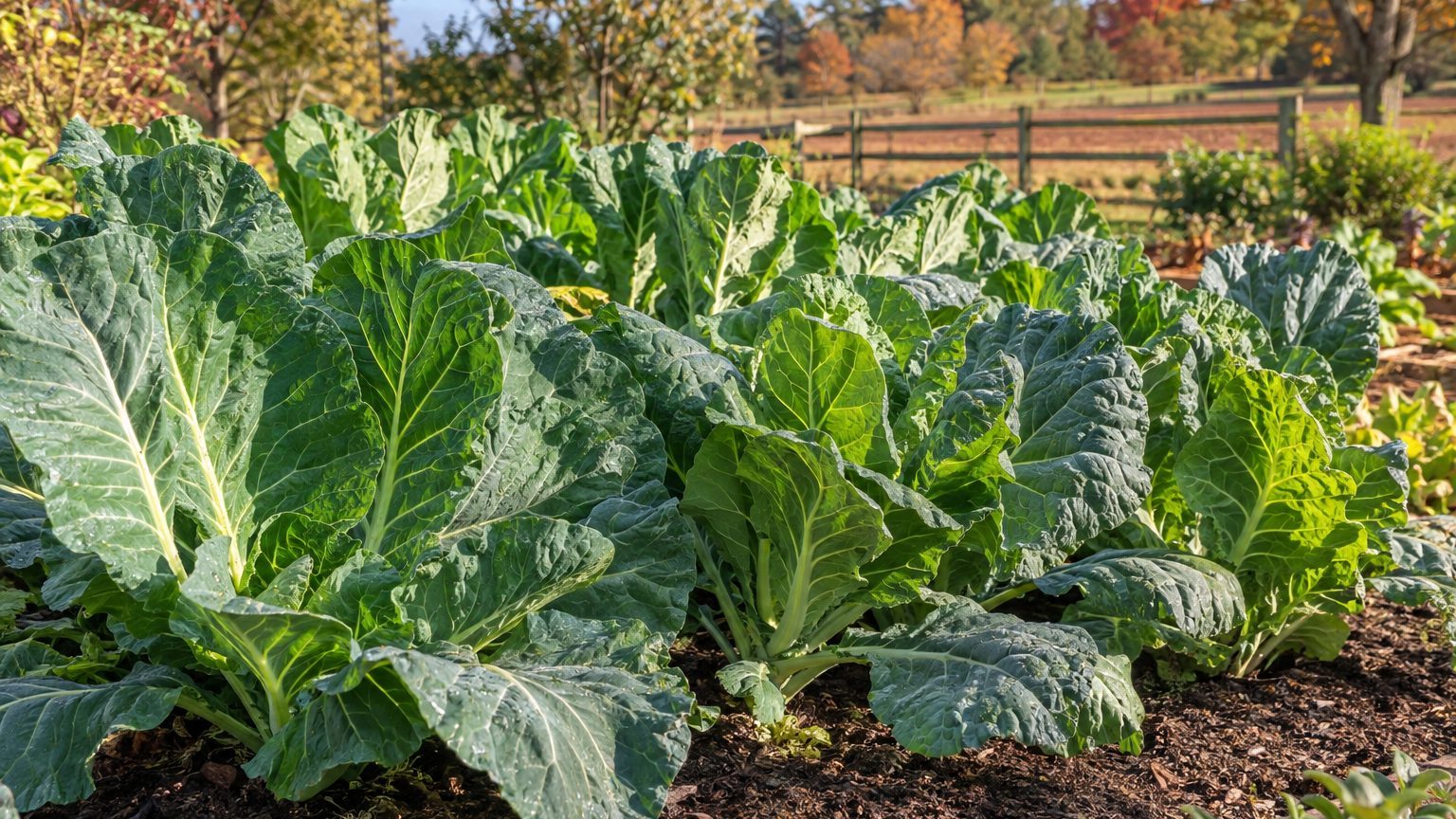

For most of Texas, the best collard is a leafy, open-growing type sown for fall and winter harvest, not a slow heading variety chasing a long season. Heat sets the limit here far more often than cold. The numbers below come from Houston, the mild Gulf end of a state that spans USDA zones 6a-10a, so read them as one reference point, not a statewide rulebook.
The short answer for Texas
Choose by type first, then by name. A non-heading, leafy collard that tolerates heat and keeps producing when you pick the lower leaves is the safe default from the Gulf Coast to North Texas. Everything else on the list is a specialty choice for a specific situation.
| Type | Where it fits in Texas | Watch for |
|---|---|---|
| Open-pollinated leafy collards (Georgia Southern and Vates are the names seed catalogs most often list) | Fall through spring crops across most of the state; the dependable default | Bolting once spring warms up |
| Hybrid leafy collards (Flash is a common catalog example) | Gardeners who want even, fast growth from a fall sowing | Seed costs more, and you cannot save it |
| Heading collards (Morris Heading is the usual example) | Gardens with a long, cool, steady season | Slow finish that heat can cut short |
| Kale, mustard and turnip greens | Companions that mature sooner and fill gaps | Mustard bolts fastest in warm spells |
The variety names are examples of what catalogs list, not a trial ranking, and this page has no Texas variety trial data to rank them. What the page does have is Houston’s climate normals from NOAA (1991-2020). The mean daily minimum of the coldest month there is 43.7°F. A collard shrugs that off. Cold hardiness is not the question on the Gulf Coast, and a typical Houston winter is a growing season for greens, not a dormant one.
The frost dates matter for a different reason. At Houston’s IAH airport station, the last spring freeze falls between February 4 and March 1, and the first fall freeze between December 1 and December 19. Both are probabilities of a 32°F freeze, taken from the 30 to 70 percent band of the NOAA data. Inside those windows, a freeze is somewhere between a coin flip and a long shot on any given date. Outside them, it is unlikely.
That leaves a fall crop with a long runway. Seed sown so the plants are established well before December 1 to December 19 gets months of mild weather before the first likely freeze, and collards take light frost without harm anyway. Our planting calendar for collards in Texas works through the sowing dates, and the broader guide to growing collards in Texas covers soil, feeding and harvest.
What will not work here

The Houston numbers rule out a few habits that work fine in cooler states. Start with the slowest heading collards planted in spring. A crop that needs a long stretch of cool days to firm up will meet rising heat before it finishes. The Gulf Coast has no late-spring buffer: the last likely freeze is as early as February 4 and no later than March 1, so the calendar is already warming by the time a spring transplant has real size.
Bolting is the practical result. When collards get warm and stressed, they send up a flower stalk, and the leaves turn tough and bitter. Mustard and turnip greens do it faster than collards, and a warm spell in March can end a spring planting in days. Gardeners who plant in April, as they would in Ohio, are mostly growing seed stalks.
Weekly watering is the next casualty. Greens are mostly water, and shallow roots in hot Texas soil dry out between deep soakings. A once-a-week schedule can work in cool weather, but a late-summer seedling bed needs a light daily check, with the soil kept evenly moist until true leaves form. Mulch helps, since bare ground bakes. Seedlings that dry out once tend to stall for weeks.
Humidity punishes close spacing. Gulf air stays damp through much of the year, and crowded collards hold moisture on their leaves, which invites fungal spots and gives aphids and cabbage worms a sheltered place to feed. Give leafy types generous room and pick the lower leaves so air moves through the plant. Crowding also means competing for water when the dry spells come.
Cold is the failure you can mostly ignore in Houston, since the coldest month’s mean daily minimum of 43.7°F is mild. That does not carry north. This page has no verified frost figures for the Panhandle, Hill Country or North Texas, so it will not guess at them. What is safe to say is that the Houston window is a poor stand-in there, because the freeze dates, and with them the length of your fall crop, shift a great deal.
What changes across Texas
The USDA Plant Hardiness Zone Map (2023, built on 1991-2020 normals) puts Texas anywhere from zone 6a to zone 10a. That is a spread of eight zone steps, each a 5°F difference in average annual extreme minimum temperature. There is no single Texas answer, and a planting date that suits the coast can be wrong by months elsewhere.
The zone number measures one thing: how cold the worst night of the year typically gets. It says nothing about how long summer lasts, how hot it gets, or how dry. So use it for what it does well, judging whether a plant survives winter, and use frost dates for timing. For collards, hardiness rarely decides anything, since the plant handles cold well. The timing of the first and last freezes does.
A reader in the north of the state or at higher elevation should expect the freeze window to move. Fall freezes come earlier, so a fall crop has less time to establish, and a spring crop can face frost later than the February 4 to March 1 range quoted for Houston. In practice that means sowing fall greens sooner and favoring quicker-maturing leafy types over heading ones. Where winters are hard, a row cover or a sheltered wall can stretch the harvest.
Down on the coast, the shift runs the other way. Even inside Houston, Hobby airport runs about two weeks milder than IAH, so neighborhoods within one metro area can disagree. Your own zone is on the USDA map, and you should look up your ZIP code there instead of trusting a guess. Then treat zones 6a-10a as the statewide spread, not as a number that describes your yard.
Where to check this for your own county
The best local source is Texas A&M AgriLife Extension, the state’s land-grant extension service. Every county has an office with horticulture staff and Master Gardener volunteers who know your soil, your typical freeze dates and which varieties have actually been grown nearby. That knowledge is worth more than anything in this article.
Two things to look for on the site. First, a planting calendar for your county or region, which will list sowing windows for cool-season greens by date. Second, any vegetable variety trials run in or near your county, since a variety that did well in trials at similar heat and rainfall is a better bet than one that simply looks good in a catalog.
A county recommendation beats a state one, and this page is the state one. It gives a Houston reference, a set of variety types and a rough sense of how the state varies. It cannot see your elevation, your soil or the way your county’s rain arrives. If the extension calendar and this page disagree, go with the extension.
Not every extension site publishes what you need for greens. This page has no verified Texas county calendars to point you to, so it does not cite one. The lawn calendars that turn up in searches from other states’ extension services are written for turfgrass in other climates and do not apply to collards, so skip them. Call or visit your county office and ask for your county’s fall vegetable planting calendar, and for any list of greens that have done well locally.
Checking this against your own garden
Dates on a page are averages. Your garden runs on what is actually happening in the soil and on the plants, and three signs are worth watching.
Start with the soil. In late summer, dig a couple of inches down and hold a handful. If it feels hot, like a warm cup, it is too warm for seeds to sprout well and for seedlings to settle. When it feels merely mild, sow. Beds under shade cloth, on the east side of a fence or beneath mulch cool sooner than open dirt, and that gap tells you which corner of your yard is ready first.
Next, watch the first true leaves. The seed leaves come up first, then the first pair of real leaves. Seedlings that hold steady through afternoon heat show your bed is sheltered enough. Ones that wilt, crisp at the edges or stall show it is too exposed, and shade in the afternoon can fix that without moving anything.
Last, watch the tender plants near your greens. The first frost-blackened leaf on basil, tomato or pepper tells you your yard’s freeze date, and it can differ from the airport’s by a week or two. The first flower stalk rising from a collard in spring is your bolting date. Write down both dates this year, and next season you will have a calendar built for your own yard, which no state page can give you.
Common questions
Which collard variety is best for Houston?
A leafy, non-heading type sown for fall is the safest choice, since Houston’s coldest-month mean daily minimum of 43.7°F never threatens it. Catalog names like Georgia Southern and Vates are common starting points, but this page has no local trial data to rank them.
Can I use Houston’s frost dates in Lubbock or Dallas?
No. The dates on this page, February 4 to March 1 for the last spring freeze and December 1 to December 19 for the first fall freeze, belong to the IAH station on the Gulf end of the state. Texas spans USDA zones 6a-10a, so check your own county’s numbers through AgriLife Extension.
Do collards need frost to taste good?
Cool weather makes collard leaves sweeter, and a light frost adds to that. They do not need one. Fall plantings still grow well and taste fine in the mild winters common along the coast.
Can I grow collards through a Texas summer?
Poorly. Heat pushes them toward bolting and leaves them tough, and they need more water than most gardeners give. Plan them as a fall-to-spring crop and use the hot months to prepare beds and start seed.