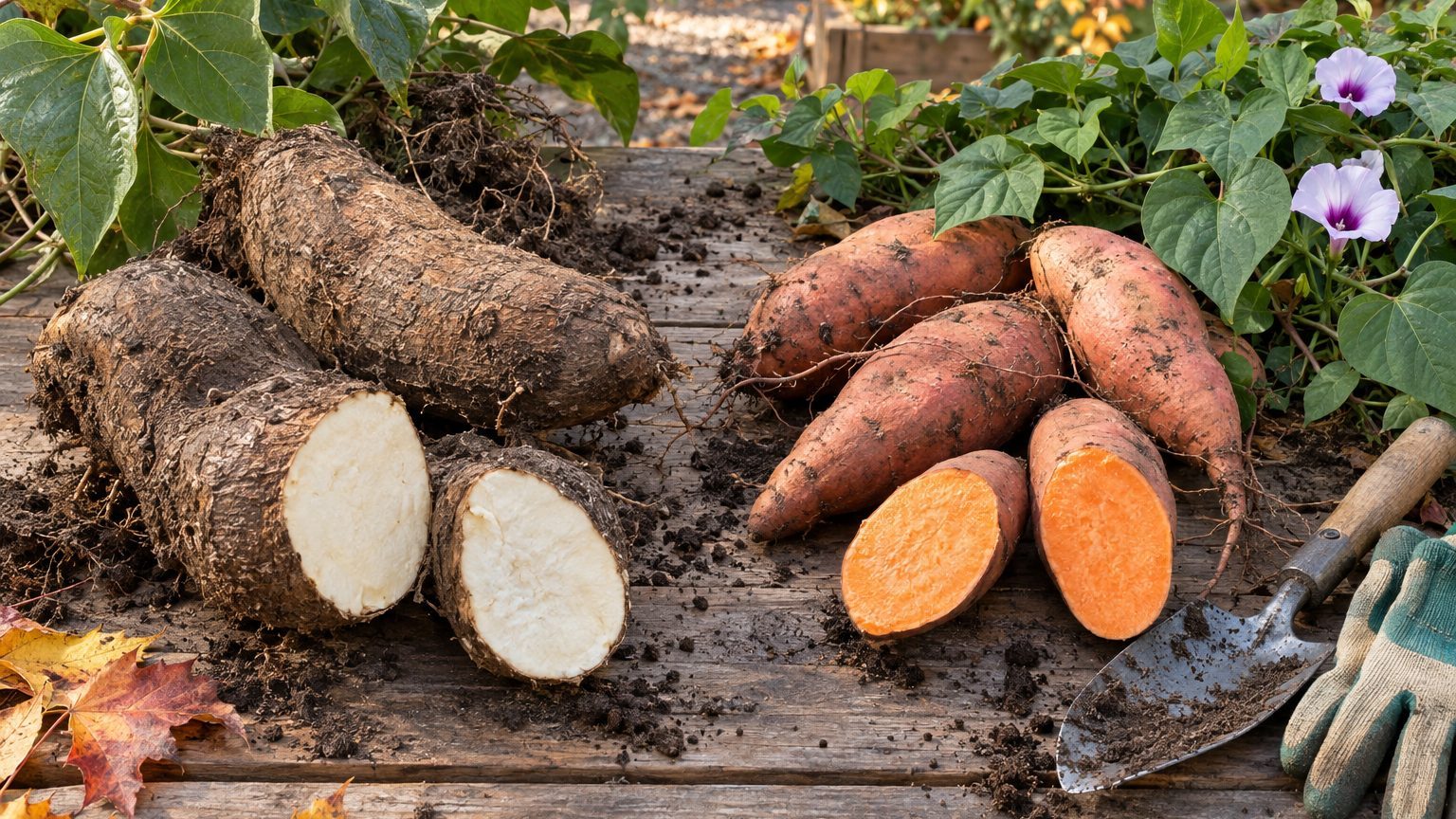

Nearly every “yam” in an American grocery store is a sweet potato. True yams are a separate plant: tropical, rough-skinned, and rare outside specialty markets. For a gardener the mix-up changes what you plant, how you plan the bed and how you handle roots after digging. If your crop has heart-shaped leaves and morning glory flowers, you are growing a sweet potato.
What is actually going on
The two plants are not close relatives. The sweet potato (Ipomoea batatas) belongs to the morning glory family. A true yam belongs to the genus Dioscorea, a monocot group that sits far from morning glories on the family tree. True yams come from West Africa and Asia, and they suit long, hot, tropical seasons. The tubers often have dark, bark-like skin and dry, starchy flesh, and some grow to a size that surprises anyone used to a grocery bin.
So how did the wrong name stick? The word “yam” traces back to West African words for an edible tuber. Enslaved Africans in the American South applied it to the sweet potatoes they found, which looked and cooked like the food they knew. Later, growers and shippers used “yam” to mark the softer, moister, orange-fleshed types and set them apart from paler, drier, firmer ones. Labeling rules generally require the words “sweet potato” to appear alongside “yam,” which is why the bin sign often says both. Every root in that bin is the same species. “Yam” here is a sales word for a texture, not a botanical claim.
Why the garden cares
Plants that differ this much behave differently. A sweet potato is a trailing vine that makes swollen storage roots, and you start it from slips, which are rooted sprouts. A potato is a nightshade, in the same family as tomatoes and peppers, and it makes stem tubers from a piece of seed tuber. The sweet potato is not a nightshade and not a potato, so advice written for potatoes (hilling, early planting into cool soil, cold storage) does not carry over. Most of it does harm.
A true yam is a different project entirely, and a poor fit for most American gardens. Anything you can buy as a plant start under the name “yam” for a home bed is almost certainly a sweet potato type. The full growing guide covers slips, heat and curing in order, and the page on flesh colors sorts the orange, white and purple types. For named varieties that have been trialled near you, your state extension service is the source to trust.
In the garden
You do not need a botany degree to know what you have. A handful of checks separate the plants, and each one saves you from a specific mistake. The table lists the check and what happens when you get it wrong.
| Check | What you see | What goes wrong if you miss it |
|---|---|---|
| The label | “Yam” on a bin or a can usually means a moist, orange-fleshed sweet potato type. | You follow tropical yam advice (very long season, big staked vines) and plan a crop your garden can’t deliver. |
| The plant itself | Trailing vines, heart-shaped or lobed leaves, funnel-shaped flowers like a morning glory. | You treat it like a potato, hill it, and give it the cool early start potatoes like. Growth stalls in cold soil. |
| Starting material | Slips, meaning rooted shoots pulled from a sprouted root. | Burying a whole grocery root gives you little for the space, and store roots can carry disease or have been treated to resist sprouting. Slips from a reputable source start cleaner. |
| Bed history | Sweet potatoes are not nightshades. | You either skip a good bed because tomatoes grew there, or replant sweet potatoes in the same spot year after year. Soil pests and diseases build up on the crop itself, so rotate away from sweet potatoes. |
| After digging | Roots with thin, easily scuffed skin. | They get rough handling and cold storage. Skin breaks, cold injury sets in, and rot follows. |
The last row deserves a plain statement. Never store sweet potatoes in a refrigerator or a cold cellar. Cold injury below their storage range is real and irreversible, and it is among the most common ways a good harvest is ruined at home. The damage often doesn’t show on the skin. It turns up later as a hard core, an off taste, or sudden rot.
Firm versus moist is the difference that shows up on the plate. Moist types turn soft and syrupy when cooked, while firm types stay drier and hold their shape. Both are sweet potatoes, and either can be called a yam in a store. When you choose, pick by how you cook, and let local trial results settle which types perform in your soil.
Whatever you grow, inspect before you trust. Look for sunken spots, shriveling, mold, or any place that feels soft. A soft patch or a weeping spot ends the question, and that root should not be eaten just because the rest of it looks sound. Keep an eye on neighbors in storage too, since rot spreads.
What it depends on where you are
Some of this is true everywhere. The botany doesn’t change at a state line: sweet potato and yam are unrelated, sweet potato is no nightshade, and the crop wants warmth and hates cold, in the ground and in storage. That last point holds from the Gulf Coast to the northern tier.
Other parts are local, and this page can’t see your garden. Length of the warm season decides whether a type has time to size up its roots. Summer heat decides how fast the vines run and whether roots swell or the plant just makes leaves. Summer rainfall changes the picture too: a wet summer raises the odds of rot in heavy soil, while a dry one means the bed needs steady watering. A gardener in a long, hot, humid season and one with a short, cool season may reach opposite conclusions about the same variety.
Those local conditions are also why one type keeps coming up in one state’s trials and never in another’s. Your state’s Cooperative Extension service, run through the land-grant university, tests varieties in your conditions and publishes what worked. Its recommendations beat any national list, this one included. The state pages on this site are a good place to start, and the guide to orange, white and purple types helps you decide what you want before you check what is trialled nearby.
Timing has a local side as well. When the soil is warm enough to plant, and how long you can let roots size up before cold arrives, differ from place to place. The page on lifting sweet potatoes at the right moment explains the signs to watch, and your extension office can supply the local frame around them.
The mistake that costs the most
Treating the crop like a potato after harvest costs the most. Potatoes like cool, dark storage. Sweet potatoes are tropical roots, and the cool cellar or refrigerator that keeps potatoes well is the place that ruins them.
The trouble begins with the label. A gardener who believes the “yam” or “potato” story tends to reach for the potato playbook: dig, brush off the dirt, move the roots somewhere cold. Cold injury can be invisible at first. The root looks fine on the shelf, then cooks with a hard center or turns bad within days. Nothing reverses it. A good harvest, months of work, gone at the last step.
What to do instead follows from the plant’s origins. After digging, handle roots gently, since the skin is thin and bruises invite rot. Cure them somewhere warm and humid, as the growing guide describes, so that the skin toughens and small wounds heal. Then keep them in a spot that stays dry and comfortably warm, never chilled. A room in the house where nobody is chasing the thermostat down is a better choice than a basement that runs cold.
Check the roots regularly. Any soft patch, weeping spot, or sour smell means that root goes in the trash, not the stew pot, and the ones touching it deserve a close look. No amount of good-looking skin makes a root safe to eat once one of those signs appears. This page won’t tell you how long roots will keep, because that depends on how well they cured and what your house is like, but inspection tells you what a calendar can’t.
Common questions
Is the “yam” in my grocery store really a sweet potato?
Almost certainly. In the United States, the moist, orange-fleshed sweet potato is the one most often labeled “yam,” and rules generally require “sweet potato” on the label too. A true yam is usually found in international or specialty markets, with a rough, dark, bark-like skin and dry white flesh.
Can I grow a true yam in my garden?
Only in rare cases. True yams are tropical and need a long, hot season that most of the country can’t supply. A plant sold to home gardeners as a “yam” is nearly always a sweet potato type. Your state extension service can tell you whether any true yam has been tried locally.
Can I start plants from a grocery store sweet potato?
It will sprout, but it’s a weak way to begin. Store roots may have been treated to slow sprouting and can carry disease into your bed. Slips from a reputable source give the crop a cleaner start, and your extension office can point you to local suppliers.
Do sweet potatoes rotate with potatoes and tomatoes?
No, they aren’t in that family. Nightshade rotation rules are built around the pests and diseases that hit potatoes, tomatoes and peppers, and they don’t apply here. Rotate away from sweet potatoes themselves, though, because problems that target this crop build up when it returns to the same soil year after year.