
Nebraska has enough heat and enough season for a solid sweet potato crop, as long as the slips wait for warm soil rather than a date on the calendar. At the Omaha reference station the last spring freeze falls in mid-to-late April, but planting comes later. Here is how soil, the frost-to-frost window, summer heat and rain, and the type you buy shape the result.
When the soil is warm enough in Nebraska

Start with the frost date, since that is what most people are searching for. At the Omaha airport weather station, the last spring freeze (32 F) arrives between April 12 and April 23. That is the 30 to 70 percent probability band in NOAA’s 1991-2020 U.S. Climate Normals. It is a probability, not a promise, so some years the last freeze comes on either side of the band.
It is also an airport, and airports run warm. Suburban and rural gardens typically see their last spring frost one to two weeks later, and more than that at elevation. Check the figures for your own county before you pencil anything in.
Why frost is only a stand-in
Sweet potatoes are tropical vines, and they answer to soil temperature, not the calendar. The frost date works as a proxy because the soil warms after the frost risk ends, not with it. An April afternoon can feel like early summer while the ground a few inches down still holds winter. Slips set into that cold soil stall, and a stalled plant burns weeks of a season with a fixed end.
Black plastic laid over the bed ahead of planting is the usual way to speed things up. It is cheap, and it gives you a reason to wait without wasting the calendar.
What to check before the slips go in
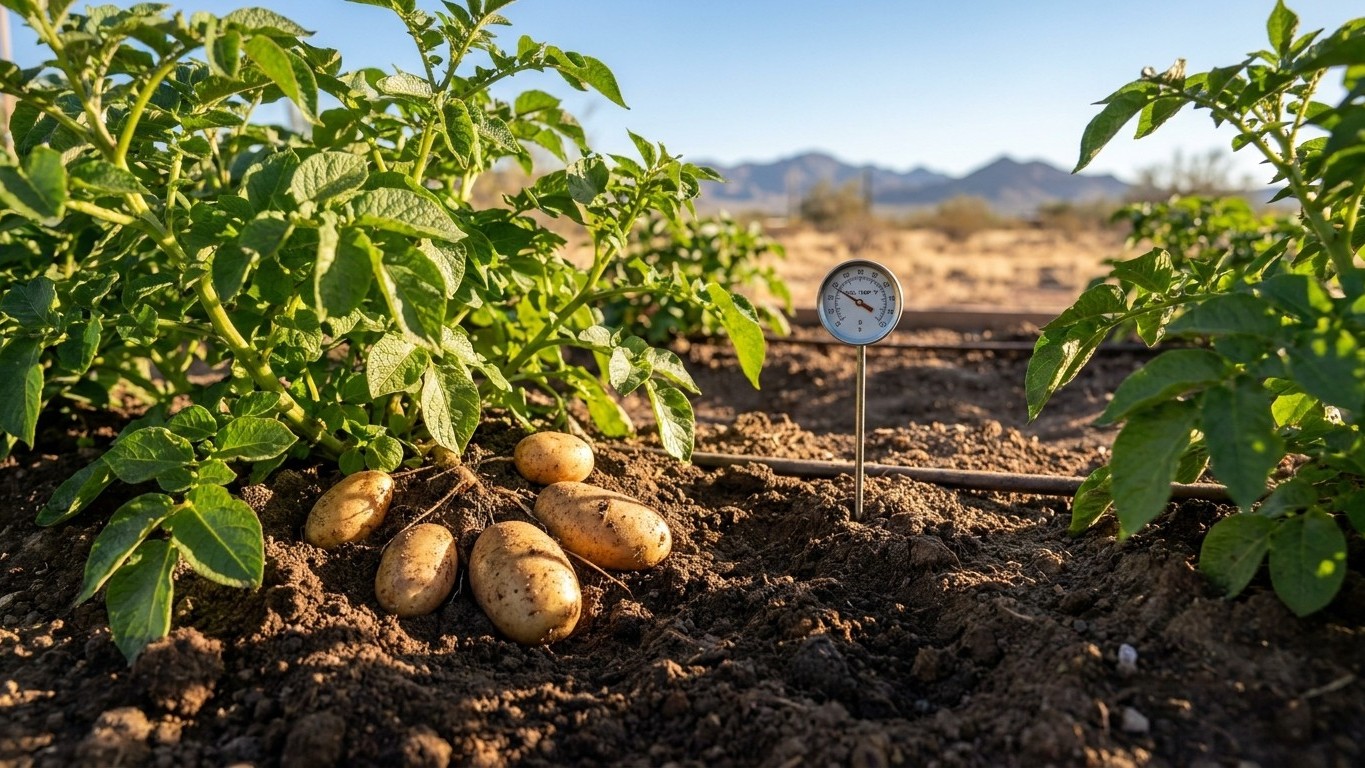
Push a soil thermometer a few inches into the bed each morning. One warm reading means little. A steady run of them, with mild nights in the forecast, means more. This page won’t hand you a threshold number it can’t source; your state extension service publishes the one Nebraska growers use.
One clarification saves trouble later. A sweet potato is not a yam, whatever the supermarket label says, and it is not a potato. It belongs to the morning glory family, not the nightshades, so the rotation rules you follow for potatoes and tomatoes don’t apply. It also grows from rooted slips, not cut seed pieces. Which type suits your county, vining or compact, early or full-season, is a question for local extension trial data.
How long the season lasts here
Both edges of the window come from the same NOAA normals for the Omaha airport station. The first fall freeze lands between October 15 and October 26. Count from the latest spring date (April 23) to the earliest fall date (October 15) and you get 175 days. From the earliest spring date (April 12) to the latest fall date (October 26), it is 197. The frost-free stretch at the reference station runs 175 to 197 days.
Trim that for a real garden. Rural and suburban plots often lose up to a couple of weeks at each end. And sweet potatoes can’t use the whole stretch anyway, because planting waits for warm soil and the first frost blackens the vines.
What a window this size allows
This is a middle-of-the-road window. It leaves room for one full crop and a slow start, but not for careless timing.
A second sowing is tempting, but for sweet potatoes it is not a second crop. A planting made late in the season risks meeting the fall freeze before the roots have sized. What a second batch of slips, set out a couple of weeks after the first, can do is hedge. If a cold snap or a weak batch of slips sets the first planting back, the later one is your insurance. The succession sowing guide on this site covers how to stagger plantings; for this crop, keep your expectations modest.
The root check on transplants matters more or less depending on the window. Slips often arrive with few roots or none. Standing them in water until white roots show costs a few days, and a rooted slip recovers faster than a bare one. In a window this size, that delay is affordable. In a territory with a shorter season, the same delay would eat into the only crop you get. Look for a firm stem and white roots, and discard anything slimy.
The window’s far end matters too. Dig when a frost threatens, then cure the roots in warmth. The full method is in Growing Sweet Potatoes: Slips, Heat, and a Careful Cure. Do not put them in a refrigerator or a cold cellar afterward, because cold injury is irreversible.
Heat and water in Nebraska

Omaha averages 28.1 days a year at 90 F or more (NOAA 1991-2020 normals, Omaha reference station). That is a count at one station, not a portrait of the whole state, and it tracks daytime highs only. Sweet potatoes want accumulated warmth and warm nights, and this figure does not measure nights.
Read honestly, it is enough heat that the crop is routine here rather than a rescue mission. Vines run well in that kind of summer. Plastic and ridged beds still earn their keep in a cool spring or on a slow-warming rural plot, but you are not fighting the climate.
Rain, roots, and the soil under them
June, July and August together bring about 12.6 inches of rain, out of 31.9 inches over the year. Month by month: June 4.44, July 3.55, August 4.60. July is the driest. For sweet potatoes the pattern matters more than the total, because roots swell steadily under even moisture and split when a dry spell is followed by a soaking. The wettest month, August, lands while the roots are sizing, so watch for splitting then.
These are normals for the reference station, not a forecast and not your garden. Cross them with your soil. A sandy bed lets rain through within the day, while a clay one holds it for a week, so a decent summer on sand can still need watering every second day. Heat matters too. Days above 90 F drive evaporation, and a single summer thunderstorm mostly runs off rather than soaking in. A rain gauge on your own plot settles it.
If a summer runs cool and damp instead, expect slower ripening, foliage disease, and rot in heavy soil. Ridges help water drain away from the roots. Gardeners who want a different climate to compare can read Growing Sweet Potatoes in Wisconsin and Growing Sweet Potatoes in Connecticut, which run the same questions against their own numbers.
Which sweet potatoes suit Nebraska
This page names no varieties, and that is deliberate. The only recommendation that means anything is one from trials run in Nebraska conditions, and this page does not have those results. A cultivar name offered without them would be a guess. The University of Nebraska–Lincoln’s extension service is the place to ask: extension.unl.edu.
Reading Nebraska’s numbers into a choice
The window is mid-length, so earlier-maturing types are worth a look, especially on rural plots where spring arrives late and fall comes early. Heat is ample, so favor types that give good airflow and leaf cover over the root zone, and space plants to match. Rain is moderate but arrives in bursts, which makes disease resistance a solid criterion. Ask extension which types stand up to the soil rots and foliage problems seen in your county.
Buy certified slips rather than sprouting a supermarket root. Store roots may carry disease and may have been treated to stop sprouting.
After the harvest
Cure the roots warm, then store them somewhere mild and dry. Never use a refrigerator or a cold cellar, since cold injury below the storage range is real and ruins many home crops. Inspect stored roots regularly. A soft patch or a weeping spot ends the question, and the root goes out. A sound-looking root is not a guarantee of safety, and no keeping time can be promised.
Common questions
Can I plant slips on the last frost date?
Not safely. At the Omaha reference station that date falls between April 12 and April 23, but soil warms after the frost risk ends. Garden plots often see frost a week or two later, so use a soil thermometer and your county’s figures.
Is a sweet potato a yam or a potato?
Neither. It is a morning glory relative, not a nightshade, and it doesn’t share potato rotation rules. The supermarket “yam” label is simply wrong.
Where should I store the harvest?
Cure first, then keep the roots somewhere mild and dry, never in a refrigerator or cold cellar. Check them often, and discard any root with a soft patch or a weeping spot.
Do I need to water in a Nebraska summer?
Usually some, depending on your soil. The reference station averages about 12.6 inches across June, July and August, with July driest at 3.55 inches. A rain gauge in your own bed tells you what actually fell, and sandy soil drains faster than the totals suggest.