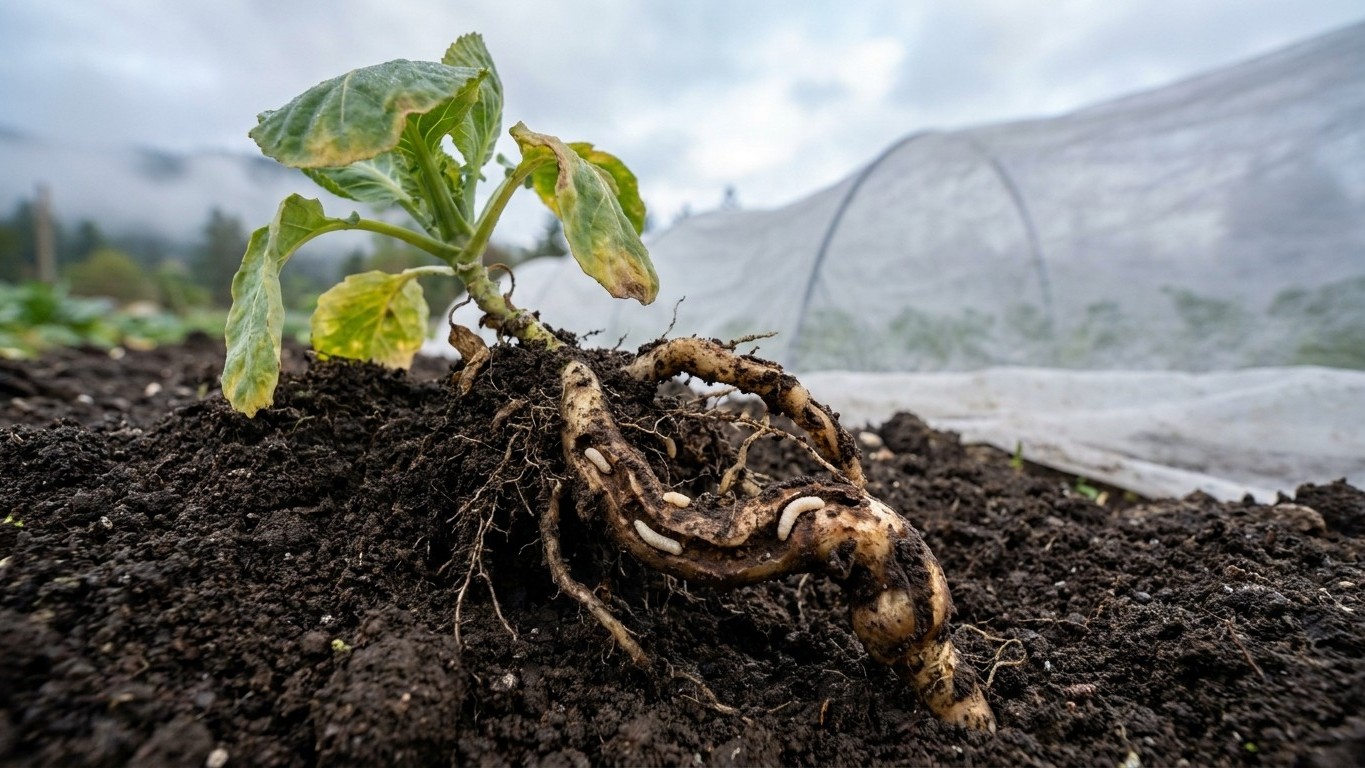

Choose early-maturing, orange-fleshed sweet potatoes, ideally compact or bush-type vines, and plant them on warm ground. Massachusetts can grow them, but the season is tight. The slowest varieties will not finish here, and the fast ones are the dependable choice from the coast to the hills.
The short answer for Massachusetts
Start with the frost numbers, because they show why “early” matters. At the Boston Logan reference station, NOAA’s 1991-2020 Climate Normals put the last spring 32F freeze between April 1 and April 8. Those dates mark the 30 to 70 percent probability band, meaning the window where a freeze is neither unlikely nor certain. The first fall freeze falls between November 3 and November 14 on the same measure. On paper that is a generous stretch.
On the ground it is not. Logan is a waterfront urban station and the mildest spot in the state, so inland suburbs and the Berkshires freeze earlier in fall and later in spring. And sweet potatoes do not start on the last frost date. They are tropical plants that sulk in cool soil, so the real clock starts weeks after April, when the ground has warmed. Check the When to Plant Sweet Potatoes in Massachusetts page for that timing.
Decide by type, not by catalog hype
Heat matters too. The Boston reference station averages 10.2 days a year at 90F or above. That is a mild heat load for a crop that loves long, hot summers, so varieties that need every warm day will lag. Quick types, such as Georgia Jet or Beauregard, are commonly sold as early producers, but this page has no Massachusetts trial data to rank them. Read the days-to-maturity on the tag instead.
| Type | Fit in Massachusetts | Reasoning |
|---|---|---|
| Early-maturing, orange-fleshed | Best bet statewide | Finishes before fall cold, even after a late planting |
| Bush or compact-vine | Good for small plots, raised beds, large containers | Less vine to fill, and the soil in a bed warms faster |
| Mid-season types | Workable on the coast and in warm pockets, with plastic mulch | Needs a full summer with little margin |
| Slowest types (often heirlooms, some purple- or white-fleshed) | Risky, especially inland and uphill | Long days to maturity run into fall frost |
For the full growing picture, see Growing Sweet Potatoes in Massachusetts. This page covers only the variety decision.
What will not work here
The slowest sweet potatoes lose the race. A variety whose tag promises a long stretch to harvest needs warm soil from planting until digging, and Massachusetts gives you that only in the middle of the season. Plant slips in early June, add the long maturity on the tag, and the harvest date lands right inside the frost band of November 3 to 14 at Logan. For a garden in Worcester County or the Berkshires, the freeze arrives sooner. A variety that “just makes it” on the coast fails inland.
Planting by the frost date fails as well. A gardener who sees April 1 to 8 and sets slips out in April will meet cold soil and probably cold nights. Slips stall, yellow and sometimes rot. Frost odds say when a tender plant will not be killed outright. They do not say when it will grow.
Heat-dependent cultivars are another weak choice. With only 10.2 days at or above 90F in a typical year, Boston summers lean moderate. Types bred for the long humid heat of the Deep South may survive here but they will set small roots. Choosing a variety from a Southern catalog because it wins praise in Georgia means borrowing a different season.
Watering habits can also go wrong in either direction. Summer rainfall at the reference station totals about 10.4 inches across June, July and August: 3.89 in June, 3.27 in July and 3.23 in August, out of 43.6 inches for the year. That is ample on clay, where the surface holds water for days, and the wrong reason to water on a schedule. Overwatering in late summer can crack roots and invite rot. On sandy ground, rain passes through within the day, and a summer thunderstorm mostly runs off rather than soaking in, so a sandy bed may still want a deep soak every week or so once the vines are established. Those are normals for one station, not your yard. A rain gauge on your own plot settles it.
Close spacing is the last trap. Crowded vines in a Massachusetts August stay damp under the canopy, which favors rot and disease. Give slips room, and give the compact types the same generous spacing you would give a sprawling one if the bed is wet.
What changes across Massachusetts
A single Massachusetts garden does not exist. The USDA Plant Hardiness Zone Map (2023 edition, built on 1991-2020 normals) places the state in zones 5a through 7b. That spans six half-zone steps, from the coldest hills to the mildest coast and islands. No single recommendation fits all of it, and any page that claims one is guessing.
Zones measure one thing: the average annual extreme minimum temperature. Sweet potatoes die at the first frost anyway, so a winter low does not decide their fate. Still, a colder zone usually means a shorter stretch between the last spring chill and the first fall one, and that is what matters. Think of the zone as a rough proxy for how much margin you have.
In the north and at altitude, shift everything toward caution. Choose the earliest-maturing type you can find. Favor compact vines. Warm the soil ahead of time with black plastic mulch or a low tunnel, plant later rather than earlier, and expect smaller roots than a coastal neighbor gets. On the coast and islands, you can try a mid-season type and plant a little sooner, though the tight-season logic still holds.
Do not assume which zone you live in from a neighbor’s guess or a plant tag. Look up your address on the USDA Plant Hardiness Zone Map, then read the result as a rough guide to margin, not a verdict.
Where to check this for your own county
Your state extension service is the best next stop. Start with UMass Extension, the land-grant extension program for Massachusetts. Look there for two things: a local planting calendar, and any sweet potato varieties trialled in or near your county. Trial results show what actually finished in Massachusetts dirt, which no catalog can promise.
A county recommendation beats a state one, and this page is the state one. It is built from a single reference station that, as noted above, is the mildest in Massachusetts. A county agent knows the local frost pockets, the soils and the trial results. If their advice differs from this page, follow theirs.
This page does not have a Massachusetts extension calendar for sweet potatoes, and it will not borrow one from another state. Extension calendars are also often written one crop at a time, so make sure the sheet you open is for sweet potatoes and not a different plant.
Checking this against your own garden
Your own observations outrank every date here. Three are worth watching, and none needs a gadget.
- Soil warmth by feel. Push your hand a few inches into the bed in the morning. If it feels cool, wait. A bed under plastic will feel warmer than one beside it, which tells you how much plastic is buying you.
- The first new leaves on your slips. Fresh growth a week or two after planting means the roots took hold. Stalled or yellowing slips mean the site is colder than the calendar suggested.
- The first frost in your low spots. Note the date frost first whitens the ground, and where. Cold air pools in hollows, so your dig date may come earlier than a neighbor’s on a slope.
Write those three dates down for a couple of seasons. They will tell you more about your microclimate than a station at Logan Airport can, and they tell you how long a variety you can really afford.
Common questions
Can I grow sweet potatoes in the Berkshires?
Possibly, with the earliest-maturing types, compact vines and warmed soil. The Berkshires freeze earlier in fall than the Boston reference station, so the margin is thin. County extension trial results are the best guide.
Should I plant slips as soon as the last frost date passes?
No. The April 1 to 8 band is the probability of a 32F freeze at Logan, not a signal that the soil is warm enough. Wait until the ground feels warm to the hand.
Do bush varieties produce less?
This page has no Massachusetts yield data to compare. Bush or compact types are suited to small beds and containers, and they take less room. Check your county extension for trial results.
How much water do sweet potatoes need in a Massachusetts summer?
Normal summer rainfall is about 10.4 inches across June, July and August at the reference station. Clay holds that water, while sandy soil lets it drain. Watch your own plot with a rain gauge, and water deeply but rarely.