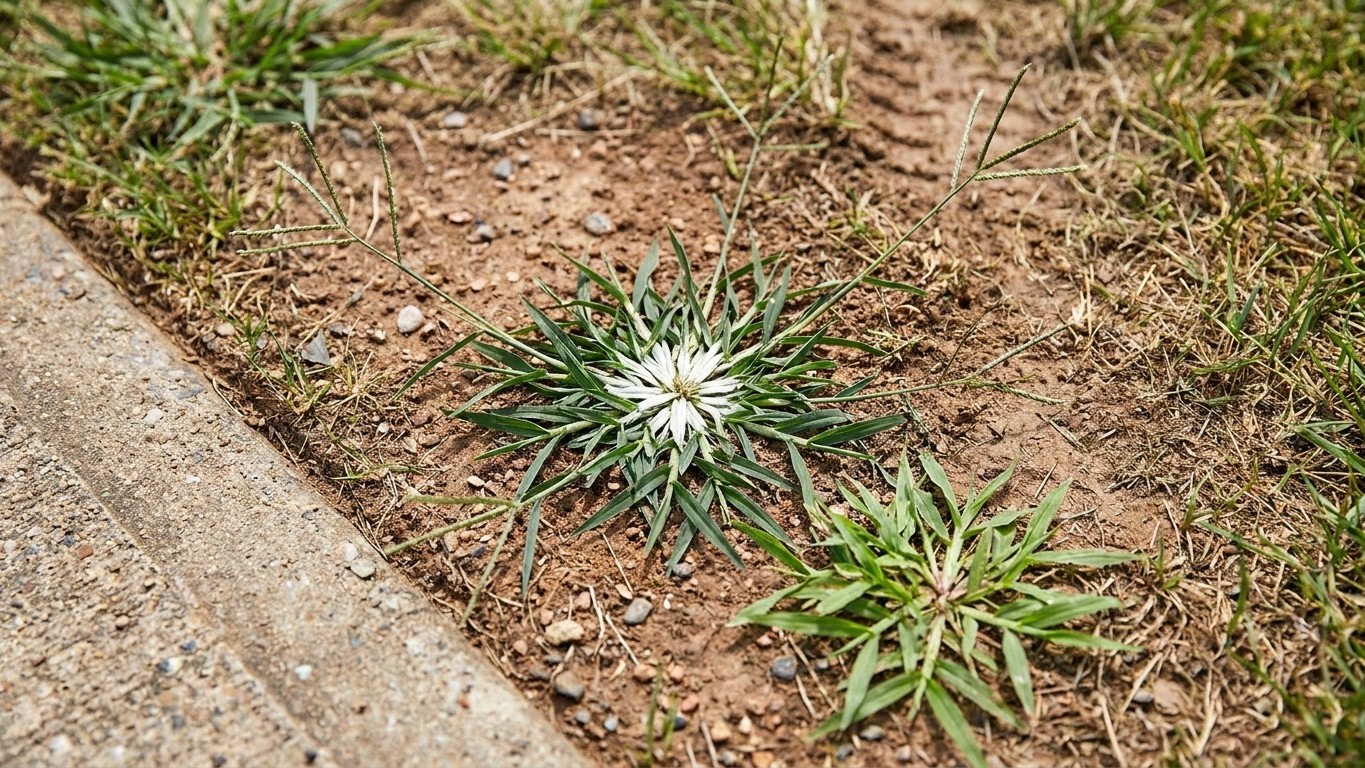

Aerate a cool-season lawn in Idaho in fall, while the grass is still growing, and finish before the first frost. In the Boise valley, NOAA NCEI’s 1991-2020 Climate Normals put that frost between October 7 and October 21. Warm-season lawns run on a different clock: summer, when they grow hardest. Idaho lawns sit in the transition zone, so your grass type decides which window is yours.
When to aerate a lawn in Idaho
Lawns here come in two families. Tall Fescue, Kentucky Bluegrass and Perennial Ryegrass are cool-season grasses. Zoysiagrass and Bermudagrass are warm-season. Clemson Cooperative Extension (HGIC 1214) and Penn State Extension list those species for climates like Boise’s, which The Homestead Post classes as transition. Neither family excels in that zone. A cool-season lawn suffers in July, and a warm-season lawn is brown from October to April. One caution: that label describes the Boise valley. Higher ground and the far north or south of Idaho can fall in the neighboring zone.
The clearest extension rule comes from the University of Nebraska-Lincoln. It says: “Cool season grasses, including Kentucky bluegrass, fescues, and perennial ryegrass, can be aerated in spring from early April through the end of May and again in fall from late August through the end of October.” For warm-season grass, it says: “Warm season grasses, such as zoysia and buffalograss, should also be aerated when they are growing actively, which is late May though late August.” Those months are Nebraska’s, not Idaho’s. A late-October job would run straight into an Idaho frost. What carries over is the condition: aerate while the grass is actively growing.
For a cool-season lawn, that means fall. Aerate while the grass is still growing and finish ahead of the October 7 to October 21 first-frost window. That window is the Boise station’s 32°F freeze probability band (30-70%) in the NOAA NCEI normals. Boise is a low valley, and most of Idaho is higher and colder. There the first frost comes earlier, so the fall job moves earlier too. Check First and Last Frost Dates in Idaho for your own area. Spring is an optional second window once the lawn is growing, but fall is the one that matters.
A warm-season lawn gets its turn in summer. Nebraska’s late May through late August shows the pattern: the grass is green, spreading and able to heal. In Idaho, wait until the lawn has fully greened up, and stop well before it fades toward dormancy.
| Lawn type | Grasses | Aerate when | Trade-off in Idaho |
|---|---|---|---|
| Cool-season | Tall Fescue, Kentucky Bluegrass, Perennial Ryegrass | Fall, while growing, before the first frost | Suffers in July |
| Warm-season | Zoysiagrass, Bermudagrass | Summer active growth | Brown from October to April |
Core aeration, not spikes
A spike pushes a hole into the ground. A core aerator pulls a plug out of it. That difference matters because a spike squeezes the soil around the hole, which can leave the walls tighter than before. UNL’s article says solid-tine or spike aeration is “not effective in clay/silt soil” and names core aeration as the method for compacted ground.
Idaho’s state soil shows why that advice applies here. USDA NRCS lists the Threebear series as representative of the state. It is an Andisol, a volcanic-ash soil that is light, porous and unusually good at holding both water and phosphorus. The surface horizon averages 35 percent sand, 15 percent clay and 50 percent silt, a loam to silt texture, and it is moderately well drained. Surface pH is about 5.0, strongly acid. The recorded organic matter is about 75.0 percent, but that is a natural organic layer in the mapped surface, not something a mowed lawn will have.
Treat all of that as a tendency, not a diagnosis. A state spans hundreds of soil series, and river bottoms, hill country and ground a builder scraped or filled can be completely different. Silty ground tends to seal and compact under foot traffic and mower wheels, and spikes won’t fix that. A soil test will give you your own pH, which the Threebear figure cannot.
Good cores are short, tubular plugs of soil with grass and roots attached, scattered across the surface. Leave them where they fall to break down, and don’t rake them up. If the plugs crumble to nothing or the machine barely bites, something is off. Moisture decides most of that: run the aerator only when the soil is moist but not wet. A screwdriver should slide in easily, and a handful squeezed in your fist should hold together briefly and then crumble. Dry ground makes tines bounce and pull shallow stubs. Wet ground smears, clumps and leaves tracks.
Aerating and overseeding together
On a cool-season lawn, the best reason to aerate in fall is what it sets up. Every core hole is a protected pocket where seed touches soil, stays moist and escapes the mower. Fall also gives seedlings warm soil and cooler air, the combination cool-season grasses want. Spread seed right after the machine passes, and the plugs and loosened soil work it in.
For a Boise-valley fescue, bluegrass or ryegrass lawn, aerate and overseed in the same pass, in fall, ahead of the October 7 to October 21 frost window. Seedlings need time to establish before a freeze, so on higher, colder ground do both sooner. When to Overseed a Lawn in Idaho covers the seeding side in detail, and The Best Grass Seed for Idaho Lawns helps with the trade-offs of each species. The Idaho Lawn Care Calendar, Month by Month shows where the job sits among mowing, feeding and watering.
Warm-season lawns don’t fit that pairing. Zoysiagrass and Bermudagrass fill holes by spreading, so they don’t need seed dropped in. They are also heading toward their brown season by October, which is when cool-season seed would be going down. Seed on a fading warm-season lawn gives you weak seedlings and a patchy mix of two grasses with opposite seasons. Aerate warm-season grass in summer and let it heal on its own.
What goes wrong
Aerating a dormant lawn tops the list. A cool-season lawn is stressed or sleeping in the heat of July, and a warm-season lawn is brown from October to April. Holes in either one just sit open to weeds. If the grass is brown and not growing, wait.
Aerating too close to the first frost comes next. In Boise that means pushing into October 7 to October 21 itself. Roots that were just cut and seedlings that just sprouted have no time to toughen up. Higher and colder parts of Idaho get their first frost earlier, so the same mistake happens sooner there.
Waterlogged soil smears and seals the holes. Bone-dry soil defeats the tines. Water a dry lawn a day or so ahead, or let a soggy one drain, until the soil is moist but not wet.
The last problem is expecting spikes to fix silty or clay-heavy ground. They poke, they don’t remove, and the soil often ends up just as tight. If the lawn pools water or stays hard, rent a core aerator. For the bigger picture, see Lawn Care.
Common questions
Can I aerate a cool-season lawn in spring instead?
Yes, once the grass is actively growing. Nebraska’s extension lists spring as a window for cool-season grasses, but those months are Nebraska’s. In Idaho, spring is a backup. Fall remains the better time, particularly if you plan to overseed.
I live above the Boise valley. Do the same dates apply?
No. The October 7 to October 21 range is Boise’s first-frost window. Higher ground gets frost earlier, so move fall aeration earlier and finish well ahead of your own first frost.
Does Idaho’s state soil mean my lawn is light and porous?
Not necessarily. Threebear is USDA’s representative soil for the state, not a measurement of your yard. A soil test will tell you where you stand.
Are spike shoes enough for a small lawn?
Spike shoes are a solid-tine method, and UNL says that approach is not effective in clay or silt soil. A core aerator pulls actual plugs and is the better tool for compacted ground.