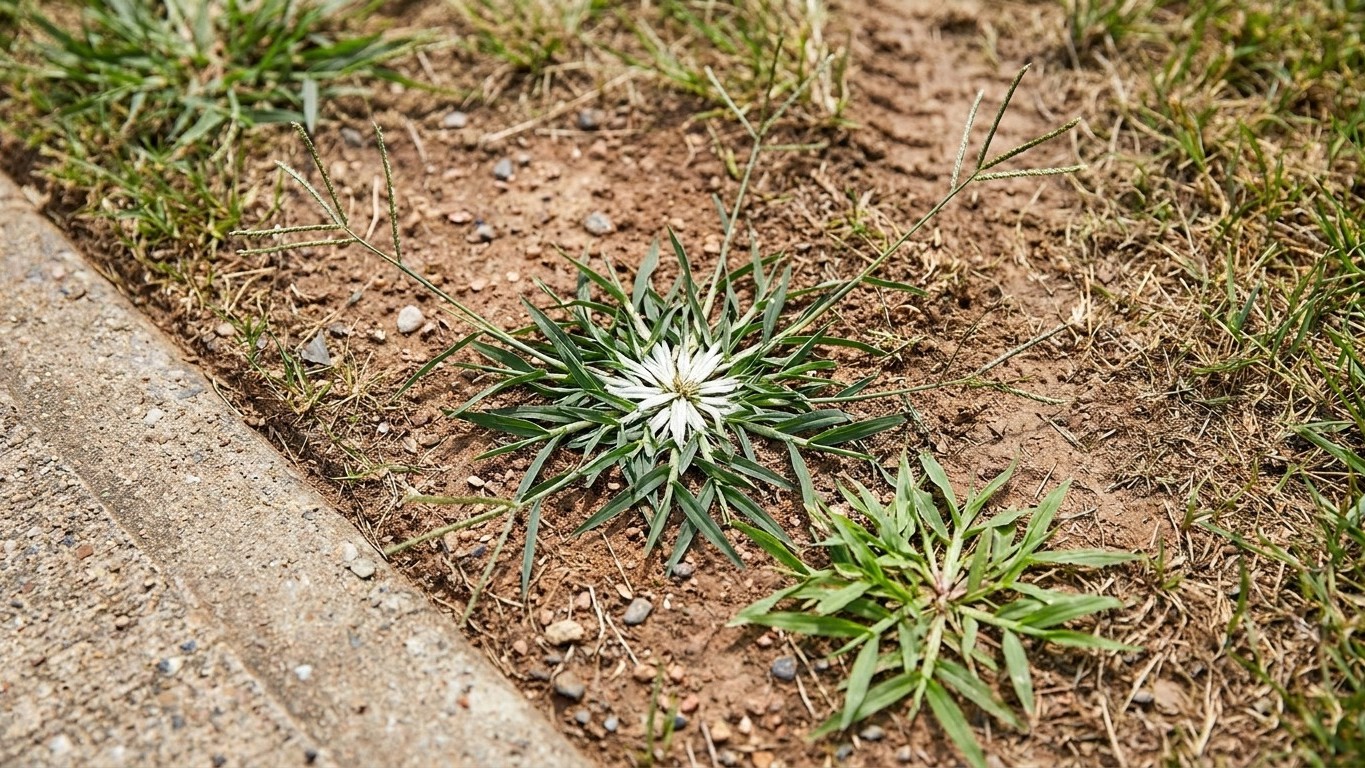

Aerate a Massachusetts lawn in fall, while the grass is still growing and well before the first freeze. Nearly every lawn in the state is cool-season turf, so late summer into autumn is the window. At Boston’s Logan Airport the first freeze arrives between November 3 and November 14 (NOAA NCEI, 1991-2020 normals), and it comes sooner inland. Spring is a workable second choice. Summer aeration only applies to a rare warm-season patch.
When to aerate a lawn in Massachusetts
Start with what the grass can do. The cool-season species that hold up here are Fine Fescues, Kentucky Bluegrass, Perennial Ryegrass, Rough Bluegrass and Tall Fescue, according to Clemson Cooperative Extension (HGIC 1214) and Penn State Extension. The Homestead Post reads Boston’s climate normals against Clemson’s season tolerances and lands on a cool-season zone. Warm-season grasses such as zoysia and buffalograss do their growing in summer heat, and the winters here are tougher than they are suited for. They tend to lose ground, which is why a warm-season lawn is the exception and not the plan. For seed choices, see The Best Grass Seed for Massachusetts Lawns.
That zone label belongs to the reference station, not to the whole state. Higher ground and the Berkshires run colder than Boston, so treat the label as a starting point.
What the extension rule says, and whose months they are
The University of Nebraska-Lincoln Extension puts it this way: “Cool season grasses, including Kentucky bluegrass, fescues, and perennial ryegrass, can be aerated in spring from early April through the end of May and again in fall from late August through the end of October.” For warm-season lawns it adds that they “should also be aerated when they are growing actively, which is late May though late August.”
Those months are Nebraska’s. Massachusetts sits in a different climate, so don’t copy them onto your calendar. What carries over is the condition: aerate while the grass is actively growing and can fill in the damage. For a cool-season lawn, that means fall before the first freeze, and optionally spring.
Where the frost window fits
The NOAA figure comes from Logan, a waterfront urban station and the mildest spot in the state. Its 32°F freeze probabilities in the 30 to 70 percent band fall between November 3 and November 14. Inland suburbs and the Berkshires get frost noticeably earlier. A colder location means an earlier first frost, so fall work moves earlier there, not later. The decision to write down: aerate in fall while the grass is still growing, finished well ahead of the November 3 to November 14 frost window, and earlier still inland. Details for your town are in First and Last Frost Dates in Massachusetts, and the rest of the lawn year is laid out in The Massachusetts Lawn Care Calendar, Month by Month.
Core aeration, not spikes
A core aerator pulls small plugs of soil out of the lawn. A spike aerator, or a pair of spiked shoes, just pushes a hole and presses the soil sideways around it. In compacted ground that squeezes the hole walls tighter. The Nebraska extension article says solid-tine or spike aeration is “not effective in clay/silt soil” and names core aeration as the method for compacted soils.
Massachusetts has an official state soil, the Paxton series, named by state law in 1990. USDA NRCS Soil Data Access lists representative surface values across 265 mapped components: 61 percent sand, 7 percent clay, 32 percent silt, about 5.5 percent organic matter, a surface pH around 5.5, and well drained. It is an Inceptisol, a young soil without strong horizons. So the region’s ground tends to shed water and run slightly acid.
That does not describe your yard. The numbers are for the surface of the mapped series, and Massachusetts has hundreds of soil series. River bottoms, hill country and any lot a builder scraped or filled can behave completely differently. Compaction from construction equipment is the usual reason a lawn needs aeration at all. A soil test will give you your own pH and texture, and it costs far less than guessing. Rent or hire a core aerator, and skip the spikes.
Good cores look like short, tidy plugs of soil, often with a bit of thatch and grass on top, scattered across the lawn in rows. Leave them where they fall. They crumble within a couple of weeks of rain and mowing and return soil to the surface.
On the day, the soil should be moist but not wet. Bone-dry ground turns hard and the tines skip across it, pulling short, broken cores or none at all. Saturated soil smears, clogs the tines and leaves ruts. A screwdriver is a decent test: if it slides in easily by hand, the tines will go in too.
Aerating and overseeding together
For a cool-season lawn, fall is when aeration and seeding make the most sense as a pair. The holes give seed a protected spot in direct contact with soil, which matters because seed lying on top of matted turf tends to dry out or wash away. The grass is also growing in the cooler weather, so new seedlings have time to establish before winter. Aerate first, then seed immediately, and you do two jobs with one pass across the lawn. The timing and seeding details are in When to Overseed a Lawn in Massachusetts.
The cores help here too. As they break down, they leave a little loose soil around the seed. After seeding, keep the surface from drying out until the new grass is up, which usually means light, frequent watering and not a deep soaking. Seed the same day, right after the aerator passes, because the holes start filling in quickly.
The pairing does not fit a warm-season lawn. Nebraska’s guidance has those grasses aerated in summer, during active growth, and cool-season seed does not belong in a summer lawn that is growing at full speed. The seed would have to compete with established grass in the heat. A warm-season lawn is also dormant by the time fall seeding makes sense. So if you have a zoysia patch in Massachusetts, aerate it in summer and treat overseeding as a separate decision, probably a skipped one.
Most Massachusetts lawns are cool-season, so this is mostly a detail for the odd exception. The basic routine holds for nearly everyone: aerate and seed together in fall, ahead of the frost.
What goes wrong
Aerating a dormant lawn gets little in return. Grass that has stopped growing, whether from late-fall cold or a summer drought, cannot fill the holes or spread into them. You tear open the turf, expose the roots, and leave open ground for weeds. If the lawn is brown from drought, wait for fall rain and renewed growth.
Waiting too long into fall causes the same trouble from the other direction. Seedlings need time before a freeze, and cores pulled just ahead of frost leave holes the grass cannot repair. Keep in mind that the November 3 to November 14 window is Logan’s, and inland lawns reach it sooner. If that window is close, skip fall aeration and wait for spring. Spring is the fallback, as long as the grass is growing and the soil has drained.
Soil moisture is the next failure. Waterlogged soil smears and compacts as the machine rolls over it, which can make the problem worse. Bone-dry soil resists the tines. Wait for a day or two after rain, or water the lawn lightly the day before.
The last mistake is expecting spikes to fix clay. If your yard sits on clay or silt, as the Nebraska article warns, spikes can pack the soil tighter around each hole. Cores are the method, and a soil test tells you what you are working with. For the larger picture of lawn timing, see Lawn Care.
Common questions
Can I aerate in spring instead of fall?
Yes, as a second choice. The Nebraska extension lists both seasons for cool-season grasses. The condition is the same: the grass is growing and the soil is moist but not soggy. Fall still wins when you plan to overseed.
Do I use the Boston frost dates for my town?
Only as a ceiling. Logan is the mildest station in the state, so inland suburbs and the Berkshires hit frost earlier. Plan to finish earlier than the November 3 to November 14 window if you live away from the coast.
How do I know if my lawn is compacted?
Water that runs off or puddles, thin turf that stays thin, and a screwdriver that will not push in all point to compaction. A soil test shows pH and texture but not compaction, so use the screwdriver as your check.
Should the aerator come before or after the seed?
Before. Pull the cores first, then spread seed so it falls into the holes and onto loosened soil. Seed spread first just sits on the surface.