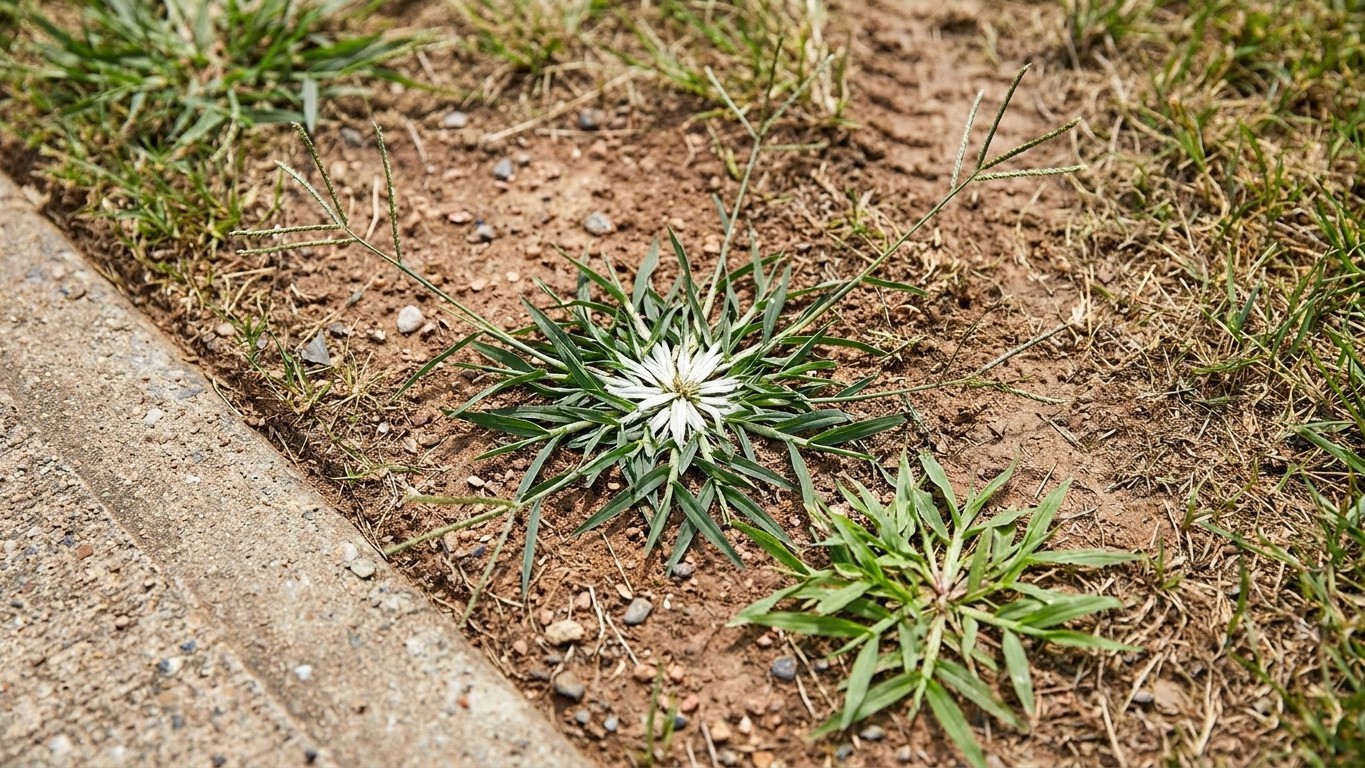

For a cool-season lawn in Kentucky, sow in early fall, with seed in the ground before the middle of September ends. Warm-season grasses such as zoysia and bermudagrass go in later, once spring soil reaches 65 to 70 °F. Kentucky sits in the transition zone, so the right date depends on which grass family you choose, and on how close your yard is to the colder, rural end of the frost map.
The best time to sow grass seed in Kentucky
Two grass families, two soil thermometers
Grass seed doesn’t care what the calendar says. It cares about soil temperature, and the two families want different numbers. Cool-season seed (tall fescue, Kentucky bluegrass, perennial ryegrass) germinates when soil sits at 50 to 65 °F. Warm-season seed (zoysiagrass, bermudagrass) needs 65 to 70 °F. Sow either one outside its range and the seed mostly sits there, waiting, or sprouts weakly and stalls.
A soil thermometer costs a few dollars and settles the argument. Push it two to three inches into the ground in the morning, check it for several days, and sow when the reading holds inside the right band for your grass.
Why fall wins for cool-season lawns
Late summer and early fall give cool-season seed something spring can’t: soil still warmed by months of sun, paired with air that’s getting kinder every week. Seedlings grow fast, weeds are fading, and the new lawn gets a full autumn and the following spring to put down roots before the first July heat wave arrives.
Spring sowing works, but it is a gamble with a deadline. Soil climbs back into the 50 to 65 °F band around the last spring frost, which NOAA’s 1991-2020 Climate Normals put between March 24 and April 4 at the Louisville station. Seed sown then has only a few months to build roots before summer arrives. A spring-sown fescue lawn often reaches its first hot month underdeveloped, thin, and thirsty.
The transition-zone trade-off
No single grass wins here, and anyone who names one is selling something. A cool-season lawn stays green for most of the year but suffers in July. A warm-season lawn handles Kentucky summers easily and then sits brown from October to April. Pick the problem you’d rather live with.
Those Louisville dates carry a warning. The National Weather Service office there notes that this urban station runs later in spring and earlier in fall than the rural ground around it. One city’s numbers don’t describe the whole state, so a farm in the hills should expect a tighter window than the figures suggest. Neighbors in the next state over face a slightly different calendar, laid out in When to Plant Grass Seed in West Virginia.
The last date that still works
Working back from the first freeze
Young grass needs about 45 days of growing weather before the first fall freeze. Seed sown later can still germinate, and that’s the cruel part: the seedlings come up, look promising, and then die over winter because their roots never got established.
The Louisville station’s 1991-2020 normals put the first fall freeze between November 2 and November 12 (the 30-70% probability band for 32 °F, from NOAA NCEI). Count back 45 days and the last workable sowing date lands between September 18 and September 28. That’s for a city station. Since NWS Louisville says the surrounding rural county freezes earlier, a country yard should treat the earlier end of that range as the real deadline, or move it earlier still.
If the date has already passed
Today is October 1, so for the Louisville band that window has just closed. That doesn’t mean a lawn project is dead. It means you choose between two honest options. One is sowing now and accepting real risk of winter loss, which makes sense only for a small patch you can easily reseed. The other is waiting for spring, when you can sow cool-season seed as soil returns to the 50 to 65 °F band, or warm-season seed once it reaches 65 to 70 °F.
Use the spare months well. Test the soil, fix drainage, and pull out the weeds that would otherwise compete with seedlings. A spring lawn on well-prepared ground beats a late-fall lawn on hopeful ground.
The 45-day rule also explains why warm-season seed doesn’t belong in a fall plan. It would have to establish while soil is cooling, which is the opposite of what it needs. Gardeners in colder places feel this squeeze even harder; When to Plant Grass Seed in Saskatchewan shows how a short season compresses the whole calendar.
Seed rate and soil preparation
How much seed per 1,000 square feet
More seed is not insurance. Crowded seedlings compete for light and water, and the weaker ones thin out, leaving a lawn that looks worse than one sown at the right rate. These are the rates for a new lawn, in pounds per 1,000 square feet. Overseeding an existing lawn takes half.
| Grass | Family | Soil temperature for germination | New-lawn seed rate |
|---|---|---|---|
| Tall Fescue | Cool-season | 50 to 65 °F | 6 to 8 lb |
| Kentucky Bluegrass | Cool-season | 50 to 65 °F | 1 to 3 lb |
| Perennial Ryegrass | Cool-season | 50 to 65 °F | 4 to 10 lb |
| Zoysiagrass | Warm-season | 65 to 70 °F | 1 to 2 lb |
| Bermudagrass | Warm-season | 65 to 70 °F | 1 to 4 lb |
Where extension sources disagree, those ranges cover them, so follow the seed bag if it falls inside the range.
Depth and ground
Cover the seed with no more than 0.25 inch of soil, then press it down so every seed touches earth. Seed buried deeper often never emerges, and it is the single most common reason a new lawn comes up patchy. Raking lightly and rolling or tamping does the job.
Kentucky’s official state soil, the Crider series, shows what the region’s ground tends to do. Its surface layer is a well-drained silt loam (76 percent silt, 19 percent clay, 5 percent sand) with about 3.0 percent organic matter and a surface pH near 6.2, slightly acid. That is friendly ground for most lawn grasses, and silty surfaces can seal over after a hard rain, so loosen the top few inches before seeding.
That’s the state’s representative soil, not necessarily yours. River bottoms, hill country, and any lot a builder has scraped or filled can differ completely. A soil test through University of Kentucky Extension will give you your own pH and nutrient numbers. If you’re starting from bare ground, the full process is in Starting a New Lawn From Seed.
Watering a new lawn until it holds
Before the seedlings show
Seed sitting under a quarter inch of soil dries out fast, and a seed that starts germinating and then dries out is a dead seed. The goal for the first weeks is a surface that never fully dries, not a soaked one. Short, light watering sessions several times a day beat one long soak, which would puddle on silty soil and wash seed into low spots.
Watch the weather as much as the schedule. A cool, cloudy day needs less water than a breezy, sunny one. Stick a finger into the top half inch of soil: if it’s dry, the seed bed needs another pass.
After the grass is up
Once seedlings are standing, begin stretching the gaps between waterings and making each one longer. This pushes roots downward, where the soil stays moist longer, and it is what makes a lawn survive a Kentucky summer. A lawn that was watered lightly forever grows shallow roots and shows it the first dry August.
Keep foot traffic and mowing off the new grass until it has clearly taken hold. Letting seedlings get a little taller than feels natural before the first cut helps them anchor, and a dull mower blade will tear young plants out of soft ground.
Rain doesn’t excuse you from checking. A heavy storm can wash seed into the low corner of the yard, so walk the lawn afterward and rake bare patches level. Re-seed any spot where the stand looks thin while the weather still favors germination.
Common questions
Can I plant grass seed in Kentucky in October?
For cool-season grass in the Louisville area, it’s late. The 45-day establishment window closes between September 18 and September 28 at that station, and earlier in colder rural spots. A small patch might survive, but a whole lawn is better waited out until spring.
Is spring or fall better for sowing?
Fall is better for cool-season grasses, because roots build before summer heat. Spring suits warm-season grasses such as zoysia and bermudagrass, which need soil at 65 to 70 °F.
Which grass should I choose for Kentucky?
Kentucky is in the transition zone, so every option compromises. Cool-season lawns suffer in July, and warm-season lawns are brown from October to April. Choose based on which of those two seasons bothers you less.
How deep should I plant grass seed?
No deeper than 0.25 inch, with the seed pressed firmly against the soil. Deeper seed often never emerges, which is the most common cause of a patchy new lawn.