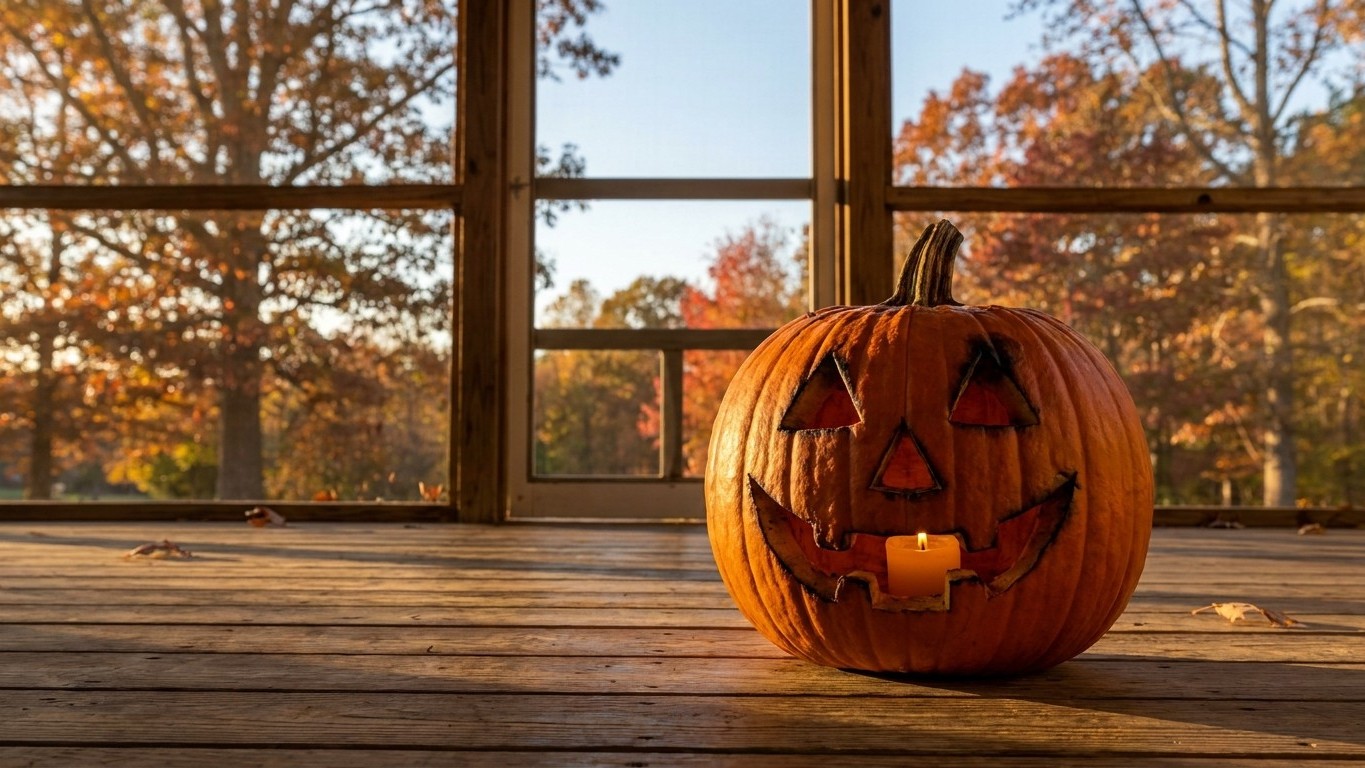

Frost eats more Quebec pumpkins than any insect does. The average first fall frost at Montreal/St-Hubert A falls on October 5, and a pumpkin needs 45 to 55 days after its flower opens to ripen. Squash bugs and cucumber beetles chew on the vines through summer, and a whole pumpkin stored beside an apple crate ages faster than it should. But the calendar does the most damage, because it quietly cancels every flower that opens too late.
The short answer
Start with the frost. Environment and Climate Change Canada puts the average first fall frost at the Montreal/St-Hubert A station on October 5. Work backwards 45 to 55 days and you get a window, not a day: roughly August 11 to August 21. That is the latest a flower can open and still give a ripe pumpkin in an average year. A flower that opens after that window is betting on a late frost.
Counting back from the frost date
The arithmetic is short. October 5 minus 45 days lands on about August 21. October 5 minus 55 days lands on about August 11. The fast end of the pumpkin clock gives you the later date, and the slow end gives you the earlier one. Since nobody knows in advance which pace a given fruit will keep, treat August 11 as the safer edge and August 21 as the gamble.
One point decides everything: the 45 to 55 days run from flowering, not from seeding or transplanting. Utah State University Extension gives the pumpkin clock as 45 to 55 days to maturity after the flower, with sowing when the soil reaches 65 F. Count from the seed packet date and you will think you have weeks of margin that do not exist.
The October 5 figure is also a mean. In one year out of two the first frost comes later, and in the other half it comes earlier, by an amount this page does not publish. It marks the midpoint of a window and is not a safe date. Plan as if frost could arrive before it.
Why the station matters
Quebec is not one climate. The figure above comes from a single station south of Montreal, and northern or upland districts run weeks behind it. If you garden in one of them, your frost comes sooner and your flower deadline moves earlier by the same margin. The exact shift is not published here, so use your own local frost records. Canadian normals also cover an older 30-year period than the US figures used elsewhere on this site, so comparing across the border is rough at best.
The deadline has a second half. Harvest with the stem attached, before frost. After that, the pumpkin faces a different enemy, which is time and neighbors. University of Illinois Extension says a whole pumpkin keeps three to six months in a cool, dark place between 45 and 50 F. It also says to keep pumpkins away from ripening fruit and vegetables such as apples, potatoes and tomatoes. Ripening produce gives off a gas that ages the pumpkin, which is why the porch next to the apple crate is the worst spot you could pick. The 45 to 50 F range applies to a whole pumpkin only. It says nothing about a carved one.
For the full growing picture, see Growing Pumpkins in Quebec.
When to sow here
Sowing dates decide whether a flower can open before the August window closes. The sequence below shows the arithmetic in words, with the dates the sources actually support.
- Start with the average last spring frost at Montreal/St-Hubert A, which is May 6. It is a mean, so in about half of years the last frost comes later. Treat it as the middle of a window.
- Do not sow on that date. The soil must reach 65 F before pumpkin seed goes in, and soil lags the air by weeks. A frost date and a soil temperature are two separate measurements, and the second one comes well after the first.
- Add the lag. If the last frost is around May 6 and the soil trails by weeks, 65 F soil arrives in late May at the earliest and can slip into June in a cool spring. Check with a soil thermometer rather than the calendar.
- Subtract what row covers give back. Covers over the planting site buy about two weeks, so a sowing that would have waited until the soil warmed on its own can go in about two weeks sooner.
- Now check the result against the flower deadline. Sowing in late May or early June leaves a gap before the first flower, and that gap is not published in these sources. The only fixed points are the deadline at the far end (flowers open by about August 11 to 21) and the 65 F soil at the near end.
The squeeze is plain. A cool spring that holds the soil under 65 F into June eats into the margin before a vine has even sprouted, and every day lost there is a day the first flower can slip toward the closing edge of the window. That is why row covers, which give back about two weeks, matter more here than almost any other trick.
For a closer look at timing by planting date, read When to Sow Pumpkins in Quebec.
What goes wrong here
Quebec’s season length produces a handful of predictable failures. Each one comes from the same arithmetic, and each has a remedy that starts before the problem shows.
- A late flower that never colors. A flower that opens after the window gives a green fruit, because the 45 to 55 days run past the first frost. Count back from your own frost date, mark the deadline, and accept that blossoms after it will not finish. Plan sowing, and row covers, so the first flowers open well before it.
- A fruit caught by frost. The average first frost is October 5, and half of years it comes earlier. Harvest with the stem attached before frost arrives, and watch the local forecast through late September. Whatever you bring in must go where it will not freeze, which is all the source says about the spot.
- A vine that dies back before the skin hardens. When the leaves go early, the fruit loses its supply while the skin is still soft. Cut the pumpkin with the stem attached and move it indoors, rather than leaving it on dead vine. Our guide on whether pumpkins ripen before frost in Quebec goes through how to judge this.
- Insects on the vines. Squash bugs and cucumber beetles feed on the plant during the growing season, and both are covered on their own pages on this site. This page gives no timing for them because none is in the verified facts here. Check the vines during flowering, since a stressed plant flowers later and loses ground on the clock.
- Storage beside ripening fruit. A sound pumpkin can lose its keeping time next to apples, potatoes or tomatoes, because the gas they give off ages it. Keep the pumpkin in a cool, dark spot between 45 and 50 F, away from the fruit bowl and the root cellar’s apple crate. A whole pumpkin keeps three to six months under those conditions.
Common questions
Do the 45 to 55 days start when I sow the seed?
No. They start when the flower opens. The time from seed to first flower is not published in the sources used for this page, so count from the flower and keep your own notes on when the first blossom opens.
Is May 6 a safe date to plant pumpkins in Quebec?
No. May 6 is the average last spring frost at Montreal/St-Hubert A, so in about half of years frost comes later. More to the point, pumpkins want 65 F soil, and soil warms weeks after the air does. Plant by soil temperature, and use row covers to gain about two weeks.
What is the latest a flower can open and still give a ripe pumpkin?
Counting back 45 to 55 days from the average first frost of October 5 gives a window of about August 11 to August 21. Closer to August 11 is safer. Gardeners in northern or upland districts should shift that window earlier, since frost arrives weeks sooner there.
Where should I keep a harvested pumpkin?
A whole pumpkin keeps for three to six months in a cool, dark place between 45 and 50 F, away from apples, potatoes and tomatoes. The Utah State source says only to keep it where it will not freeze, and the 45 to 50 F range does not apply to a carved pumpkin.