
Quebec gardeners chasing a real jack-o’-lantern need their pumpkin flowers open by mid-to-late August at the very latest. That deadline is built from two fixed numbers: the 45 to 55 days a pumpkin needs after flowering to finish ripening, and the province’s average first fall frost, which lands near October 5. Sowing itself is a separate question, tied to soil temperature rather than the calendar, since pumpkin seed simply rots in ground that hasn’t warmed to 65 F.
The short answer
Start from the frost, not the seed packet. Environment and Climate Change Canada’s 1981-2010 normals put the average first fall frost at the Montreal/St-Hubert A station on October 5. That figure is a mean, not a guarantee: in roughly one year out of two, frost arrives later than that date, and in the other half it arrives earlier. Treat October 5 as the midpoint of a window, not a line you can plant right up against, and remember that a single station near Montreal doesn’t speak for the whole province. Gardens north of the St. Lawrence Valley, or at higher elevation, typically see their first frost weeks ahead of this date.
Working backward from that midpoint is what actually answers the question this page asks. Utah State University Extension puts pumpkin maturity at 45 to 55 days after the flower opens, not from the day the seed goes in the ground. Count 45 days back from October 5 and you land near August 21. Count the full 55 days back and you land near August 11. That gives a safe flowering window of roughly August 11 to August 21: a bloom that opens inside that stretch has a real chance of finishing before frost, using the average date as a guide. A bloom that opens after that window is racing a clock it’s likely to lose.
This is the number that matters more than any sowing date on a calendar. A pumpkin plant that flowers on time but late in its own cycle, say early September, is still working against the same 45-to-55-day requirement, and the arithmetic simply doesn’t leave enough season. Everything about choosing when to sow in Quebec exists to put flowering inside that August window, with enough margin for the year the frost decides to arrive early instead of on the average date.
When to sow here
The last spring frost at the same reference station averages May 6, but that date solves the wrong problem. Pumpkin seed doesn’t care about air temperature once frost risk has passed; it cares about soil temperature, and soil warms far more slowly than air. A grower who sows the week after the frost-free date is usually sowing into ground still too cold for pumpkin seed to do anything but sit and rot.
- Use May 6 only as the marker for when frost risk has largely passed, not as a signal that the ground is ready. Because it’s an average, treat any date close to it with caution rather than confidence.
- Wait on the soil itself. Air can be comfortable while soil six inches down is still cold, since bare ground lags several weeks behind air temperature after the last frost clears.
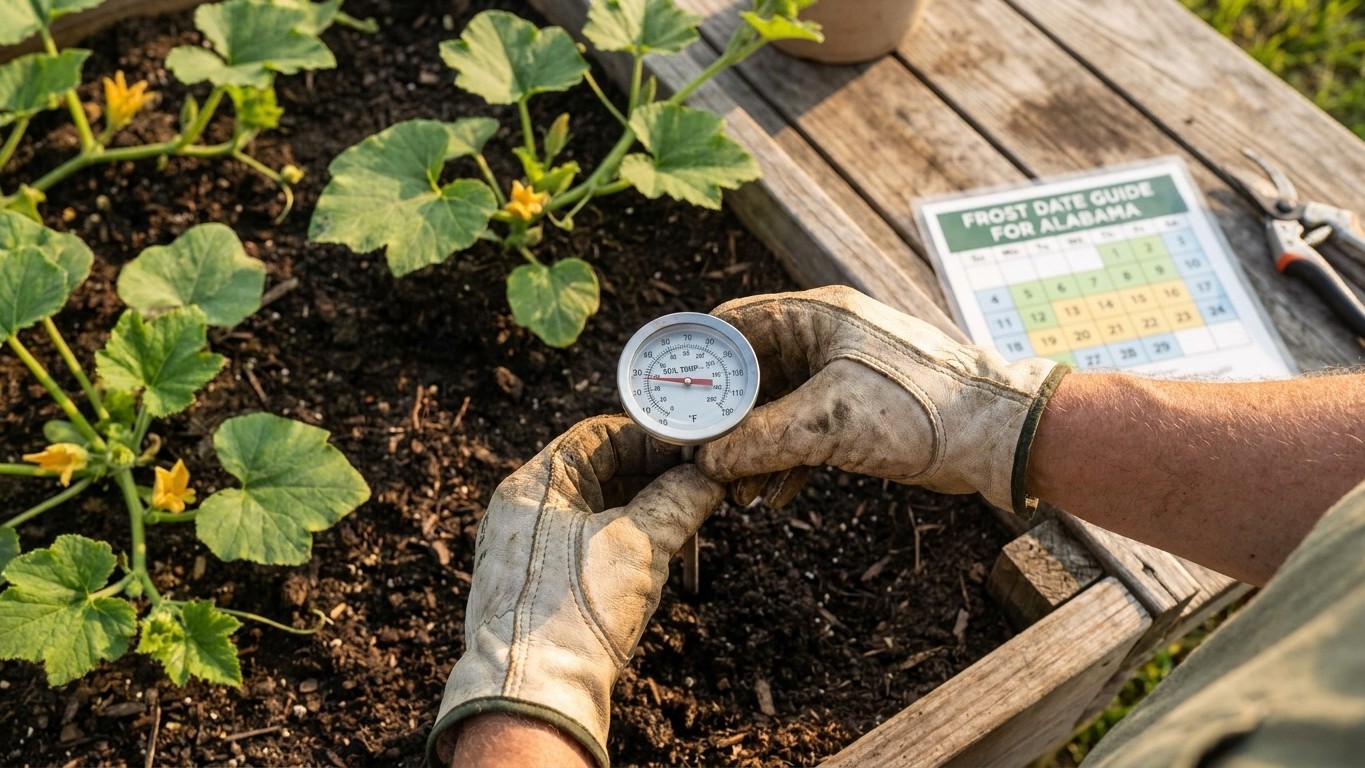
- Check soil temperature directly at planting depth before sowing. Pumpkins need it holding at 65 F, and in a Quebec spring that typically means the ground isn’t ready until well after the frost-free date has already passed.
- Warm the bed artificially if an earlier start matters. Row cover or dark plastic mulch laid over the soil can pull the 65 F threshold forward, effectively buying back about two weeks compared to bare, uncovered ground.
- Run the arithmetic forward once a sowing date is set. Add the weeks a pumpkin plant needs to grow from seed to its first open flower, then check that the resulting bloom date falls inside the safe window identified above, roughly August 11 to August 21. If it doesn’t, an earlier sowing date, a warmed bed, or a shorter-season plan becomes necessary.
None of this replaces watching the plant itself. A grower who sows the moment soil hits 65 F, aided by row cover, gives the plant the longest possible runway toward that mid-August flowering deadline, with room to spare if the season runs short.
What goes wrong here
- A flower that opens after the safe window never fully colours. Once a bloom opens past roughly August 21, the plant is short on the 45 to 55 days it needs before the average frost, and the fruit stalls out green or pale. The remedy is to track bloom dates through the season and pinch off new flowers that open too late, so the plant’s remaining energy goes into fruit that already has a chance.
- A fruit still ripening on the vine gets caught by the first frost. Even a light frost can collapse the stem and turn the flesh soft at the point where fruit meets vine. Watch the forecast as October opens rather than betting on a few extra days of colour, and harvest with the stem attached the moment frost looks likely.
- The vine dies back before the rind has hardened. Frost or late-season disease can kill the plant while the pumpkin’s skin is still soft, which means it won’t keep. Utah State University Extension’s guidance is to bring such fruit somewhere it will not freeze, giving the rind time to toughen off the vine, since no specific storage temperature or keeping time is published for this step.
- Seed sown before the soil reaches 65 F rots or limps out of the ground. A weak, stunted seedling pushes the entire flowering schedule later, eating into the same August window described above. Confirm soil temperature with a thermometer rather than guessing, and use row cover to warm the bed instead of sowing early on hope.
- Pests weaken the vine before the fruit finishes. Damage early in the season shortens an already tight window between sowing and the safe flowering cutoff. This site covers identification and control separately: see the pages on squash bugs in Quebec and cucumber beetles in Quebec rather than repeating that detail here.
Common questions
What is the latest date to sow pumpkins in Quebec?
There’s no single sowing date published for this, because the number that actually matters is the flowering deadline, not the seeding date. Aim to sow as soon as soil reaches 65 F so that flowering falls inside the roughly August 11 to August 21 window, worked back from the average October 5 frost using the 45-to-55-day maturity period.
Can I still get pumpkins if I missed the sowing window?
A late sowing can still flower and set fruit, but the math works against it once bloom time slides past the safe window described above. The fruit may reach size without finishing the full 45 to 55 days needed to mature and colour before frost.
How do I know when my soil has reached 65 F?
A soil thermometer pushed to planting depth is the only direct way to check. Air temperature and the calendar date of the last frost are not reliable stand-ins, since soil consistently lags behind air temperature by weeks in a Quebec spring.
How long can pumpkins be stored after harvest?
Utah State University Extension’s guidance stops at keeping harvested fruit somewhere it will not freeze; it doesn’t publish a specific storage temperature, humidity level, or keeping time for pumpkins, so no such figure can be given here.