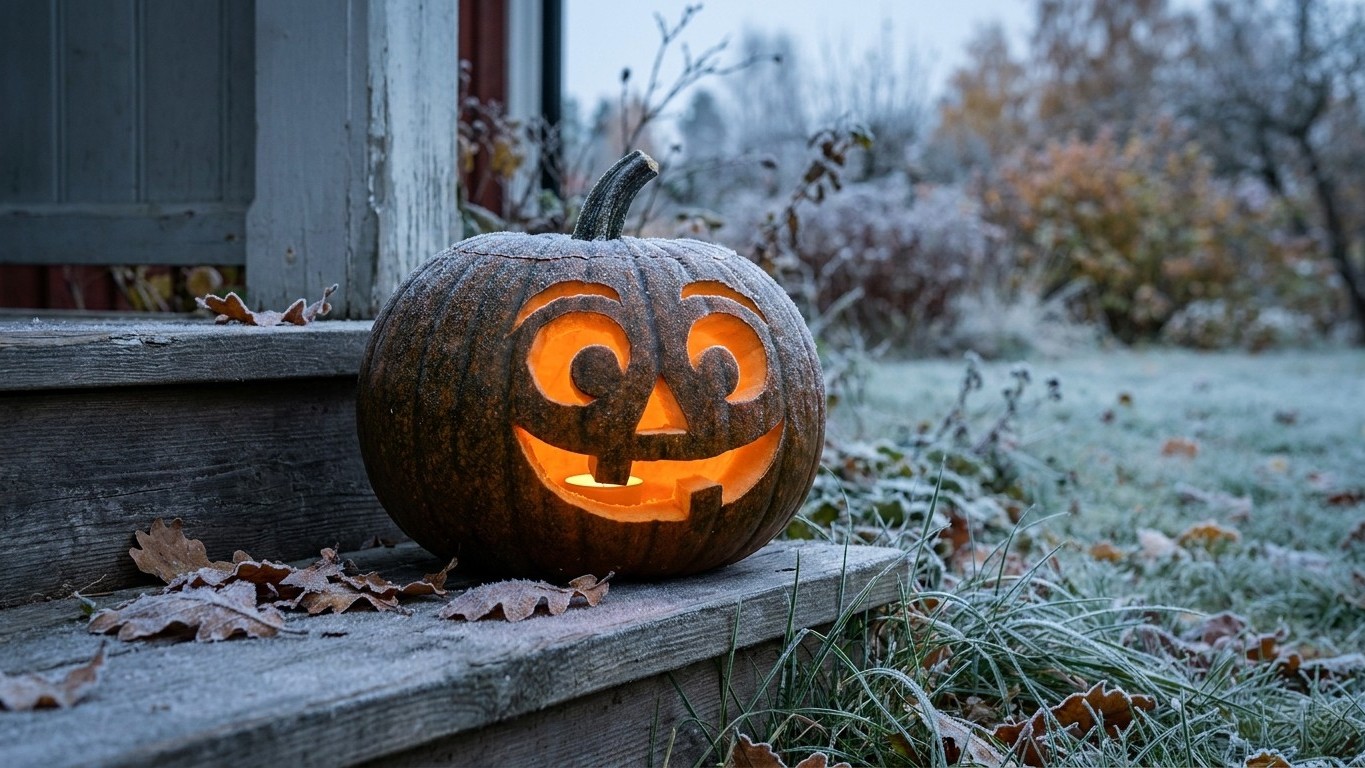

Frost is what ends most Rhode Island pumpkins, but the damage is usually settled weeks earlier, by the day the flower opened. Pumpkins need 45 to 55 days after flowering to mature, and the fall calendar leaves only so much room. Insects such as squash bugs and cucumber beetles also take a toll, and they have their own Rhode Island pages on this site. This page sticks to the clock.
The short answer
At the reference-city airport weather station, the first fall freeze (32 F, in the 30 to 70 percent probability band) arrives between October 24 and November 3, according to the NOAA NCEI U.S. Climate Normals. That is a reference-city figure, not a statewide promise. Suburban and rural gardens typically see frost one to two weeks earlier than an airport does, and more than that at elevation. Check the number for your own county before you build a plan on it.
Now work backward. Utah State University Extension puts pumpkin maturity at 45 to 55 days after flowering. Take the earliest frost, October 24, and subtract the slowest clock, 55 days: that lands on August 30. Take the latest frost, November 3, and subtract the fastest clock, 45 days: that lands on September 19. So the latest a flower can open and still give a ripe pumpkin at the reference city is a window running from roughly August 30 to September 19. Where you fall inside it depends on how soon frost hits your yard and how quickly your variety matures.
The count starts at the flower. It does not start at seeding, and it does not start at transplanting. A seed pushed into the ground in May has no bearing on the 45 to 55 days. A vine can be huge and green in August and still be too late if its fruit did not begin until the window closed.
For a garden that frosts a week or two ahead of the airport, shift the window by the same amount. Subtract 14 days from August 30 and 7 days from September 19, and the cutoff becomes about August 16 to September 12. A flower opening after that point will probably set a fruit that stays green. Sources here publish no way to speed it up, so the honest move is to count it as a loss and let the plant spend its energy on fruit that is already sizing up.
Harvest comes with one rule attached: cut the pumpkin with the stem attached, and do it before frost. For the full picture of the season, see Growing Pumpkins in Rhode Island.
When to sow here
- Start with the last frost, then do not stop there. At the reference-city station, the last spring freeze falls between April 7 and April 17. Rural and suburban gardens usually see it later, often by one to two weeks. Treat that date as the point where the work begins, not the point where you plant.
- Wait for the soil to reach 65 F. Pumpkins are sown when the soil hits that mark, and soil lags the air by weeks. Even two weeks past April 7 to 17 gives April 21 to May 1, and “weeks” means that is the floor, not the typical case. For most Rhode Island beds the real sowing month is May. A cheap soil thermometer settles the question better than any calendar.
- Add row covers if you want to start early. Covers buy about two weeks. If an open bed would reach 65 F on a given day, a covered bed gets there roughly two weeks sooner. The arithmetic runs in your favor, but the soil still has to reach 65 F under the cover. A cover does not turn a cold April into a warm one.
- Check the other end of the season. Sowing is not the deadline that matters; flowering is. The sources behind this page publish no figure for the days between sowing and first flower, so no honest seed-to-harvest total can be built from them. Plan backward from the frost window above, and let the flowers show you where you stand.
- Write down the first flower date. Add 45 days and 55 days, and compare both results to your county’s first-frost estimate. If the later result passes the frost date, you know early which fruit are at risk. For more on timing, see When to Sow Pumpkins in Rhode Island.
What goes wrong here
A season this short leaves little slack. The failures tend to follow the same few patterns.
- A late flower that never colors. A flower opening after the cutoff window gives a fruit that stays green when frost arrives. The remedy is to count 45 to 55 days forward from each flower you care about and compare it with your county’s frost estimate. Fruit that cannot make it is not worth feeding. The article Will Pumpkins Ripen Before Frost in Rhode Island? goes deeper on that call.
- A fruit caught by frost. If a mature pumpkin is left out when the first freeze arrives, it can be lost. The remedy is to harvest with the stem attached before frost and to watch the forecast as the airport’s October 24 to November 3 window approaches, remembering that your yard may freeze one to two weeks sooner.
- A vine that dies back before the skin hardens. A vine that collapses early, whether from cold or from insects like squash bugs and cucumber beetles, leaves fruit with thin skin and no time to finish. Pick the fruit with the stem attached and move it somewhere it will not freeze. Not every pumpkin is ripe enough to store, so keep the softer ones for early use.
- Storing the pumpkin next to ripening fruit. Apples, potatoes and tomatoes give off a gas that ages a pumpkin faster. The porch beside the apple crate is the worst spot. Keep whole pumpkins in a cool, dark place, away from those fruits and vegetables.
Common questions
When is the first fall frost in Rhode Island?
At the reference-city airport station, the first fall freeze falls between October 24 and November 3, based on NOAA NCEI U.S. Climate Normals. Gardens away from the airport often freeze one to two weeks earlier, and higher ground earlier still. Check your own county rather than relying on the airport figure.
Do the 45 to 55 days start when I plant the seed?
No. They start at flowering. A pumpkin takes 45 to 55 days to mature after the flower opens, according to Utah State University Extension. Seeding date matters for getting the vine going, but it is not the starting line for this count.
Is 65 F soil the same as the last frost date?
No. Last spring frost at the reference station is April 7 to April 17, but soil lags the air by weeks, so 65 F arrives well after that. Row covers can buy about two weeks, and a soil thermometer will tell you when the bed is actually ready.
How long will a harvested pumpkin keep?
University of Illinois Extension says a whole pumpkin keeps three to six months in a cool, dark location between 45 and 50 F, away from ripening fruit such as apples, potatoes and tomatoes. That figure applies to a whole pumpkin only. It says nothing about a carved one, and the Utah State source gives only the instruction to keep pumpkins where they will not freeze.