
In Rhode Island, pumpkin seed goes into the ground once soil warms to 65°F, which usually lands in mid-to-late May across most counties, well after the last frost has cleared. Wait too long past that, though, and the vines run out of season before the fruit finishes ripening. The whole calendar hinges on working backward from fall’s first freeze.
The short answer
Rhode Island’s first fall frost, based on the 1991-2020 climate normals from the reference weather station, arrives somewhere between October 24 and November 3. That window is the hard stop. Everything about pumpkin timing in this state gets built backward from it.
Pumpkins need 45 to 55 days from the moment a female flower opens and gets pollinated to the moment the fruit is fully mature, according to Utah State University Extension. That clock starts at flowering, not at the day you drop seed in the soil, and not at transplant either. Confusing those two dates is the single most common mistake gardeners make with this crop, and it throws off every other calculation that follows.
So take the frost window and count backward. Using the earliest possible frost date, October 24, and the longer end of the maturity range, 55 days, the last safe flowering date lands around August 30. Using the latest possible frost date, November 3, paired with the shorter 45-day maturity window, that pushes the deadline out to roughly September 19. Put those two calculations together and you get a range, not a single date: flowers need to open somewhere between late August and mid-September for the fruit to have a real shot at coloring up and hardening off before a hard freeze ends the season.
That’s a wider window than a lot of gardeners expect, and it’s wide for a reason. Frost dates vary from year to year and from yard to yard, and the 45-to-55-day maturity spread depends on the variety, the weather that particular summer, and how much stress the vine has been under. A flower that opens on September 19 in a year with a late frost might finish just fine. The same flower in a year with an early frost won’t make it. There’s no way to know in advance which year you’ll get, which is why gardeners in this state are better off aiming for the early end of that flowering window rather than the late end.
One more caution worth repeating: the frost dates above come from an airport weather station. Gardens in low-lying spots, river valleys, or inland areas away from the coast tend to see frost arrive earlier than the station records, sometimes by a week or two. Coastal yards and anything near Narragansett Bay often run milder. Check your own county’s typical pattern rather than treating these dates as a guarantee for your specific plot.
When to sow here
Backing into a sowing date means starting from two different benchmarks and reconciling them, since the last spring frost and the point where soil actually warms up are not the same thing.
- Note the last spring frost window. At the reference station, that falls between April 7 and April 17. This is an air temperature measurement, and it tells you when it’s safe to stop worrying about a hard freeze killing tender seedlings outright.
- Wait for the soil, not the air, to catch up. Soil temperature lags well behind air temperature in spring, since it takes sustained sun and warmer nights to heat several inches of ground. In most Rhode Island gardens, that means soil doesn’t reliably cross 65°F, the threshold Utah State University Extension gives for pumpkin sowing, until several weeks after that last frost date has passed. Practically speaking, that puts direct sowing for most home gardens in the state somewhere in the back half of May, and later still in cooler, shaded, or heavy clay soils that warm more slowly.
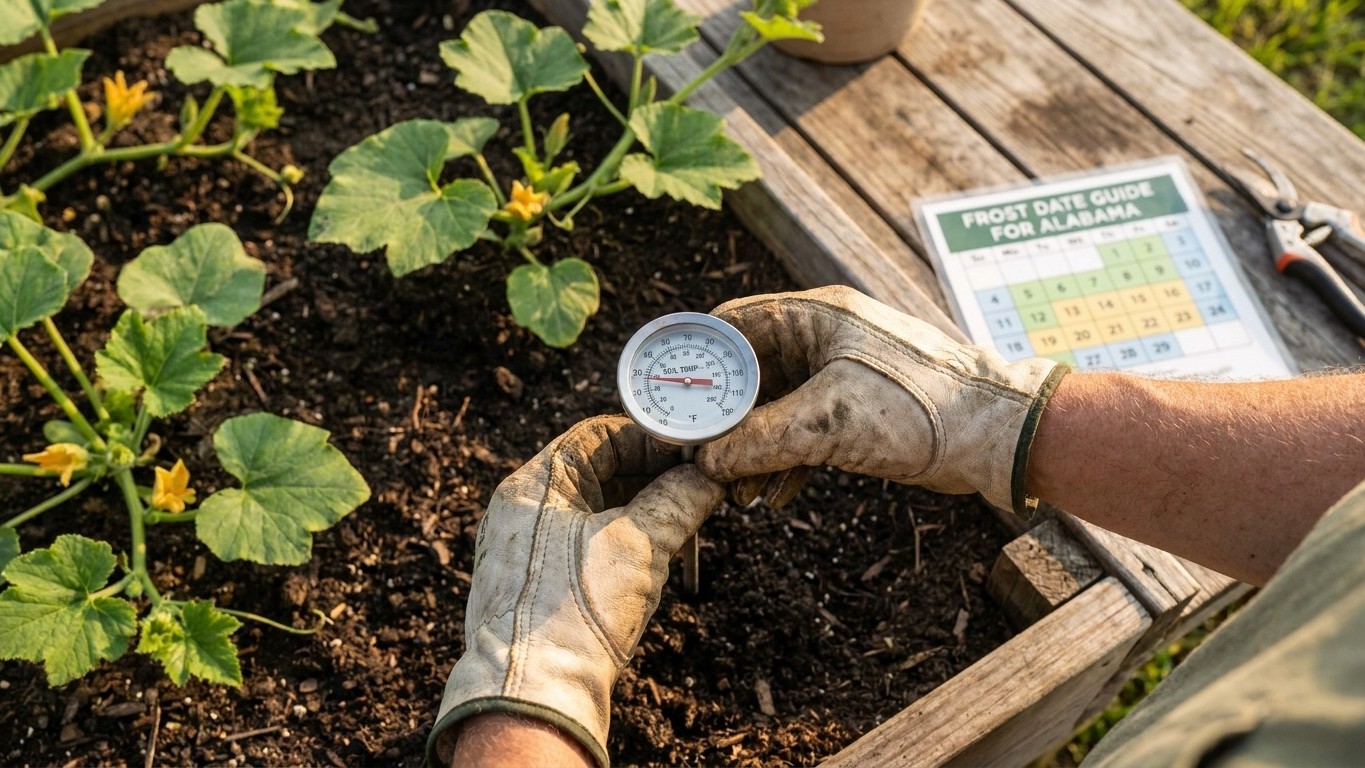
- Check the soil directly instead of guessing from the calendar. A simple soil thermometer pushed a couple of inches into the bed gives a real reading. Relying on the frost date alone, without checking soil temperature, is exactly the mistake that leads to seed sitting cold and rotting instead of germinating.
- Use row covers to buy time if you want an earlier start. Floating row cover over the bed traps daytime heat and can effectively buy about two weeks, letting a gardener sow into soil that would otherwise still be too cool. That’s meaningful in a state where the growing season is already tight against the fall frost window calculated above.
- Work the sowing date back from the flowering deadline, not just forward from frost. Since the latest safe flowering date sits somewhere between late August and mid-September, and pumpkins typically flower some weeks after sowing depending on variety and conditions, sowing any later than early June starts to squeeze that margin thin for larger, slower varieties.
The net result: soil-ready sowing in Rhode Island generally clusters in the back half of May, with row covers offering a way to nudge that earlier for gardeners who want more buffer before the fall countdown starts.
What goes wrong here
- A late flower that never colors. When sowing gets pushed into June, or a vine’s first flowers get lost to poor pollination and later ones open past mid-September, the fruit is still green when frost hits. There simply isn’t enough of the 45-to-55-day window left. The fix is sowing on the earlier side of the recommended window and watching for the first female flowers so you can gauge, in real time, whether the math still works for this year’s weather.
- A fruit caught by frost before it’s had time to cure. Even a fruit that’s technically reached size can still have a soft, thin rind if frost arrives on the early edge of the October 24 to November 3 window. Once a hard freeze hits unprotected fruit, the flesh inside breaks down fast. Covering ripening pumpkins with a tarp or blanket on forecasted cold nights, or harvesting slightly early and finishing the cure indoors, protects fruit that’s close but not quite there.
- A vine that dies back before the skin hardens. Vines weakened by pests often collapse in late summer, well before the fruit has finished maturing, which stops the hardening process cold. Rhode Island gardeners dealing with this should check for the two most common culprits behind early vine decline; both squash bugs and cucumber beetles have dedicated pages on this site covering identification and control specific to this state. Catching either early, rather than after the vine has already started wilting, is what keeps the plant alive long enough to finish the job.
Common questions
Can I start pumpkin seeds indoors in Rhode Island?
Starting seed indoors and transplanting out can give a small head start, but it doesn’t change the underlying soil temperature requirement. Seedlings set out into soil that’s still below 65°F will simply stall rather than grow, so transplant timing should follow the same soil-warming logic as direct sowing, not the calendar date alone.
What happens if I plant pumpkins too late in Rhode Island?
Late sowing pushes flowering later, and if flowers open after roughly mid-September, the 45-to-55-day maturity window from Utah State University Extension can’t finish before the first fall frost arrives between October 24 and November 3. The result is typically small, pale, or green fruit that never fully hardens.
How do I know when my soil has actually reached 65°F?
A soil thermometer pushed a few inches into the bed is the only reliable way to check. Air temperature and the last frost date are useful for judging general safety from freezing, but they don’t tell you what’s happening several inches underground, where the seed actually sits.
How long can I store pumpkins after harvest?
Utah State University Extension doesn’t publish a specific storage temperature or keeping time for pumpkins; the guidance is simply to keep harvested fruit somewhere it won’t freeze. Beyond that general instruction, no published storage duration figure applies here.