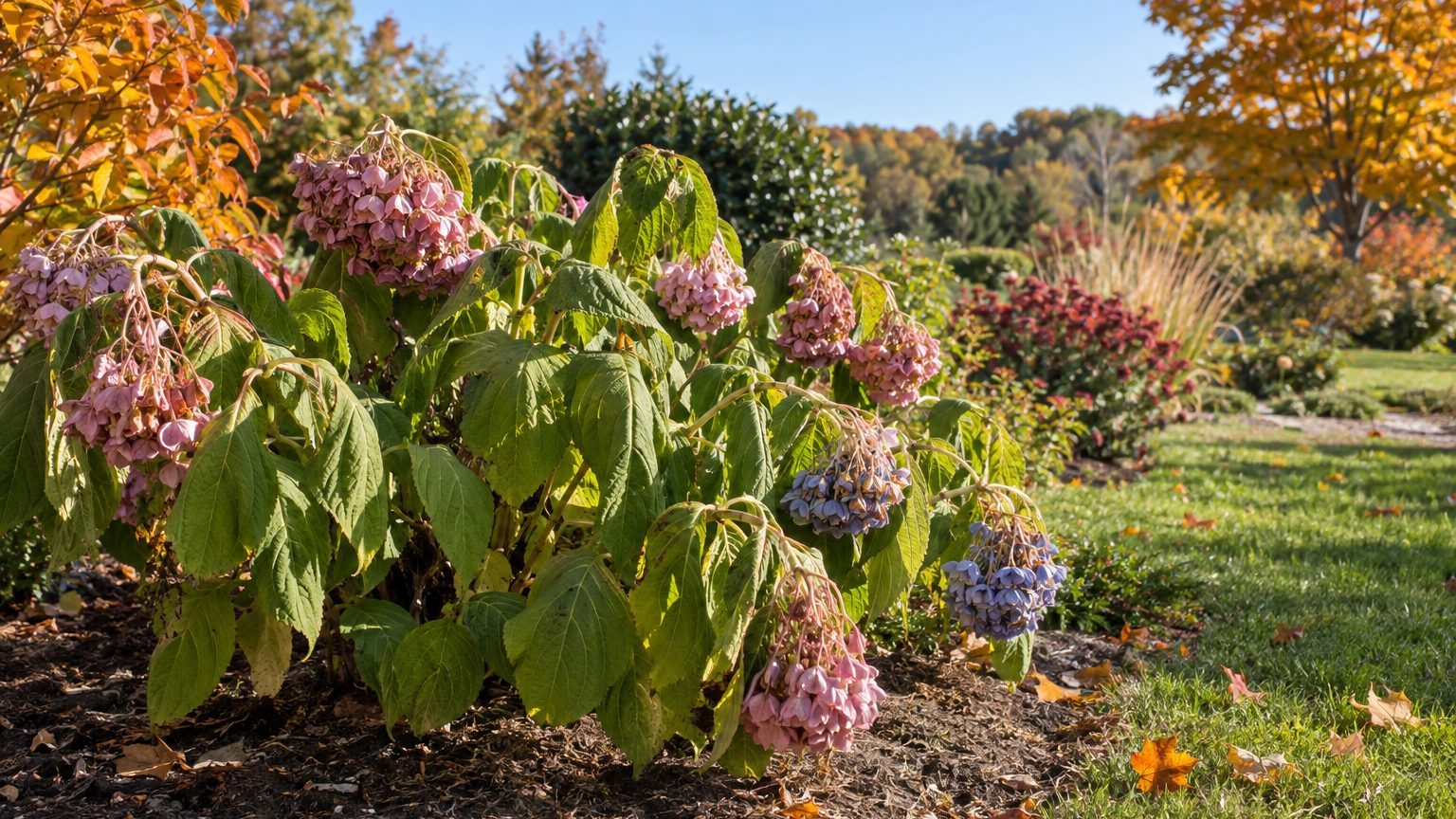

A hydrangea that droops by mid-afternoon and stands up again overnight is losing water through its leaves faster than its roots can replace it. Heat drives the loss. A dry root zone can make it worse. The deciding check is how wet the soil is a few inches down.
Why this matters
Bigleaf hydrangea (H. macrophylla) carries broad, thin leaves, and every one of them is releasing water into the air. Its roots, like those of panicle hydrangea (H. paniculata), stay shallow, in the top layer of soil that heats and dries first. On a hot afternoon the leaves lose water faster than the roots can pull it up, the cells go soft, and the leaf hangs. After sundown the air cools, the loss slows, the roots catch up, and the leaves fill out again by morning. That daily droop is a plant protecting itself, not dying.
The trouble is the pattern repeating. Each daily droop stresses the leaves, and a plant that hits its limit again and again ends up with scorched margins, as in Brown Edges on Hydrangea Leaves and Flowers. Getting this wrong cuts both ways. If you ignore a plant with truly dry soil, the droop slowly stops recovering overnight. If you keep watering a plant whose soil is already wet, you add a root problem to a heat problem. The plan below assumes you already grow the plant, as covered in How to Grow Hydrangeas, and want this one symptom sorted out.
When to do it
Start when you see the droop, but not by reaching for the hose at the first sign. Look at the plant at the same hour for a few days. If the leaves are drooping in the afternoon and flat again by early morning, you have time to check the soil and fix the cause before any damage shows.
The plant’s own stage changes how seriously to take it. A hydrangea in its first season after transplanting has not yet spread its roots beyond the original root ball, so it runs out of reachable water sooner than an established neighbor. The same goes for a plant pushing out its flower heads, because big blooms add to the water demand. A plant that wilts only on the hottest afternoons and recovers is behaving normally. A plant that wilts earlier each day, or is still limp at breakfast, needs action now.
Check in the morning, when the plant has had the night to refill and the soil tells you the truth. If the soil is dry, water before the heat builds. If the leaves are already limp in the afternoon and the soil is dry, water then. The goal is to get water into the ground, not to protect your schedule.
Moving a plant, cutting it back or replanting it all depend on your zone and variety.
How to do it

Check the soil before you water
Push a trowel or a finger into the soil beside the plant, about where the roots sit, and pull out a little. Damp and cool means the soil still has water, and the afternoon droop is a heat response. Crumbly, pale and dry means the plant is out of reach of moisture. This takes thirty seconds and prevents the most common mistake.
Look at the plant’s position too. Bigleaf hydrangea does best in dappled sun or partial shade and needs protection from afternoon sun. Panicle hydrangea is the one type that takes full sun well. If a bigleaf sits in hot western light, the wilt may be a placement issue.
Water slowly, mulch, and shade if needed
When the soil is dry, water at the base, not over the leaves. Lay a hose at low pressure beside the plant and let it trickle until a trowel finds damp soil well below the surface. A quick sprinkle only wets the top layer, which is the layer that dries fastest. Keeping the foliage dry also helps with leaf spot, one of the diseases the NC State Extension Gardener Plant Toolbox lists for the genus.
Next, mulch. Both bigleaf and panicle hydrangeas are shallow-rooted and benefit from it. Spread shredded bark, leaf mold or similar material over the whole root zone, out to the edge of the branches, thick enough to hide the soil. Pull it back from the stems so it does not sit against the bark. Mulch slows evaporation and keeps the top layer of soil cooler, which is where the roots are working.
For a young or exposed bigleaf, add temporary shade during the worst hours of afternoon sun. A shade cloth, a patio umbrella or a board propped on stakes will do. It is a short-term bridge until the plant’s roots catch up.
Done right, the next morning shows glossy, flat leaves, and the afternoon droop arrives later and lifts sooner. Judge the result by the plant, not by how much water went on.
What goes wrong

The mistake that looks like extra care is watering a plant that is not short of water. A drooping hydrangea looks thirsty, so the hose comes out, but if the soil is already wet, the afternoon droop is heat and more water adds nothing. Good drainage is wanted and occasional wetness is acceptable, which is not the same as soil that stays saturated. Soggy ground starves roots of air, and the plant looks thirstier. Afterward you will see yellowing leaves, a droop that no longer lifts overnight and soil that smells sour. The cure is to stop watering and let the ground drain.
Light sprinkling is the opposite error. The surface looks wet, the roots below stay dry, and the plant keeps drooping while you keep watering. Mulch piled against the stems is a quieter one. It holds moisture where bark rots, and it hides how dry the soil underneath is.
Cutting back a wilted plant to “reduce the load” backfires on bigleaf, which flowers on last year’s wood. The buds were formed the previous summer, so pruning off stems removes the flowers (Deadheading Hydrangeas: Where to Cut Without Losing Next Year covers where cuts are safe). It also does nothing for the water problem.
The one to watch for is wilt that does not follow the daily pattern. If a stem or the whole plant stays limp in the morning with moist soil, look beyond watering. Bacterial wilt is among the diseases the source names for hydrangea, and Hydrangea Diseases: Reading the Leaf shows how to read the signs. Deer browsing can also leave a plant looking ragged. Deer are a damage agent, and hydrangeas are browsed, so do not assume they are safe.
Doing it differently
Containers change the rules. A pot holds a small volume of soil, so a hydrangea in one can wilt every afternoon even when the bed beside it is fine. Check the pot’s soil daily in hot weather, water until it drains from the bottom, and keep it out of reflected heat from walls and paving. Raised beds drain fast and dry quickly, so they respond well to mulch and more frequent checks.
Type matters too. The facts differ enough to change your plan:
| Type | Light | Roots | What it means for afternoon wilt |
|---|---|---|---|
| Bigleaf / mop-head / lacecap | Dappled sun, partial or deep shade; protect from afternoon sun | Shallow | Most likely to droop; shade and mulch both help |
| Panicle / peegee | Takes full sun well | Shallow | Sun is fine, but shallow roots still need mulch and deep watering |
Sometimes the better answer is to move the plant, not to water more. A bigleaf that wilts every day despite deep watering and mulch is in too much afternoon sun, and a spot with morning light and afternoon shade solves it for good. The right time to move it depends on your zone, so check your state’s page first. Panicle hydrangea is the sensible choice for a spot that cannot be shaded.
Common questions
Is afternoon wilt harmful to the plant?
An occasional droop on a hot day that recovers by morning is not. Repeated stress can scorch leaf edges, and a plant that stops recovering overnight needs attention.
Should I water the moment the leaves droop?
Check the soil first. If it is damp a few inches down, wait, because the droop is heat and extra water will not help. If it is dry, water slowly at the base.
Why does my hydrangea wilt when the soil is wet?
Waterlogged roots cannot take up water properly, so the leaves droop as if the plant were dry. Improve drainage and stop watering until the soil drains. Wilt that persists in moist soil may be a disease such as bacterial wilt.
Do all hydrangea types wilt in the afternoon?
Bigleaf is the one most often seen drooping, and it needs protection from afternoon sun. Panicle is the type that takes full sun well, but it is shallow-rooted too, so mulch benefits it as much as it does bigleaf.
Sources : gardenia.net