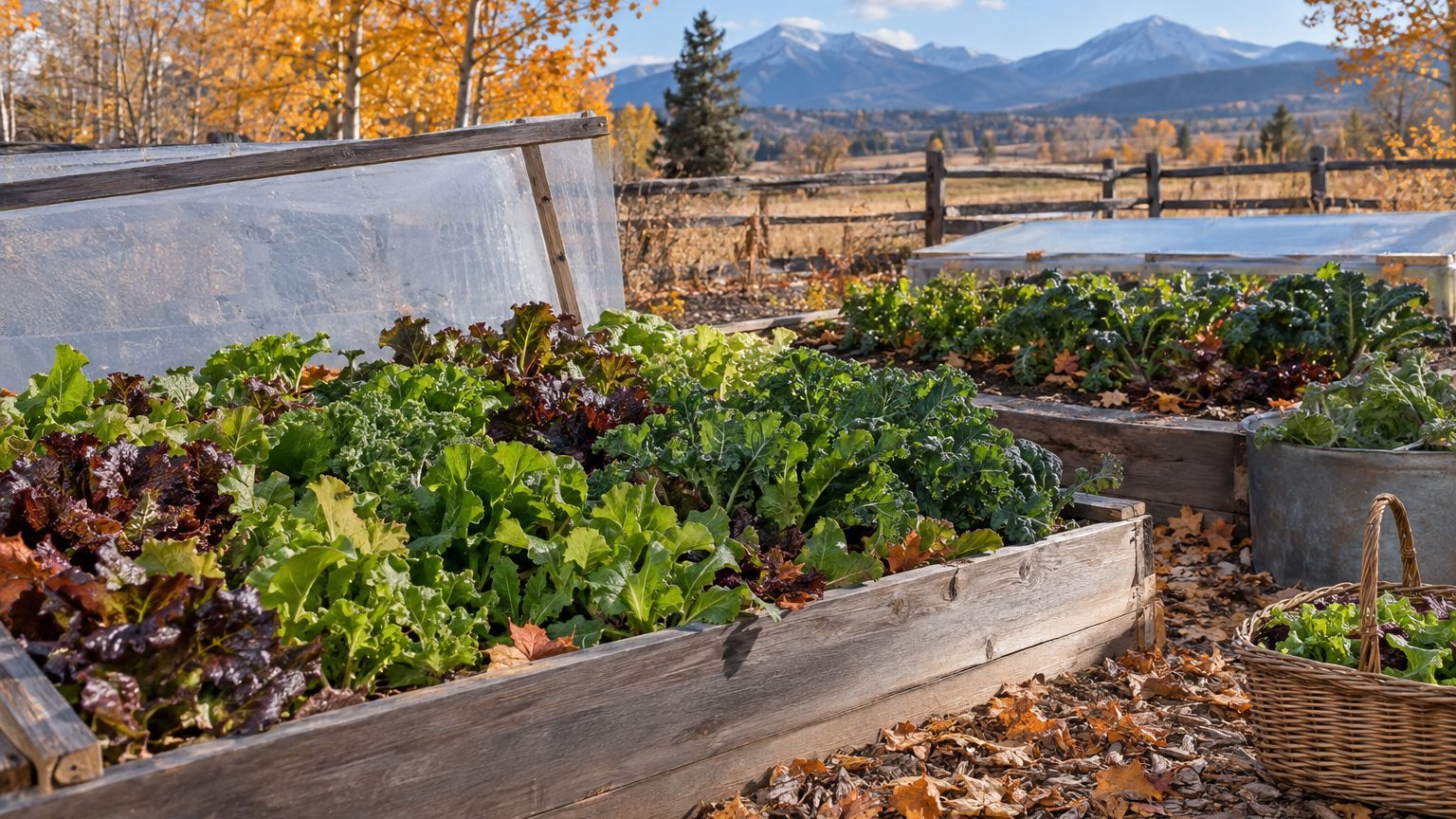

Michigan beds sown after the light has thinned out give you seedlings that sit through January and rot in March. Winter salad has to be nearly full size before the days shorten, because the cold then holds it in place and you cut from it as you need it. Count back from your first fall frost, sow with a generous margin, and have a row cover or low tunnel ready before the first hard freeze.
When the soil is warm enough in Michigan

Start with the frost date, because the other dates hang on it. MSU Extension’s frost-free dates put the last spring frost around April 30 in the Detroit area, and early to mid May across most of the Lower Peninsula. Farther north it comes later. The USDA Plant Hardiness Zone Map (2023 edition, built on 1991-2020 data) spans zones 4a to 6b across Michigan, so treat Detroit as a reference point and not as a description of your backyard. A frost date is a probability, not a promise.
Frost is a proxy, soil is the test
Winter salads do not wait for the frost date. They wait for warm soil, and soil warms after the frost risk ends, not with it. In early May the air can feel mild while the bed is still cold and wet enough to rot seed. A cheap soil thermometer pushed a few inches down in the morning tells you more than the calendar does.
For a winter crop, though, the spring date is not the one that matters most. It matters because it tells you how long the bed stays committed to summer crops, and therefore when it comes free again.
Where the winter crop fits
Winter salads are sown at the other end of the year, into a bed you clear in late summer. Here the problem reverses. The soil is still warm from July and August, and lettuce and spinach seed will sulk or refuse to sprout in hot ground. Water the bed well and shade it with a board, burlap or shade cloth until the seedlings are up. Sow in the evening, and keep the surface damp.
That sequence means the bed you plant in August or September should already be planned in May. Early potatoes, bush beans, peas and garlic all leave the ground clear at the right time. A bed holding late tomatoes does not.
One boundary on the page: it deals with beds, cold frames and containers you control. Every plant here comes from seed you sowed yourself. The Winter Salads: What Grows When Lettuce Will Not overview covers the crops in general, and this page assumes you have already picked what you want to grow.
How long the season lasts here
The MSU Extension Michigan Garden Calendar puts the first fall frost between October 6 and October 21 for zone 6a. Set that against the Detroit-area last spring frost of around April 30 and the frost-free window runs from about 159 to about 174 days, or roughly 23 to 25 weeks. The two figures come from different MSU pages and different reference points, so read the result as a soft range. Across most of the Lower Peninsula, where the last frost falls in early to mid May, the window opens later and is shorter. In the northern zones it shrinks further.
What that length allows
Nearly six months is enough for a full summer crop and a winter crop behind it. It is not enough if the summer crop is one that occupies the bed until the last week of the window. The winter salad sowing goes into the tail of the season, not the front, and the rest of the summer belongs to something else.
The length also allows succession sowing. Instead of one big sowing, you put in small batches spread through late summer, so that no single hot spell or slug raid takes the whole crop. The succession sowing guide on this site covers spacing and quantities. In a shorter northern season, the first sowing is the only one you will get to size, and you cannot afford to be late with it.
Counting back to your own last sowing date
Do the arithmetic yourself with your own local frost figure. The steps are short.
- Take the first fall frost range for your area, not the Detroit or zone 6a figure if you live elsewhere.
- Read the days to maturity on the seed packet.
- Count back that many days from the earliest date in the frost range.
- Add a wide margin, because fall growth is far slower than the packet assumes.
The result is a range of dates, not one date, and the safe end is the earlier one. Packet figures assume summer growing speed, so plants sown at the calculated limit will still be small when the light fails.
Sow in place or transplant
Transplanting buys you weeks of window. Lettuce, endive and radicchio take it well, and you can start them in trays in shade in midsummer while the bed is still occupied. Spinach, arugula, mâche and claytonia resent root disturbance and do better sown where they will stay. With a window this long, direct sowing works for most, and transplants earn their place only for the slowest types.
Heat and water in Michigan

This page does not print a count of days above 90 F or a summer rainfall total, because neither is in the figures it rests on and both shift between Detroit, Grand Rapids and Traverse City. NOAA’s 1991-2020 climate normals give both for the station nearest you. What can be said honestly is that a Michigan summer is not a Deep South summer, and the problems it causes are mostly damp ones, not scorched ones.
What a humid, changeable summer brings
Warm nights, dew and bursts of rain favor downy mildew, gray mold (botrytis) and damping-off on seedlings, along with slugs. Dense sowings in still air suffer most. Space plants, sow thin, and water at the base in the morning so leaves dry before dark. Heat still matters in late summer, but as a germination problem. The seedbed itself is the thing to cool, not the plants.
The winter decides the rest
NOAA’s NCEI 1991-2020 normals for Detroit put the mean daily minimum of the coldest month at 19.2 F. That is an average of nights, not a record low, so individual nights run colder. It is also one station. Inland and northern beds run colder still.
Read against that number, the crops sort into three groups:
- Stand uncovered in most winters: mâche, claytonia and spinach, though a cover keeps the leaves cleaner.
- Need cover to stay edible: cold-hardy lettuce, arugula, mizuna, tatsoi and endive, which brown, shred or go slimy in open beds.
- Cannot manage at all: tender summer lettuce heads and every warm-season crop.
Light closes the argument from the other side. After the first frost the days keep shortening, and growth slows toward a halt. A plant that has not reached useful size by then will not get there before spring, however mild the winter turns out.
Which winter salads suit Michigan
Choose by type first. The table sorts the main groups by how they handle a Michigan winter and what to watch for.
| Type | Cold behavior | Watch for |
|---|---|---|
| Mâche (corn salad) | Hardy, holds outdoors with light cover | Slow germination in warm soil |
| Claytonia (winter purslane) | Hardy, tolerates cold well | Slugs in damp weather |
| Spinach | Hardy, best sown early enough to size | Downy mildew in wet falls |
| Cold-hardy leaf lettuce | Wants a tunnel or cold frame | Gray mold, poor germination in heat |
| Arugula, mizuna, tatsoi | Fast, but leaves shred without cover | Flea beetles early, bolting |
| Endive, escarole, radicchio | Sturdy, cover extends the harvest | Rot in tight hearts |
Reasoning from this state’s conditions
A short northern season favors the earliest, fastest types: mâche, spinach, arugula and the Asian mustards reach size sooner than heading lettuce or radicchio. A humid, damp summer makes disease resistance the first criterion, ahead of flavor or leaf color. Catalogue descriptions and seed packets print resistance to downy mildew and slow-bolting traits, and those statements are the same in every state, so use them as a filter. The winter minimum favors the hardy group for open beds and the sturdier types for tunnels.
Why no variety names here
This page names no cultivars. The only recommendation that means anything for a Michigan bed is one from local trials, and this page does not have that data. A name offered without it would be a guess. MSU Extension is the place to ask which varieties have been tried in your part of the state, since a trial in Detroit tells you little about the Upper Peninsula. If you garden across a border, Winter Salads for Massachusetts Gardens covers a humid, cold-winter neighbor with its own timing, and Winter Salads for Utah Gardens covers a dry-air state where disease pressure is lower and the choices differ.
When you order, check the packet for two phrases, mildew resistance and slow to bolt. Together they screen out most of the varieties that fail in a damp Michigan season.
Common questions
Why did my winter salad seed not come up in August?
Almost certainly the soil was too hot. Lettuce and spinach seed goes dormant in warm ground and may sprout weeks later once it cools. Water the bed, shade it, and sow in the evening. If nothing has appeared after a couple of weeks, resow rather than waiting.
Can I grow winter salad in containers on a porch?
Yes, but pots freeze harder than beds because cold reaches them from every side. Use large containers, group them against a south-facing wall, and cover them on cold nights. Small pots suit the hardiest types only, such as mâche and claytonia.
Should I pick leaves that are frozen?
No. Frozen leaves bruise and turn slimy when handled. Wait until they thaw, usually by midday under a cover, then cut. Cutting leaves and leaving the crown lets plants regrow when light improves.
Is a row cover enough or do I need a cold frame?
A row cover over hoops is enough for the hardy types in most winters. Lettuce and the fast mustards do better in a cold frame or tunnel with vents you can open on sunny days. Whatever you use, ventilate. Trapped humidity does more harm than a hard freeze.