
In the Moncton area, the average last spring frost falls on May 23, which makes late May the earliest sensible marker for setting out frost-tender salad plants. Winter salads, though, are mostly decided later. The sowings that go in once summer settles matter more, as does a cover that keeps leaves edible when the coldest month’s mean nightly low sits at -13.9 °C. Here is how the dates, the cold and the damp line up in New Brunswick.
When the soil is warm enough in New Brunswick
Start with the date, since that is what most gardeners search for. At the Moncton station (Environment and Climate Change Canada, Canadian Climate Normals 1981-2010, climate ID 8103100), the average last spring frost is May 23. Treat that as a midpoint. It is a mean date, so in roughly one year out of two the last frost lands later, and a late-May cold snap is not a freak event. A frost date is a probability, not a promise, and this is the one place on the page where I will say so.
Moncton is also one station. A province is not one climate, and northern or upland districts in New Brunswick run weeks behind it. If your garden sits well inland or on higher ground, push every date in this article later and watch your own beds.
Frost is a proxy, soil is the real test
The frost date is a stand-in. What the seed or transplant actually meets is the soil, and soil warms after frost risk ends, not at the same moment. A bed can be frost-free on paper and still be cold and sodden at root depth, especially a heavy bed that held snowmelt into May. Seeds sit and sulk in that, or rot.
The practical test is cheap: push a soil thermometer a couple of inches down in the morning, read it over several days, and compare it with the minimum germination temperature printed on the seed packet for the crop you want. Waiting a week costs little. Resowing a failed row costs a week anyway, plus the seed.
Which salads can go in before the soil is warm
Types matter more than the calendar here. Cold-tolerant greens such as spinach, corn salad (also called mâche) and the hardier mustards germinate in cooler ground than tender lettuce does, so they can go in ahead of the warm-soil crops. Frost-tender types, including most leaf lettuce transplants raised indoors, wait for the date and the thermometer to agree.
These spring sowings are not the winter salad itself. They fill the bed while you plan the real thing, which goes in after midsummer and is covered below. For which varieties have actually been trialled in New Brunswick, ask Agriculture and Agri-Food Canada or the provincial agriculture department. This page cannot source variety names, so it does not offer any.
One note on method. Everything here assumes beds, raised frames and containers that you sow and tend. Do not substitute leaves gathered from ditches, streams or field edges. Wild watercress in livestock-grazed water can carry liver fluke, and several wild plants that look like young salad leaves are seriously toxic.
How long the season lasts here
Both mean frost dates come from the same Moncton station: May 23 in spring and October 2 in fall. Count the days between them and you get 132, a little over 18 weeks. Those are midpoints at both ends, so a late spring frost and an early fall frost in the same year can shave the window noticeably, while a mild year can stretch it.
The Canadian normals cover 1981-2010. The US figures used elsewhere on this site cover 1991-2020, so do not line the two up as if they were measured the same way.
What 132 days allows
That length is workable, not generous. It allows one sowing of fast salad greens in spring and a second sowing of the same bed in the second half of summer, which is the one that carries you toward winter. It does not allow much slack for a slow crop, a failed germination or a three-week wait for a rainy spell to pass.
It also changes the transplanting question. In a longer season you can afford to let a transplant sit and recover from root disturbance. Here, a check in growth after transplanting eats a real share of the window. Leafy crops that sulk when roots are disturbed are usually better sown where they will grow. Transplants earn their place for the slower types, and for filling gaps when a sowing fails.
Counting backward from October 2
For winter salads, count backward from the fall frost date rather than forward from spring. Plants need to reach useful size before the light fades, because growth slows long before the frost kills anything, and in the dark months a plant mostly holds what it has. A sowing that goes in too late produces tiny seedlings that sit through winter and give you nothing to cut. Working out your own last safe sowing date from a recorded local frost date, plus a few weeks of buffer, is the sound approach.
The sequence of sowings, and how far apart to space them, is laid out in the succession sowing guide on this site. Use that for the spacing logic and use the dates here for the anchor.
Heat and water in New Brunswick
This page carries no count of days above 90 °F (about 32 °C) and no summer rainfall total for Moncton, so it will not quote either. Writing the hot-dry paragraph anyway would be filling space with a climate this province does not obviously have. What a northern, Maritime garden gets more reliably is the other set of problems: in a cool, damp summer, mildew spreads on crowded leaves, crops ripen slowly, and slugs and leaf spot find the bed before you do.
The remedies are plain and they cost nothing. Give plants room and airflow, water the soil rather than the leaves, and do it in the morning so foliage dries before evening. If the same bed has grown the same family of greens for two years running, rotate it.
The cold decides everything
The number that matters is the cold. The mean daily minimum of the coldest month at Moncton is -13.9 °C (6.9 °F), per the 1981-2010 normals. That is an average, not a record low, so individual nights will be worse. Natural Resources Canada places Moncton in Canadian hardiness zone 5a, based on 1991-2020 normals. That is the Canadian system, which uses seven climate variables and does not convert to a USDA zone, so do not read a US plant tag against it.
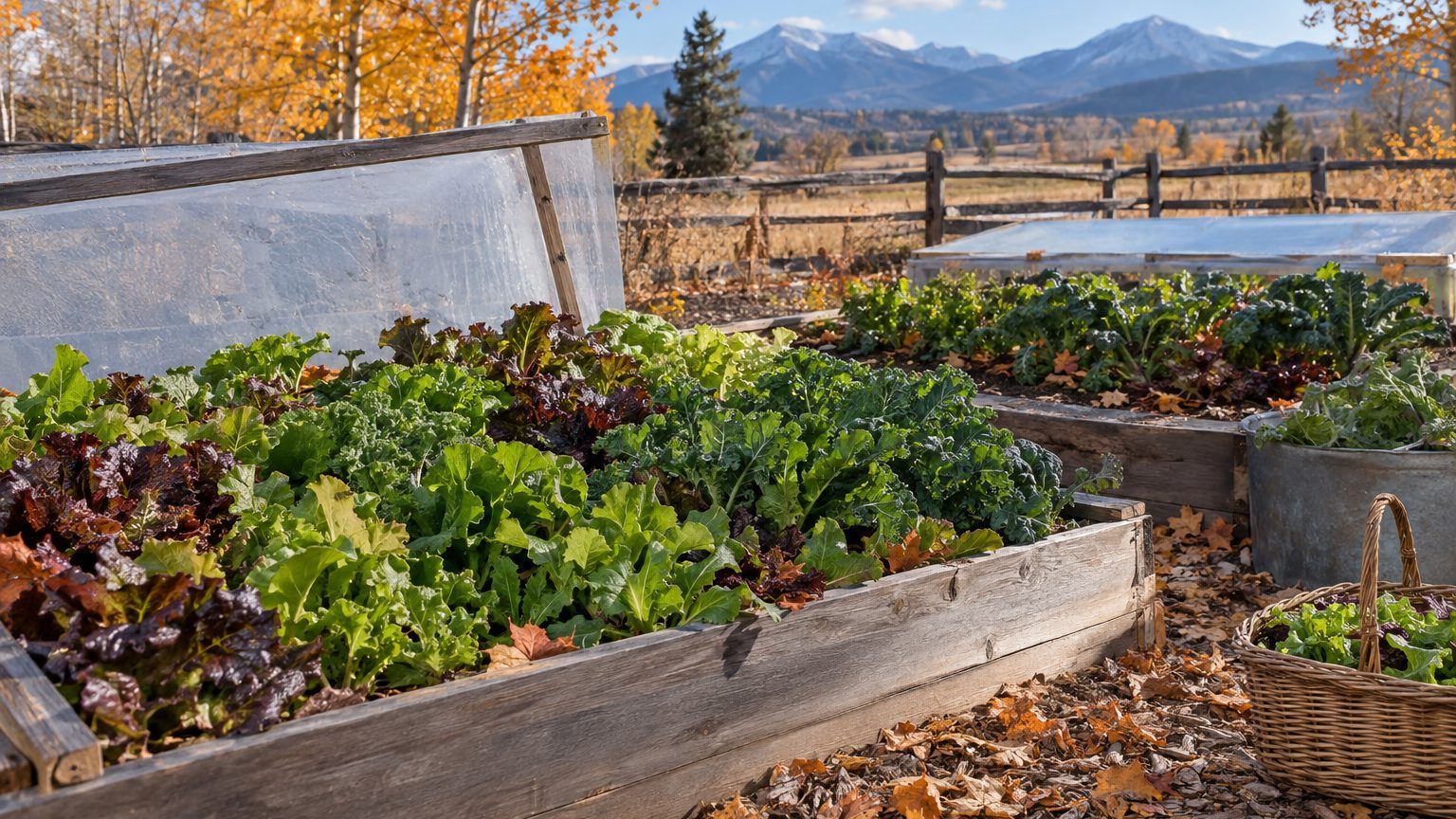
That cold sorts the crops into three groups. A few of the hardiest greens, such as spinach and corn salad, can stand uncovered through much of the cold season, though in the worst stretches they may stall or take damage. Many others, including most lettuces, need a cover (a cold frame, a low tunnel or floating row cover) just to stay in edible condition. And the tenderest types, the ones sold for summer salads, cannot manage a New Brunswick winter at all and should be treated as finished at the first hard frost.
The first fall frost, on average October 2, sets the other limit. It tells you how late a sowing can still reach useful size before the light fails. Once you are past that, the sowing is a hope, not a plan.
Which winter salads suit New Brunswick
Reason from the facts above. A 132-day mean window favours the earliest-maturing types. A damp, cool summer makes disease resistance the first thing to look for on a seed packet. And a coldest-month low of -13.9 °C means cold tolerance, backed by a cover, decides what survives, not summer performance.
| Type | Behavior in a cold, damp climate | Practical approach |
|---|---|---|
| Spinach | Among the hardiest; tolerates cold | Sow late summer; cover in the hardest weeks |
| Corn salad (mâche) | Cold-tolerant, low growing | Sow late summer; a light cover is usually enough |
| Hardy mustards and arugula | Quick growth, mixed cold tolerance | Early sowing; cover as nights drop |
| Hardy-type lettuce | Needs protection to hold in winter | Cold frame or tunnel; watch for mildew |
| Summer lettuce | Cannot manage the winter | Treat as a spring and early fall crop only |
This page names no cultivar, and it should not. A variety that does well in a trial in Ontario or Maine tells you little about a bed in Moncton, and the only recommendation that means anything is one trialled near you. For that, contact Agriculture and Agri-Food Canada, which is the federal department. The provincial department of agriculture is the better source for local trial results, though its own site refused our automated checks, so we link the federal one instead.
For the general principles behind these choices, read Winter Salads: What Grows When Lettuce Will Not. Gardeners on the other side of the Northumberland Strait can compare notes with Winter Salads for Prince Edward Island Gardens, and anyone curious about a much harsher case will find one in Winter Salads for Yukon Gardens.
Common questions
When can I sow winter salads in New Brunswick?
Count backward from the first fall frost, which averages October 2 at Moncton, and sow in the second half of summer so plants reach useful size before the light fades. Spring sowings of hardy greens can go in earlier, once the soil has warmed enough for the crop.
Is Canadian zone 5a the same as USDA zone 5a?
No. Natural Resources Canada puts Moncton in zone 5a, but its system uses seven climate variables and the USDA system uses one. There is no simple conversion between them, so read Canadian zones only against Canadian plant information.
Do I need a cover for winter salads here?
For most of them, yes. The mean daily minimum of the coldest month at Moncton is -13.9 °C. Only the hardiest greens may stand uncovered, and even they can stall in the worst weeks. A cold frame, low tunnel or row cover is the usual answer.
Are the Moncton dates right for my garden?
They are a starting point. The figures come from one station, and northern or upland districts of New Brunswick run weeks behind it. Keep your own record of last spring and first fall frost and adjust the dates here to match.