
In New Hampshire, the last spring frost at the NOAA reference station falls between April 16 and April 27. That is not your sowing date. Winter salad greens go in when the soil is workable and warming, which happens after frost risk ends. Inland and hill-country gardens usually run one to two weeks behind the station. The date that matters most is the October frost, because it decides how late a sowing can still pay off.
When the soil is warm enough in New Hampshire
Start with the number most gardeners ask for. NOAA’s U.S. Climate Normals for 1991-2020 put the last spring 32°F freeze between April 16 and April 27. That range comes from the 30-70% probability band in the NOAA NCEI normals file for an airport weather station. It is a probability, not a promise, and a frost after the later date is still possible in any given year.
The airport figure is a starting point, not your date
Airport stations sit in open, relatively mild spots. Suburban and rural gardens typically see the last spring frost later than the station does, often by one to two weeks, and more at elevation. New Hampshire has plenty of elevation. The USDA Plant Hardiness Zone Map (2023 edition, built on 1991-2020 normals) lists the state as 3b to 6a, a spread that tells you a garden in the north country and a garden near the coast are living in different climates. Check the frost dates for your own county before you mark a calendar.
Why soil lags behind the frost
Frost is a proxy. It tells you about air temperature on a clear night, while seeds respond to what is happening in the bed. Soil holds winter cold long after the last freeze, and cold, saturated spring ground in New Hampshire can keep seed sitting and rotting rather than sprouting. So the soil warms after the frost risk ends, not along with it.
Cool-season salad greens are among the more forgiving crops here, since they do not need warm ground the way tomatoes do. But “forgiving” still means ground that has drained, crumbles in your hand and is no longer a mud pie. A cheap soil thermometer pushed a couple of inches down tells you more than any date. Read it in the morning, when the bed is at its coldest, and wait until the readings climb steadily rather than bouncing back to cold after a warm afternoon.
Spring sowing is only half the story for winter salads. The bigger harvest comes from sowing in late summer and early fall, timed backward from the first fall frost. For the types worth sowing and how to stagger them, see Winter Salads: What Grows When Lettuce Will Not. And a note on scope: this site grows salad in beds and containers. Nothing here is about gathering greens from ditches, streams or woodland edges.
For which varieties have actually been trialed in New Hampshire soil, ask University of New Hampshire Extension. This page talks in types, because a variety name is only useful if someone has tested it near you.
How long the season lasts here
The same NOAA normals give the first fall frost between October 13 and October 26. Set that against the spring range and you get a frost-free window. Which dates you pair changes the answer, so here are the combinations:
| Pairing | Last spring frost | First fall frost | Days between |
|---|---|---|---|
| Earliest to earliest | April 16 | October 13 | 180 |
| Latest to latest | April 27 | October 26 | 182 |
| Shortest possible | April 27 | October 13 | 169 |
| Longest possible | April 16 | October 26 | 193 |
So the reference-station window runs from about 169 to 193 days. Now apply the caution that comes with those dates. If your garden freezes one to two weeks later in spring and one to two weeks earlier in fall, you lose two to four weeks from both ends combined. A hillside garden may be working with something closer to five months than six.
What that length allows
A window of around half a year is enough for a gardener to sow twice, but only if the second sowing is planned deliberately. A spring sowing of fast greens can come out in early summer, and the same bed can take a late-summer sowing meant to reach size before the cold. The arithmetic gets tight at the fall end. A sowing that goes in too close to the October frost range will sit as tiny seedlings while the days shorten and growth slows, and it may never reach a harvestable size.
Transplanting also becomes a judgment call. In a short season, the head start from setting out seedlings can be worth the small root check that comes with moving them. In a longer one, direct sowing often wins, since the seedlings never get interrupted. In New Hampshire the answer depends on elevation. Gardeners near the low end of the window can usually afford to direct-sow. Those in the hills may want to start some crops in trays so the plants are already established when the beds are ready.
The sowing interval itself, how many days between rounds and how to stagger them, is laid out in the succession sowing guide on this site. Use the frost range above as the outer edge and work inward from there, leaving a margin on the fall side. Gardeners in colder-summer states face the same arithmetic with different numbers, as in Winter Salads for Alaska Gardens and Winter Salads for Wisconsin Gardens.
Heat and water in New Hampshire
This is the section where a southern page would talk about shading beds from August sun. New Hampshire is not that kind of territory, and the verified figures for this page do not include a count of days above 90°F or a summer rainfall total, so none appear here. Any such count would come from a reference station and would not describe the whole state anyway. Lakes Region, coastal and White Mountain gardens differ a lot. NOAA’s normals for the weather station nearest you will give you the real count.
What a northern summer brings instead matters more for salad. A cool, damp stretch makes the problems mildew, slow ripening and soil-borne disease. Leaves that stay wet through the night invite fungal trouble, and crowded rows make it worse. The practical answers are plain: spacing that lets air move, watering at the soil rather than over the leaves, and morning watering so foliage dries by evening. If a heat spell does arrive, a bit of shade at the root zone, from mulch or a neighboring taller crop, keeps greens from bolting.
The cold makes the decisions
Everything here is decided by winter. At the Manchester reference station, the mean daily minimum of the coldest month is 17.1°F. That is an average of nightly lows, not the record low, and the actual cold snaps run well below it. The USDA zone range of 3b to 6a tells the same story from the other side, since it is built on the average annual extreme minimum temperature.
Sorting salad crops against that cold gives three groups. The hardiest leafy types, such as spinach and mâche, are the ones most likely to stand through a New Hampshire winter outdoors, and even they are far more reliable in the milder parts of the state. A middle group, including many mustards and similar greens, stays in edible condition only under a cover such as a low tunnel or row cover. The third group is the tender lettuces, which cannot manage a New Hampshire winter without real protection, and in the colder zones not even then. Treat that sorting as the general pattern and confirm it against your own microclimate and with extension.
The first fall frost sets the other limit. With frost arriving between October 13 and October 26 at the reference station, and earlier in many rural gardens, the last useful sowing date for outdoor winter salad comes while the weather still feels like summer. By the time the first frost hits, greens should already be near harvest size, because shortening autumn days slow growth to a crawl. Plants that are small going into late autumn mostly just hold on rather than grow.
Which winter salads suit New Hampshire
The choice here comes down to type, and three facts about the territory drive it. Taken in order of importance, they are the cold, the short window and the damp.
- Cold-hardy leaf types first. With a coldest-month mean minimum of 17.1°F at Manchester and zones down to 3b, hardy greens such as spinach and mâche-type salad plants have the best odds. Tender lettuce belongs in a protected structure.
- Fast, early-maturing types for the late-summer sowing, since the first frost can arrive as early as October 13 at the station and sooner inland.
- Disease resistance, especially to mildew, as the first thing you check on a seed packet in a climate where cool, damp spells are the norm rather than the exception.
Airflow matters as much as the variety does. Wide enough spacing, a bed that is not crammed against a wall, and mulch that keeps the root zone cool all work in the plant’s favor. A sunny, open spot dries leaves faster after rain or dew, which does a lot of the disease prevention for free.
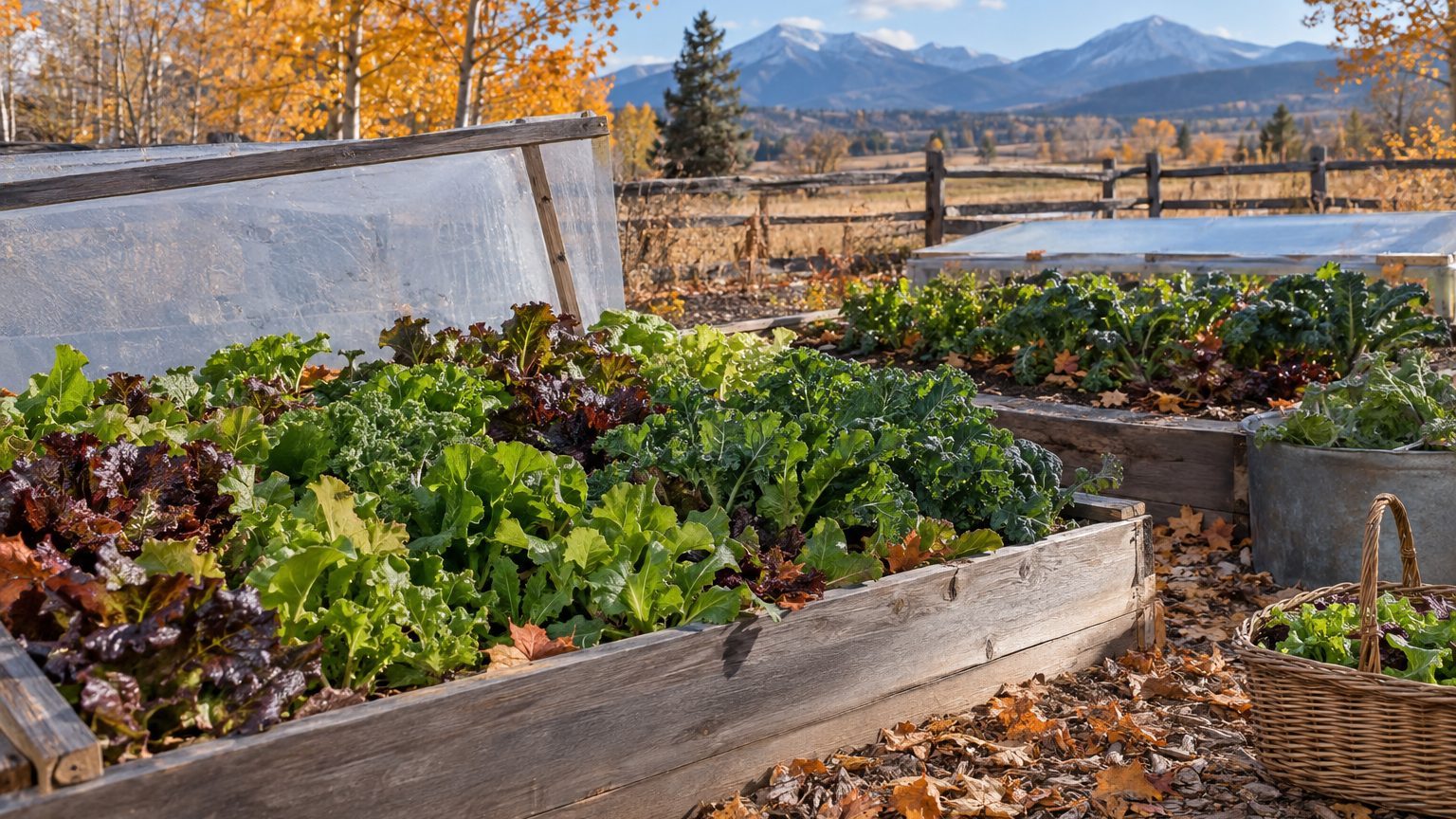
Covers extend the choice. A low tunnel or row cover lets the middle group stay in edible condition well past the point where bare ground would have finished them, and it is often the difference between a harvest in November and a harvest in January.
What this page deliberately will not do is name a cultivar. Varieties behave differently by elevation, soil and local disease pressure, and the only recommendation worth following is one from a trial run in New Hampshire. University of New Hampshire Extension is the place to ask which have been trialed, and whether a given type has held up through your county’s winters. A name taken from a page that has not seen those trials is a guess, and gardeners notice a bad guess in their own beds.
Common questions
When should I sow winter salad greens in New Hampshire?
For a harvest in cold weather, sow in late summer and early fall, working backward from the first fall frost. At the NOAA reference station that frost falls between October 13 and October 26, and rural gardens usually freeze earlier. Spring sowings can go in once the soil is workable, which comes after the April 16 to April 27 last-frost range at the station.
Is the April 16 to April 27 frost date right for my garden?
It is the figure for an airport weather station, not a guarantee for the state. Suburban and rural gardens often see the last spring frost one to two weeks later, and higher ground sees it later still. Check your own county, and treat any frost date as a probability.
Do winter salads survive outdoors in New Hampshire without a cover?
Only the hardiest types stand a decent chance, and mostly in the milder parts of the state. The coldest-month mean minimum at Manchester is 17.1°F, and the USDA zones run from 3b to 6a. Most gardeners will get a longer, better harvest with a row cover or low tunnel.
Which varieties should I plant?
This page does not name any, because it has no local trial data to back a recommendation. University of New Hampshire Extension can tell you which varieties have been tested in the state. Look first for disease resistance, and for early-maturing types if your garden sits at higher elevation.