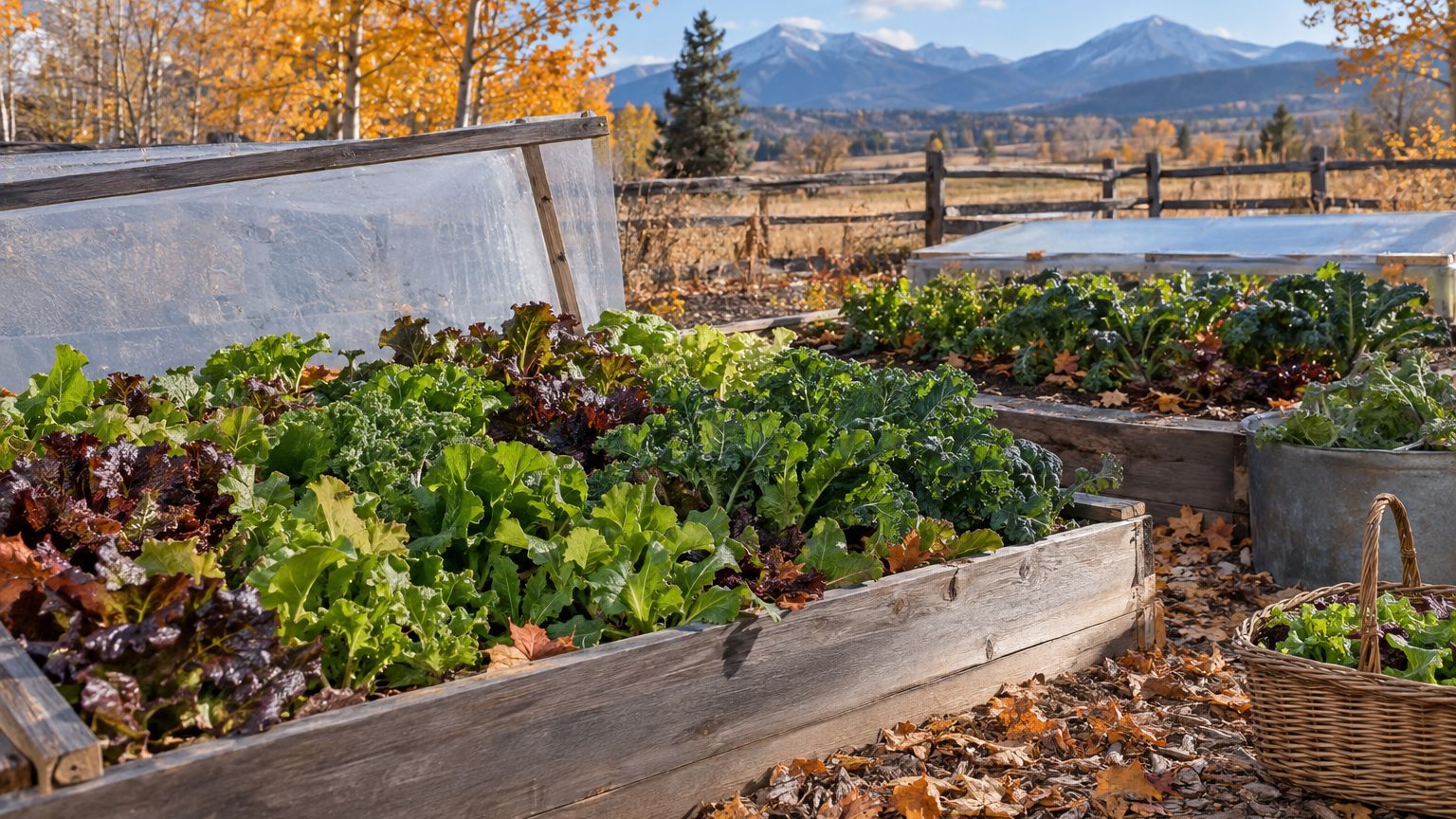

Nova Scotia winter salads are sown in late summer and early autumn, so the spring frost date printed on every seed packet is nearly beside the point. The greens you cut in December were sown months earlier and did most of their growing before the coldest weather arrived. Work backward from your own first fall frost, sow the hardy types with that date in mind, and put a thermometer in the bed before you trust any calendar.
When the soil is warm enough in Nova Scotia

The date most gardeners ask for is the last spring frost. Environment and Climate Change Canada’s 1981-2010 Canadian Climate Normals put it, on average, at May 7 at Halifax Stanfield International Airport. That is a mean date, so in one year out of two the last frost arrives later. Treat it as the middle of a window rather than a safe date.
Halifax is one station, and the province is not one climate. The Annapolis Valley, the Northumberland shore and the Cape Breton uplands each run on their own calendar, and northern and upland districts trail the airport by weeks. These Canadian normals also cover 1981-2010, while the US pages on this site use 1991-2020, so do not set the two side by side as if they measured the same thing.
Frost is a stand-in for soil
A frost date only tells you when the air stops dropping below freezing. Seeds care about the soil, and soil warms after the frost risk ends, not with it. A bed that shed its last frost in early May can still be cold and waterlogged for a good while after. For a spring salad sowing, wait until the soil crumbles in your hand and a thermometer pushed a few centimetres down reads steadily above the low readings of early spring.
That spring sowing is a bonus crop. It gives you baby leaves in early summer and clears the bed before the sowing that actually carries you through winter.
Late summer reverses the problem
For the winter crop the trouble runs the other way. In late summer the soil is at its warmest, and some salad seed sulks in a hot, dry seedbed. Lettuce is the usual offender. Sow in the evening, water the drill before you cover the seed, and lay a board or a strip of shade cloth over the row until the first seedlings show. Take it off the day they appear, or they will stretch and flop.
The types worth sowing are the hardy leafy ones: corn salad (mâche), spinach, claytonia (miner’s lettuce), leaf kale, and the quick mustard-family greens such as arugula, mizuna and tatsoi. Lettuce belongs in the mix only if you have a cover for it. If you want the crop as a whole before you commit a bed, Winter Salads: What Grows When Lettuce Will Not covers what each type asks of you. For named varieties trialled in your own district, ask Nova Scotia’s provincial agriculture department. This page does not have those trial results and will not guess at them.
How long the season lasts here
Environment and Climate Change Canada’s 1981-2010 normals for the same Halifax Stanfield station give an average first fall frost of October 18. Count from the average last spring frost of May 7 to that date and you get roughly 164 days, a little over 23 weeks. Both figures are means, so a real season can start later and end earlier, or the reverse. Think of 164 days as the middle of a range, not a guarantee.
The gap also shrinks fast inland and on higher ground. A garden well north or up on a ridge can lose several weeks at either end.
What 164 days allows
A window that length is long enough for two rounds of salad and not much room for a third. A spring sowing finishes in early summer. The bed is then free for a second sowing in late summer, and that second sowing is the winter crop. What you cannot do is treat autumn as open-ended. Once October arrives the days shorten quickly, and growth slows well before the first hard frost. Anything that has not reached cutting size by then will mostly sit and wait.
Succession sowing is what makes the window pay. Instead of one large sowing, put in several small ones spaced through late summer, so that a cold snap or a run of grey weeks does not catch the whole bed at the same stage. A row that is too small to cut in November will often be your December salad. A row that is already full-size in November is holding, not growing.
Transplants or direct sowing
Transplanting is worth the root check only when the window is comfortable. In late summer, when you have a bed freed up by an early crop and a few weeks in hand, starting lettuce and kale in trays lets you fit more into the space. Every transplant loses a few days to root disturbance, and in September you do not get those days back.
- Sow direct: spinach, corn salad, claytonia, arugula. They resent the move and are quick from seed.
- Transplant if you have the time: kale and lettuce started in trays, set out while the bed is still warm.
- Skip transplanting entirely once the first fall frost is close. A seedling set out then barely gets going.
Gardeners comparing notes with other regions will find the same logic played out on different calendars. Winter Salads for Minnesota Gardens works from a continental climate, and Winter Salads for Connecticut Gardens uses the US 1991-2020 normals. The numbers will not line up with Halifax, but the way the dates are used will.
Heat and water in Nova Scotia

What summer does to the crop
This page has no figure for hot days or for summer rainfall at Halifax, and inventing one would be worse than leaving the gap. What you can rely on is the character of a maritime summer. It is mild by continental standards, often humid and often foggy near the coast, and it does not usually cook a seedbed for weeks on end. Heat is rarely what stops a winter salad here.
A cool, damp summer causes a different set of problems. Downy mildew and grey mould take hold on leaves that stay wet, slugs work the bed at night, and growth is slower than the seed packet suggests. The remedy is dull and effective. Space plants for airflow, water at soil level in the morning so foliage dries by evening, and thin seedlings early instead of leaving a dense mat. Clear the fallen leaves from the base of kale and lettuce, because that is where the rot starts.
The cold decides the rest
Everything else on this page is decided by winter. Environment and Climate Change Canada’s 1981-2010 normals for Halifax give the mean daily minimum of the coldest month as -10.4 °C. That is an average of the nightly lows, not the worst night, so individual nights run colder. Natural Resources Canada’s Plant Hardiness Site, using 1991-2020 normals, places the city in zone 6b of the Canadian system. That is not a USDA zone and does not convert to one, because the Canadian system draws on seven climate variables. Inland Nova Scotia is colder than Halifax, so treat both figures as the coastal floor, not the provincial rule.
Those numbers sort the crops into three groups. The table below gives general tendencies for a Halifax-type winter, not trial results from a named station.
| Type | Uncovered outdoors | Under a low tunnel or cold frame |
|---|---|---|
| Corn salad (mâche) | Usually holds through | Cleaner leaves, easier picking |
| Spinach | Usually holds through | Better leaf quality late in winter |
| Claytonia | Usually holds through | Cleaner leaves |
| Leaf kale | Holds through, cut as needed | Not needed |
| Arugula, mizuna, tatsoi | Leaves damaged in hard weather | Stays edible |
| Lettuce | Unlikely to last | Needed to survive |
How the first frost sets the last sowing
The October 18 mean at Halifax works as a deadline. Winter salads must reach a usable size before the light fades, because once days get short a plant adds almost nothing. What you cut in January is mostly what grew in October. A sowing that is late by a fortnight can end up too small to harvest until spring, whatever the cold does. Keep covers vented on mild days, since trapped humidity brings back the mildew you fought all summer.
Which winter salads suit Nova Scotia
Choose by type, and choose the hardy ones first. Corn salad, spinach, claytonia and leaf kale are the reliable core, because the winter cold at Halifax will not trouble them as it does a lettuce. Add the mustard-family greens if you have a low tunnel or cold frame, and add lettuce only if you are willing to cover it the whole way through. Each step down that list buys you tenderness and costs you cover.
Let the climate rank your criteria
A moderate season with a hard finish makes speed the first thing to look for. Pick types that reach cutting size fast from a late-summer sowing, and treat slow crops as spring plants. A humid, cool summer makes disease resistance the second criterion, above flavor or looks. Mildew resistance on a seed packet is worth more here than a prettier leaf. Spinach and lettuce vary a great deal in this respect, so read the description before buying.
Airflow matters as much as the seed. Grow the crop in a bed with room between plants, not in a tight carpet, and keep it off the north side of a solid wall where damp air pools.
Why this page names no varieties
It would be easy to list cultivar names here. It would also be wrong, because the only recommendation that means anything in Nova Scotia is one that has been grown in Nova Scotia, and this page does not have those trial results. Names lifted from catalogues written for other climates are the quickest way to lose a bed of seed. Ask the Nova Scotia provincial agriculture department for its list of trialled varieties, then buy from a Maritime seed supplier when you can, since those catalogues are written with cool, wet summers in mind.
Read days-to-maturity numbers with autumn in mind. They are counted for summer growth, so a late-summer sowing takes noticeably longer than the packet says as the light drops off, and that is one more reason to sow early.
Common questions
Can I sow winter salads in a cold frame with no heat?
Yes, and an unheated cold frame is the simplest cover to build. The hardy types keep going without heat, and the frame mainly protects leaf quality from wind and hard freezes. Prop the lid open on mild days, or damp air will breed mildew inside.
Will snow kill my spinach and corn salad?
No. Snow lying on the bed acts as insulation, and the plants usually come through better than they do in a bare, windy cold spell. What harms them is a thaw followed by a hard refreeze. If you expect one, lay a light row cover over the bed.
Do the Halifax dates apply to my garden in Cape Breton or the Annapolis Valley?
Not exactly. Both dates come from the Halifax Stanfield airport station, and districts inland or at elevation see frost earlier in autumn and later in spring. Check with the provincial agriculture department or a neighbor who has gardened your plot for years, and shift your sowing dates by what they tell you.
Should I water covered beds in winter?
Only a little. Covered beds dry out more than you expect, because rain and snow no longer reach them. Water lightly on a mild morning so the leaves dry before dark, and skip watering in freezing weather.