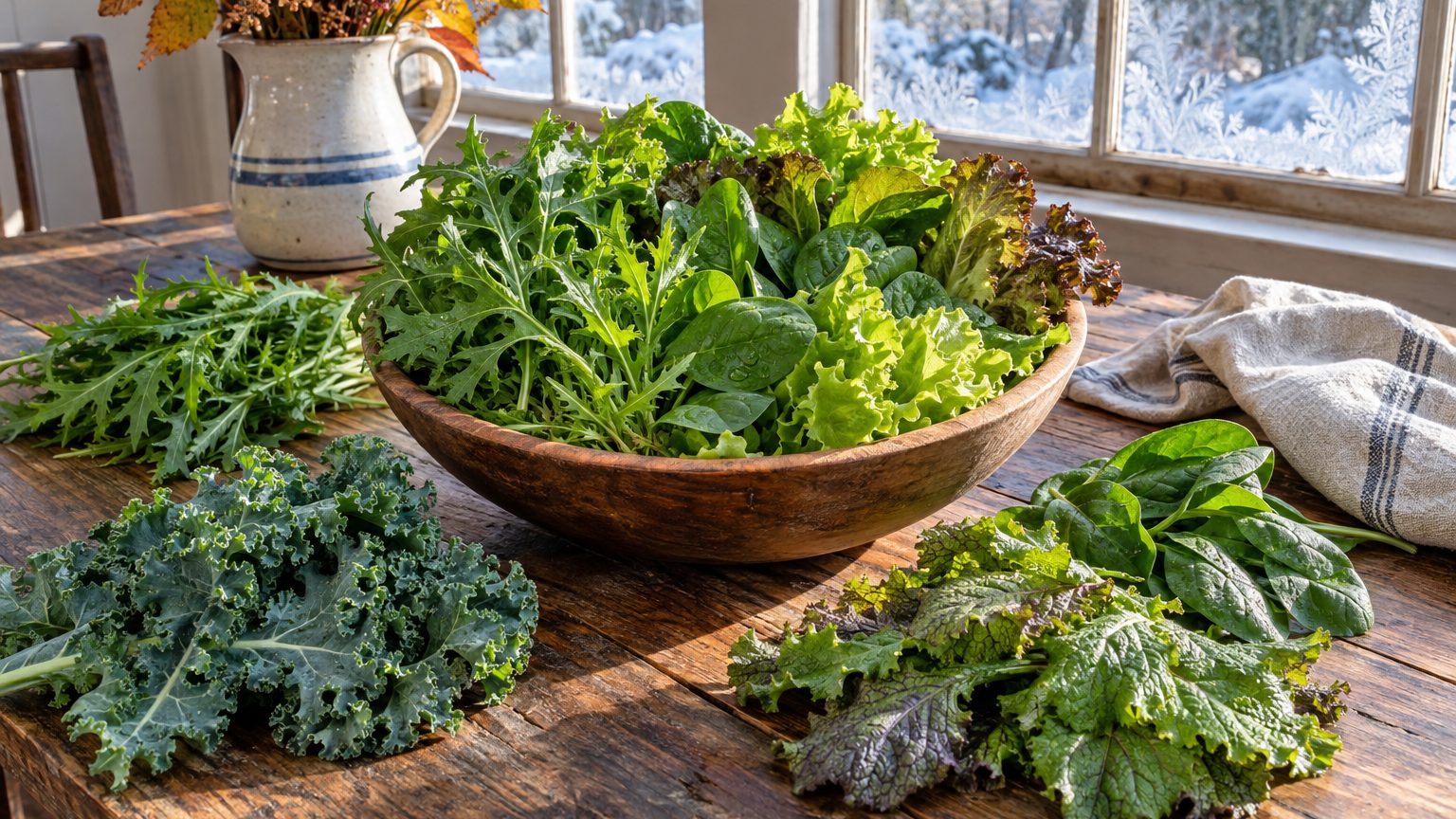

The best winter salad crops for Alabama are the cold-tolerant, quick leaves: arugula, mizuna, spinach, loose-leaf lettuce, baby kale and mustard. Mild winter nights and light frost rarely bother them. Heat and humidity are what end the season, so the choice comes down to bolt resistance and mildew tolerance. This page sorts the options by type, and the wider picture lives in Winter Salads for Alabama Gardens.
The short answer for Alabama
Start with the number that decides survival. The mean daily minimum of the coldest month is 33.1°F, per NOAA’s 1991-2020 Climate Normals at the Huntsville reference station. That is an average night sitting just above freezing, which is mild for a winter crop. Cold is rarely the limit here. Warmth at the wrong end of the season is.
The frost dates frame the window. At the NOAA reference airport station, the last spring frost falls between March 19 and April 3, and the first fall frost between November 2 and November 16. Those are the 30-70% probability band for a 32°F freeze, so each date is a probability of a freeze, not a promise. Suburban and rural gardens usually get the last spring frost later and the first fall frost earlier than an airport does, often by one to two weeks, and more at elevation. Treat the dates as a reference-city figure and check your county.
Because the early fall is still warm and the spring warms fast, the winning crops are the ones that grow quickly in cool weather and tolerate a frost without cover. Here is how the types sort out.
| Type | Why it fits Alabama | What to watch |
|---|---|---|
| Mustards, mizuna, tatsoi, baby kale | Shrug off frost, cut-and-come-again, the backbone of a winter bowl | Flea beetles and caterpillars on warm days |
| Spinach | Thrives in cool soil and takes freezing nights | Bolts as days lengthen in spring |
| Arugula | Fastest from seed to salad | Turns hot and bitter, then bolts, once it warms |
| Loose-leaf lettuce | Forgiving, harvested leaf by leaf | Poor germination in warm soil; mildew in wet spells |
| Escarole, endive, radicchio | Sturdier in fall warmth than lettuce | Bitterness; slower to reach harvest |
| Mâche, claytonia | Tolerate the cold end of the range | Slow growth; fussy about summer-warm soil |
If you want one starter mix, build it on mustards and loose-leaf lettuce, then add spinach and arugula for variety. Timing matters as much as variety, and When to Sow Winter Salads in Alabama covers it.
What will not work here
Sowing lettuce in September heat tops the list. Lettuce seed often refuses to germinate in warm soil, and what does come up grows fast, bitter and leggy. With the first fall frost not arriving until November 2 to November 16 at the reference station (earlier in many yards), the early fall is still a summer-adjacent season. Waiting a few weeks beats sowing on the first cool morning.
Tight spacing fails next. Alabama winters are damp, and a dense bed of baby leaves stays wet for hours after rain or heavy dew. That is an invitation to downy mildew, gray mold and rot. Crowded plantings that thrive in a dry-air state turn slimy here. Give leaves airflow, water in the morning so foliage dries by afternoon, and thin seedlings even when it hurts.
Tight heads of lettuce, especially the dense, thick-hearted kinds, are the third casualty. They trap moisture in the center and rot before they size up. Loose-leaf and cut-and-come-again types let the air through, and they allow a harvest without waiting for a perfect head.
Then there is the spring. With the last frost falling between March 19 and April 3 at the reference station, warm weather arrives quickly behind it. A winter salad bed that is still producing in April is on borrowed time. Spinach and arugula bolt first, lettuce turns bitter soon after, and plants sown in late winter hoping for a spring crop often bolt before they are ready to cut. Plan the harvest for the cool months, not the shoulder of spring.
Finally, do not over-cover. A mean coldest-month minimum of 33.1°F means heavy protection is rarely needed, and plastic left sealed on a sunny day can cook the plants. A mean is still only an average, and a hard night can arrive, so light row cover kept handy is cheap insurance. Think of it as a blanket you pull on for the cold snap and take off in the morning.
What changes across Alabama
Alabama is not one garden. The USDA Plant Hardiness Zone Map (2023 edition, built on 1991-2020 normals) places the state across zones 7a to 9a. The system rests on a single variable, the average annual extreme minimum temperature, so a spread of that size means there is no single answer for the whole state. The figures on this page come from reference stations, and your yard may sit well away from them.
North Alabama and higher ground
The Tennessee Valley and higher elevations sit toward the colder end of that range, and the coldest-month figure above comes from a northern reference station (Huntsville). Frost arrives earlier in the fall and lingers later in spring. Readers here should sow a little earlier so plants size up before the hard cold, lean on spinach, kale, mustards and mâche, and keep row cover ready. Growth slows sharply in midwinter, so expect harvests in pulses rather than a steady flow.
South Alabama and the coast
The warm end of the range lies toward the south, where winters are milder and freezes are fewer. Cold is less of a threat, and heat and humidity do more damage. Sow later in fall, favor heat-tolerant and mildew-resistant types, and expect the bolting window to close sooner in spring. Harvests can run through much of winter, but spacing and airflow matter even more.
Zone numbers measure minimum cold only. They say nothing about humidity, summer heat or rainfall, and those shape a winter salad bed as much as frost does. To see where your own address falls, look it up on the USDA map rather than assuming from a neighbor or a state average.
Where to check this for your own county
A county recommendation beats a state one. This page is the state one: it gives you the shape of the decision and a reference-city set of dates, but it cannot tell you what grows best in your soil, at your elevation, in your slice of the state.
The place to go is the Alabama Cooperative Extension System, the state’s land-grant extension service. Once there, look for two things. First, a local planting calendar for fall and winter vegetables, ideally one written for your county or region rather than the state as a whole. Second, any lists of varieties that have been trialled in your area, since a cultivar that performs well in one part of Alabama may bolt or mildew in another.
If you cannot find those, contact your county extension office directly and ask which leafy greens do well locally and when local growers sow them. Many offices also work with Master Gardener volunteers who answer these questions from long experience. A soil test is worth requesting too, because winter greens respond to fertility and pH, and the results arrive with specific recommendations for your bed.
When the county advice and this page disagree, follow the county. Local frost records, soil and elevation will always be closer to your garden than a reference station is.
Checking this against your own garden
Your own observations outrank every date here. Three are worth watching.
- Soil warmth by feel. Push your hand a few inches into the bed in the morning. If it feels distinctly cool, not just the surface, lettuce and spinach seed will germinate. If it still feels warm, wait. A bed that stays warm longer than a neighbor’s tells you it sits in a sunny, sheltered or paved-in spot.
- The pace of first true leaves. Seedlings show a pair of seed leaves, then the first true leaves. If those arrive quickly and the plants stay compact, conditions suit them. If they stretch and pale, the spot is too warm or too shaded.
- Frost damage on tender plants. Note when basil, peppers or tomatoes first blacken. That date, not the airport’s, is your yard’s first frost, and the gap between the two shows how much colder or warmer your microclimate runs.
Write those dates down for one season. By the next fall you will have a calendar more accurate than any state page.
Common questions
What is the easiest winter salad crop to grow in Alabama?
Baby mustards and loose-leaf lettuce are the most forgiving. Both are harvested leaf by leaf, tolerate frost and recover from cutting. Arugula is the fastest, though it bolts quickly in warmth.
Can I grow head lettuce in Alabama in winter?
It is possible, but riskier than loose-leaf types. Dense heads hold moisture and are prone to rot in a damp climate, and warm spells can make them bolt before they form. Loose-leaf and cut-and-come-again lettuces fit the climate better.
Do winter salad greens need frost protection in Alabama?
Usually not heavy protection. The mean daily minimum of the coldest month is 33.1°F at the Huntsville reference station, so most winter nights are mild. A hard freeze can still arrive, especially in the north and at elevation, so keep light row cover on hand for cold snaps.
Are the frost dates on this page right for my yard?
They are the reference-airport figures: last spring frost March 19 to April 3 and first fall frost November 2 to November 16, as probabilities of a 32°F freeze. Suburban and rural yards often see the last frost one to two weeks later and the first one one to two weeks earlier, so shift your plans accordingly.