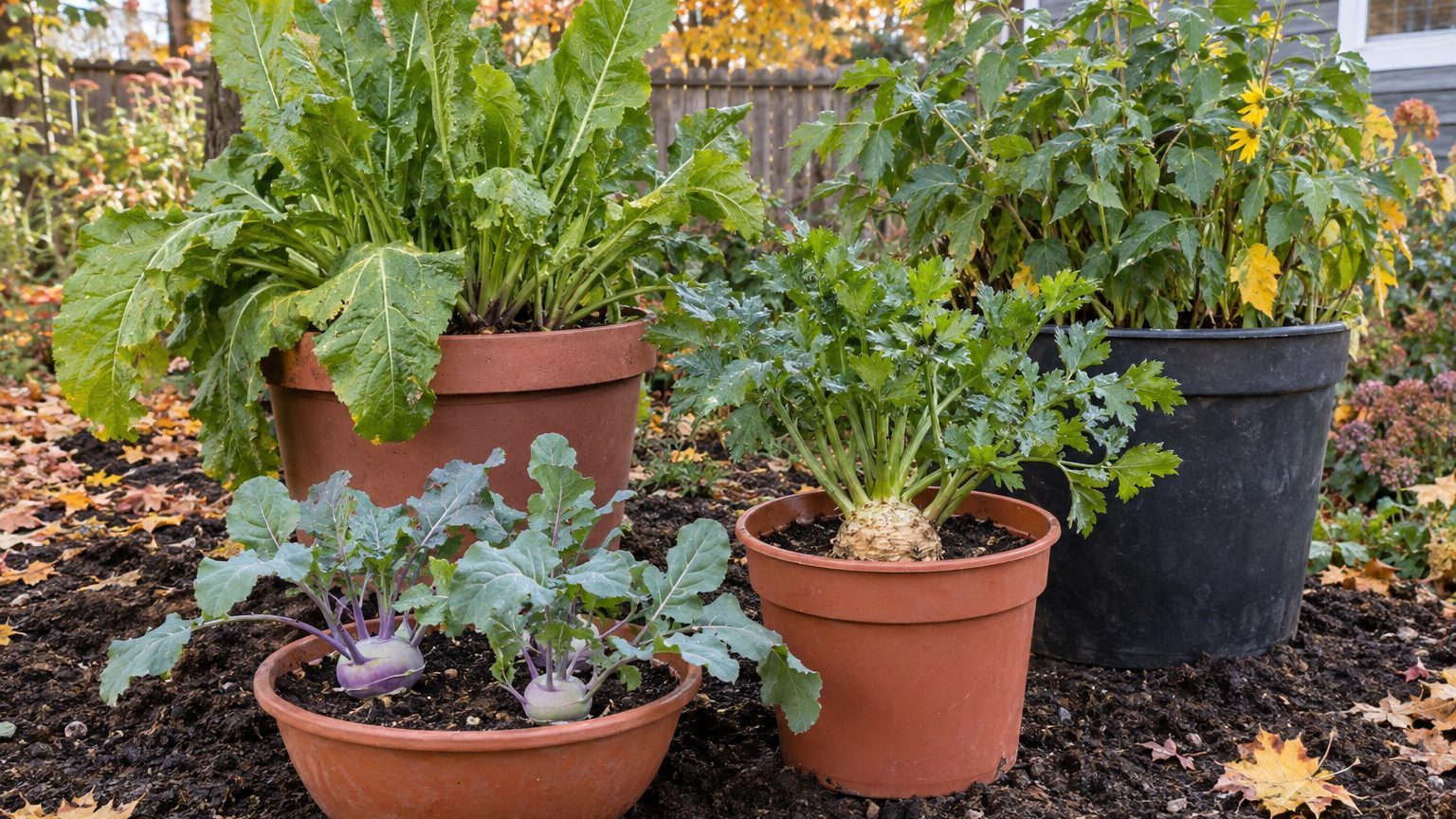

All four of these roots can be grown in pots, but they don’t behave the same way once they’re boxed in. Kohlrabi is the easiest and fits in a 5-gallon bucket. Celeriac works in the same size if you keep up with the watering. Horseradish and Jerusalem artichokes want 15 gallons or more, and in those big pots they’re more manageable than they are in the ground, where both can take over a bed. If you’re still deciding which of these to grow at all, the overview of Celeriac, Kohlrabi, Horseradish and Jerusalem Artichokes covers what each one offers at the table.
Matching Pot Size to the Root
Container size is the first real decision, and the roots split into two camps. Here is the short version:
- Kohlrabi: 8 to 12 inches deep, with about 6 inches between plants. A 5-gallon container holds two or three.
- Celeriac: one plant per 5-gallon container, or per pot at least 12 inches wide and deep.
- Horseradish: 15 to 20 gallons, at least 18 inches deep, one or two root cuttings.
- Jerusalem artichokes: 15 gallons minimum, with two or three tubers.
Kohlrabi is the outlier in that list. What gets eaten is a swollen stem that sits right at the soil line, not a true root, so it never needs depth. Its shallow, fibrous roots are happy in a window box that’s 8 inches deep. Celeriac is a slower and hungrier plant. It spends 100 to 120 days building a knob 3 to 5 inches across, and a cramped pot starves it before it gets there.
Horseradish and Jerusalem artichokes are different animals. A horseradish root can run a foot or two straight down, and a pot that’s too shallow gives you a tangle of pencil-thin side roots instead of a thick, grateable taproot. Jerusalem artichokes (also sold as sunchokes) are a sunflower relative that can reach 6 to 10 feet in a single season, and the tubers form on rhizomes that radiate outward. A narrow pot cuts off that room, and a tall plant in a light pot becomes a sail on the first windy afternoon.
Weight matters too. Wet potting mix in a 15-gallon container can easily top 80 pounds. Decide where it’s going to live before you fill it, or put it on a plant caddy first.
Potting Mix, Water and Feed
Garden soil is the wrong thing to put in a container. It packs down, drains poorly and drags weed seeds and soil pests along with it. Use a good commercial potting mix, ideally one blended with compost, and mix in a handful of slow-release or organic granular fertilizer at planting. A drainage hole (or several) is nonnegotiable. Fabric grow bags drain and breathe well, but they dry out faster than plastic or glazed ceramic, so they suit crops that tolerate a drier spell better than celeriac does.
Water is where container root crops usually go wrong. Celeriac punishes irregular watering with split, hollow or pithy roots, and a pot swings from soaked to bone dry far faster than a garden bed does. Check by pushing a finger 2 inches into the mix. If it’s dry at that depth, water until it drains from the bottom. In midsummer heat, a 5-gallon pot may need water every day. A 2-inch layer of shredded leaves or straw on top slows evaporation noticeably and keeps the surface from crusting.
Kohlrabi needs even moisture for a similar reason. Stalled growth followed by a flood of water gives you woody, cracked bulbs. Horseradish and Jerusalem artichokes tolerate more neglect, though both do better with steady moisture during the summer months when the roots are bulking up.
Feeding follows each plant’s appetite. Celeriac is a heavy feeder, and a liquid fertilizer every two to three weeks after the first month keeps it moving. Kohlrabi needs less. Horseradish and Jerusalem artichokes are happy with the starter dose plus a mid-season boost, and too much nitrogen tends to push leaves at the expense of the roots and tubers you actually want. Nutrients wash out of containers with every watering, which is why pots need more frequent, lighter feeding than in-ground beds do.
Timing, Heat and Winter Care
Celeriac needs the longest runway. Seeds need light to germinate and take two to three weeks to sprout, so start them indoors 8 to 10 weeks before your last frost date, then transplant after the frost danger has passed. In short-season states like Minnesota, Maine or Montana, a pot has a real advantage: you can set it in the sunniest spot and move it out of a cold snap. Harvest before the soil in the pot freezes hard. Light frost doesn’t hurt it, but a container freezes through faster than the ground does.
Kohlrabi is a cool-season crop, and a dark pot on a hot patio can push it past its comfort zone. When daytime temperatures climb into the 80s, growth slows and the bulbs toughen. Plant in early spring and again in mid to late summer for a fall crop, and move the pots into afternoon shade if the weather turns hot. Harvest when the bulbs are 2 to 3 inches across. Past that size they’re often woody. Sowing a few seeds every two weeks spreads out the harvest, so you’re not stuck with a dozen bulbs ready on the same Saturday.
Horseradish is grown from root cuttings (sold as sets or crowns) planted in spring, set at a slight angle with the thicker, top end pointing up. Harvest comes after the first fall frosts, when the roots are at their sharpest and thickest. Expect modest yields from the first season in a container, and consider leaving it for a second year if the plant is healthy. The details on harvesting and handling are in Horseradish: Easy to Grow, Hard to Remove. Pot culture takes much of the “hard to remove” problem off the table, because the plant has nowhere to run. But any root fragment left in the mix will sprout, so sift the pot thoroughly at harvest.
Jerusalem artichoke tubers go in 4 to 6 inches deep in spring, once the soil can be worked. Pick a sheltered spot, use a stake or a fence behind the pot, and expect the tall stalks to need support in a storm. Wait until the foliage browns after frost to dig. The tubers store poorly compared with potatoes (the thin skins wrinkle and soften within a couple of weeks in the fridge), so many gardeners leave them in the pot and dig a few at a time. A small caution from the kitchen: they’re rich in inulin, a fiber that causes gas in some people, so start with a small serving.
Both perennials are generally hardy in zones 3 to 9 in the ground, but a pot is a different story. Roots in a container are exposed to cold from every side, and a common rule of thumb is to treat them as though they were growing one or two zones colder. In zone 5 or colder, shove the pot against a south-facing wall, wrap it in burlap or bubble wrap, mulch the top heavily, or sink the whole pot into a bed or a pile of leaves for winter. Skip this and a hard freeze can kill roots that would have sailed through in open ground.
Resetting the Pots Each Season
A container gives you a clean slate, in a sense. You can empty the mix and start over with fresh potting soil every year, which avoids most of the disease buildup that rotation is meant to prevent in a garden bed. Even so, it helps to keep the plant families in mind. Kohlrabi and horseradish are both in the cabbage family, celeriac belongs to the carrot and parsley family, and Jerusalem artichoke is a sunflower. Putting kohlrabi in a pot where horseradish grew last year, even with new mix, invites trouble if old root bits or residue were left behind. The logic behind that sort of planning is laid out in Rotating Four Crops From Four Families, and it works as well with a row of pots on a deck as it does with four garden beds.
If you reuse potting mix, refresh it. Remove old roots and debris, blend in fresh compost to replace the organic matter that has broken down, and add fertilizer again. For the perennial pots, the horseradish and Jerusalem artichokes, top-dress with an inch or two of compost each spring and divide the plants every two or three years, or they’ll become root-bound and yield less.
One last practical detail concerns the bottom of the pot. Horseradish and Jerusalem artichoke roots will grow out through drainage holes if the pot sits on bare soil, and once they anchor in the ground below, the container no longer contains anything. Set big pots on pavers, gravel over landscape fabric, or a patio, and give them a quarter turn every month or so to keep a stray root from taking hold.