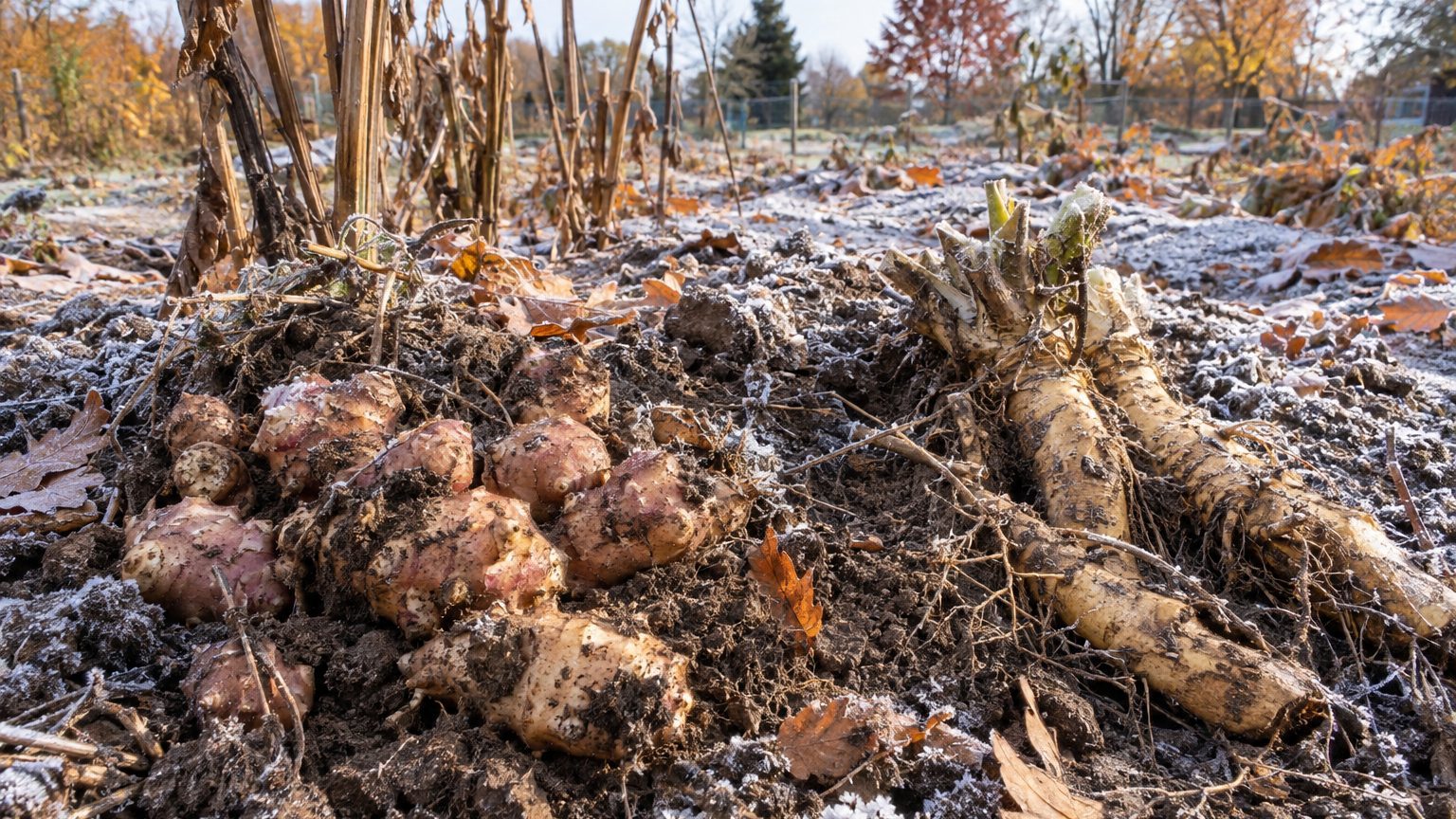

Two of the four stay put without complaint. Jerusalem artichokes and horseradish are hardy perennials that do better, and taste better, when left in the ground and dug as needed. Celeriac can overwinter only where the soil rarely freezes hard, or under a thick blanket of mulch. Kohlrabi is the odd one out, and in most of the country it belongs in the refrigerator or root cellar, not the garden bed.
The details matter, though, because “leave it in the ground” can mean a pantry that never runs out or a bed of mush. Here is how each root behaves, how to keep the ground diggable, and what to watch for before spring.
Which roots tolerate winter in the ground
Jerusalem artichokes are the easiest case. Native to eastern North America, they handle cold in zones 3 through 9 and are happy in soil that freezes solid. Their tubers have thin skin and no real protection against drying, so they shrivel within days once dug and left on a counter. In the ground they stay plump. Wait until the stalks have been killed back by frost and turned brown, then dig only what you plan to cook that week. Many gardeners also find the tubers taste sweeter after a few weeks of cold soil, as the starch-like inulin converts partly to sugars. That sweetness is a common observation, not a guarantee, and it varies by variety and soil.
Horseradish follows the same logic. It is a perennial, hardy through roughly the same range, and its roots keep growing until the ground locks up. Fall and early winter digging gives the sharpest roots, since cool weather concentrates the flavor. You can keep harvesting through winter whenever the soil is workable, and the window closes in early spring when new leaves start pulling energy out of the root. After that the roots turn fibrous and less pungent. One practical note: the heat comes from compounds released when the root is grated, and vinegar added shortly afterward stops the reaction. Dig the root cold, grate it outdoors or by an open window, and you will understand why people tear up.
Celeriac sits in the middle. It shrugs off light frosts, and a few cold nights in fall are said to improve the flavor. A hard freeze that penetrates the soil is a different story. The knobby shoulder of the root sits at or just above the surface, which makes it the most exposed part of the plant. Where winters are mild (think the Pacific Northwest coast, the Southeast, much of California and Texas), a thick mulch lets you pull roots from November through late winter. In the Upper Midwest or New England, plan to lift it before the ground freezes.
Kohlrabi is technically a swollen stem, not a root, and it is the least suited to winter. It tolerates light frost, but it keeps growing after it reaches its ideal size, and that growth turns the flesh tough and fibrous. If you have ever cut into a baseball-sized bulb and found it woody, Kohlrabi That Is Tough and Woody explains what went wrong. In zones 8 through 10, a fall-planted crop can sit in the garden through winter, since the season stays cool and growth stays slow. Elsewhere, pull it before hard freezes.
For a quick reference, here is how the four rank for leaving in the ground:
- Jerusalem artichokes: excellent in nearly any climate, dig until new shoots appear.
- Horseradish: excellent, dig from fall until early spring growth.
- Celeriac: conditional, mild winters or heavy mulch only.
- Kohlrabi: poor outside zones 8 through 10, lift before hard freezes.
For a broader look at how each of them grows through the season, the main guide on Celeriac, Kohlrabi, Horseradish and Jerusalem Artichokes covers planting and care.
Keeping frozen ground diggable
Soil is a surprisingly good refrigerator, but only if you can get into it. Frost depth varies enormously by region. In parts of the South it barely exists, while in northern Minnesota it can reach several feet in a cold winter. A shovel meets a frozen crust long before you run out of roots, and a pitchfork will not help much against a layer of ice.
Mulch solves most of this. Spread 8 to 12 inches of straw, shredded leaves, or similar loose material over the bed after the first hard frost but before the ground freezes. Loose, dry mulch traps air, and trapped air insulates. Wet, compacted leaves do the opposite, sitting like a soggy mat that holds moisture against the crowns, so fluff the layer and shred whole leaves when you can. For horseradish and Jerusalem artichokes the mulch is optional but convenient. For celeriac it is what keeps the plants alive.
Mark the rows before snow arrives. Jerusalem artichoke stalks are tall and easy to find in fall, but by midwinter they have fallen over or been cut, and a bed covered in mulch looks like every other bed. Stakes, a ring of stones, or a note on the garden map will save you from digging in the wrong place with numb hands.
Another trick works in cold regions: pull back the mulch from a small harvest section on a mild afternoon, dig what you need for the next week or two, and cover the hole again. Keep the roots in a bucket with damp sand in the garage or refrigerator. This cuts the number of trips into frozen ground and keeps most of the crop protected.
What can go wrong under the mulch
Voles love a mulched bed. The same insulating layer that protects celeriac gives mice and voles a covered highway to a winter buffet, and Jerusalem artichokes are a favorite. If you have vole trouble, keep mulch a few inches away from stems at the crown, use a lighter layer, and avoid piling it against nearby tree trunks or fence lines where the animals already live. Hardware cloth cages around valuable plants work, though they add a chore. Gophers, which tunnel from below, are a separate and tougher problem, and in gopher country many gardeners grow these crops in wire-lined raised beds.
Drainage is the other threat. Celeriac and horseradish both rot in waterlogged soil, and a winter of freezing and thawing in heavy clay can turn crowns to slime. If your bed holds standing water after a thaw, harvest the celeriac early. Jerusalem artichokes are more forgiving, though even they suffer in soggy ground.
Then there is the matter of what you leave behind. Any Jerusalem artichoke tuber or horseradish root fragment missed at harvest will sprout the following spring. Both plants spread aggressively, and a patch planted in the wrong spot can take over a bed within a few seasons. Some gardeners confine them on purpose to a dedicated corner, a strip along a fence, or a bottomless barrel set into the soil. In containers, the situation changes a lot, because a pot freezes through much faster than open ground, so Growing These Roots in Containers covers how to handle winter in pots.
Spring deadlines and when to dig instead
Ground storage has an expiration date, and it is set by the plant, not by the calendar. Jerusalem artichokes begin sprouting once the soil warms in early spring, and tubers start to soften and lose quality as shoots emerge. Horseradish pushes new leaves at about the same time. Celeriac is biennial, so after exposure to cold it may bolt, sending up a flower stalk that leaves the root hollow and bitter. Aim to finish digging each crop before it shows green growth.
Digging everything in fall is the right call under certain conditions:
- Your winters freeze the ground solid for months and you do not want to fight it.
- Vole or gopher pressure is high.
- Your bed drains poorly.
- You grow celeriac or kohlrabi outside a mild-winter zone.
Lifted roots keep best cold and humid, near freezing, in a refrigerator crisper, a root cellar, or boxes of damp sand in an unheated garage. Trim celeriac tops and rootlets but leave the bulb unwashed, and wrap horseradish in a damp cloth or bury it in slightly moist sand. Jerusalem artichokes keep only briefly out of the ground, so a bag in the crisper drawer with a damp paper towel is better than a bowl on the counter.
One last detail on timing: a mulched bed warms slowly in spring, which can hold back Jerusalem artichoke sprouts for a week or two. If you want to stretch the harvest, leave the mulch on until you have dug your final tubers, then rake it off and let the sun reach the soil.