
In Louisiana, unusual root crops follow the heat, not the frost. Freezes are brief and sometimes skipped altogether in the south, so celeriac, kohlrabi, turnips, rutabagas, horseradish and Jerusalem artichokes are timed to get ahead of summer. Plant the cool-season roots in the mild months, keep the permanent ones out of the vegetable bed, and let your state extension service pick the varieties.
When the soil is warm enough in Louisiana
The last spring frost at the NOAA reference station falls between January 18 and February 8, based on the 30-70% probability band for a 32°F freeze in the NOAA NCEI 1991-2020 Climate Normals. That is a probability, not a promise. A late cold snap can still arrive after the later date.
Frost is only a stand-in for what these crops actually wait on, which is soil temperature. Soil trails the air. It warms after the frost risk ends, not at the same moment, so the calendar date tells you when to start checking the ground, not when to sow. A soil thermometer at planting depth, read in the morning, beats any date printed on a seed packet.
Louisiana bends this logic in an odd direction. South Louisiana barely freezes. At this station a 32°F freeze occurs in only 86.8 percent of years, so roughly one year in seven has no freeze at all, and the fall window (December 17 to January 8) straddles the New Year. Here the soil is rarely the obstacle for long. It heats up fast, and the cool-season roots lose ground to summer, not to winter. North Louisiana freezes far more reliably, so gardeners there should expect the dates above to run later and the cold to bite harder.
Site Jerusalem artichokes before you plant them
One crop in this group needs a decision before any sowing advice. Jerusalem artichoke is effectively permanent once planted. Every fragment of tuber left in the ground regrows, and digging the patch only scatters pieces. Gardeners regret this planting more than any other in the vegetable plot. Give it a corner you can mow around, a bed with a solid barrier, or a spot where a stand of tall sunflower-like stems is welcome. Never put it among crops you rotate each year.
The tubers store inulin instead of starch, and in many people that causes digestive discomfort. Start with a small first portion and see how you do. Neither cooking nor cold weather is guaranteed to change that.
What to do with the date
Use the frost range as a rough starting line for checking soil, then lean on your LSU AgCenter parish office for planting windows by type. Turnips, rutabagas and kohlrabi, which are all brassicas, tend to be the cool-season workhorses. Horseradish and Jerusalem artichoke are planted from root pieces and tubers and are the permanent exceptions. The wider how-to for each is in the main guide to Celeriac, Kohlrabi, Horseradish and Jerusalem Artichokes.
How long the season lasts here
Both frost dates come from the same NOAA normals, so the subtraction is fair. Pair the earliest dates (last frost January 18, first fall frost December 17) and you get 333 days. Pair the latest (February 8 and January 8) and you get 334. Mix early with late and the window stretches from about 312 to 355 days. Call it eleven months or more between freezes.
That number flatters Louisiana, because it measures cold, not the conditions these roots need. A frost-free year does not mean a root-growing year. Summer eats the middle of it. The usable season is really two pieces on either side of the heat, and the one-in-seven winters with no freeze at all mean even the cold end of the calendar is soft.
What does a window this long allow? A second sowing, for a start. A gardener in Louisiana can sow a root crop for a late-winter and spring harvest, then sow again as the heat breaks, and both sowings have room to finish. The same length takes pressure off transplanting. In a short season, setting out transplants is a way of buying weeks, and it is only worth the risk of disturbing a young taproot if the weeks matter. Here they usually do not. Direct sowing, which leaves the root undisturbed, is the easier default for the quick crops. Celeriac, the slow one, is the main case where starting seed in a protected spot first still makes sense.
Compare that with Growing Unusual Root Crops in Saskatchewan, where the first sowing is often the only one and every transplant has to justify itself. Louisiana’s problem is the reverse: too many options and a hot midsummer that closes one of them. For spacing the two sowings, see the succession sowing guide in this series. Texas gardeners working with a similar heat squeeze will find a neighboring view in Growing Unusual Root Crops in Texas.
Heat and water in Louisiana
This page does not carry a measured count of days above 90°F or a summer rainfall total, and it will not make one up. What any Louisiana gardener already knows is that summers are hot, humid and wet, and the soil stays warm and damp well into fall. Those conditions are what push these crops into the cool months. Ask your parish extension office for the local heat and rainfall figures before you plan a sowing schedule around them.
Two facts govern the group. The first is season length, which decides whether celeriac, the long crop, can finish at all. In south Louisiana, it can only do so if it grows through the cool months and is out of the ground before the heat arrives. Planted late, it will meet summer half-grown. The second is winter cold. At the New Orleans reference station, the mean daily minimum of the coldest month is 46.1°F, per NOAA’s 1991-2020 normals. That is a monthly average, not a record low, and cold snaps below it do happen. But the soil there rarely freezes, so perennials and hardy roots can usually stay in the ground under mulch instead of being lifted before a freeze. Further north the answer shifts. The USDA Plant Hardiness Zone Map (2023) runs from 8a to 10a across the state, and that system rests on a single variable, the average annual extreme minimum. Treat it as a range for the whole territory, not a number for your yard.
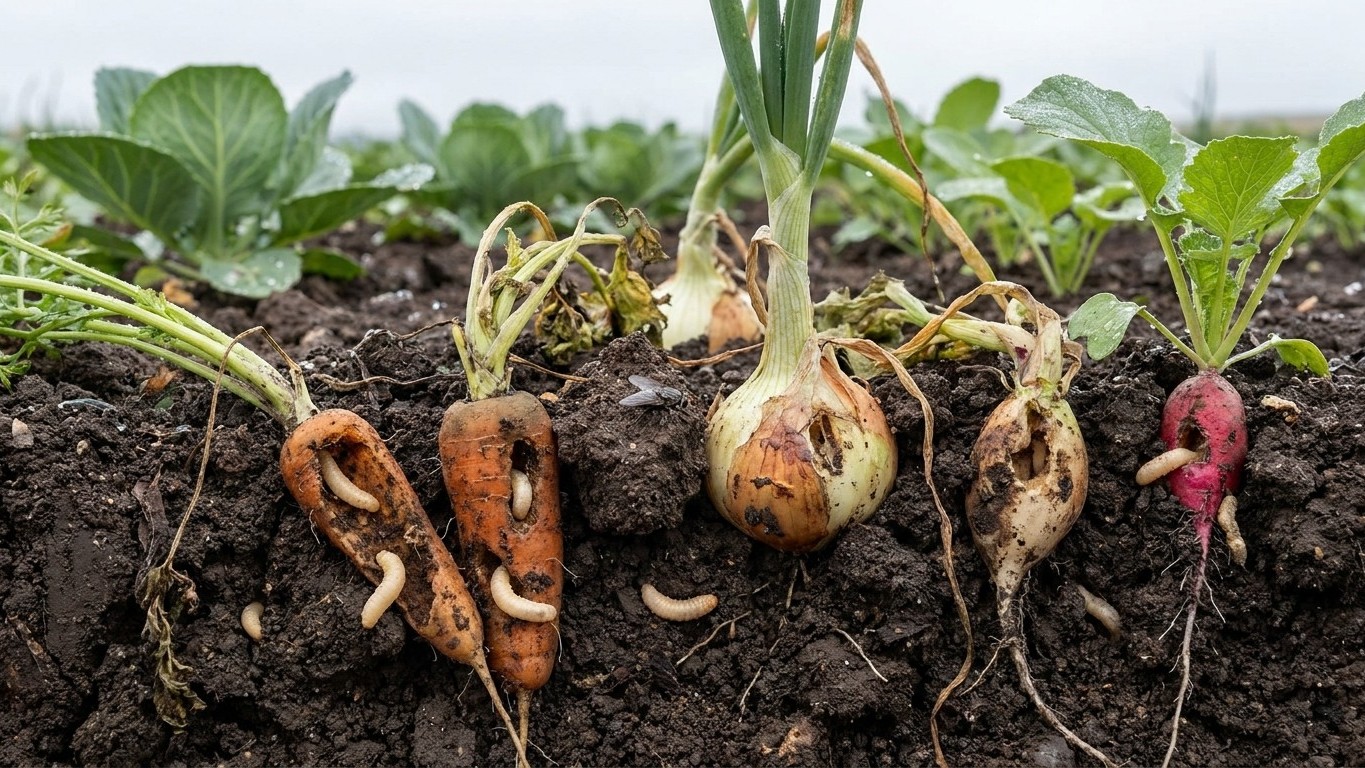
Leaving roots in warm, wet ground has its own cost. Soil that stays damp and warm invites rot and fungal disease, so drainage matters more than any watering schedule. Raised beds, mulch to keep the root zone cooler, and watering at the base instead of overhead all help. Pulling a crop on time beats hoping it holds up through a wet spell.
Lifted roots need inspection before any storage. Check each for soft patches, weeping spots, or a moldy crown. Any of those ends the question, and a root that looks sound on the outside is not proof that it is safe. Never count on a fixed keeping time.
Horseradish needs a plain warning in the kitchen. Grating the fresh root releases compounds that burn the eyes and airways. Work with the window open or the fan running, and keep your face well back from the bowl.
Which these root crops suit Louisiana
Choose by type, and let Louisiana’s conditions set the order of questions. A long, hot, humid year means disease resistance comes first, heat tolerance second, and speed to harvest third. A short cold season would reverse that. Here, the types that finish quickly and stay healthy in damp air are the safest bets.
| Type | What Louisiana asks of it | Practice that helps |
|---|---|---|
| Turnip, rutabaga, kohlrabi | Finish in cool weather, resist humidity-driven disease | Sow in the mild months, space for airflow, rotate away from other brassicas |
| Celeriac | Long crop; must beat summer heat | Start early in the cool season, keep the root zone cool with mulch |
| Horseradish | Tolerates the winter mildness; may struggle in wet soil | Well-drained bed, lift pieces on time, handle with ventilation |
| Jerusalem artichoke | Perennial; will persist | Contain it in a dedicated spot before planting anything |
Turnip and rutabaga are brassicas, and so is kohlrabi. They share their pests and diseases with cabbage, kale and mustard, and a gardener who rotates them into a cabbage bed has rotated nothing. Keep them on a separate rotation from the rest of the brassica family, as the rotation page in this series explains. For problems, rely on practices, not products: clean up crop debris, improve drainage, give plants room, and check your extension office for what is approved in your state.
This page names no varieties, and that is deliberate. A variety that thrives in Minnesota can melt in Baton Rouge, and the only recommendation worth following comes from local trials. The LSU AgCenter is the place to look, and a parish office can tell you what has actually performed in your part of the state, from the Gulf coast to the northern parishes where winters bite harder.
Common questions
Can I plant these roots in spring in Louisiana?
Early spring works for quick types if you sow soon after the soil warms, since the last frost range of January 18 to February 8 arrives early. Anything that needs a long season risks meeting summer heat, so fall sowing usually suits those better.
Do I need to lift roots before winter?
Rarely in the south. The coldest month’s mean daily minimum is 46.1°F at New Orleans, and the soil seldom freezes, so hardy roots and perennials can often stay under mulch. Further north, check local conditions, and inspect anything you lift for soft spots, weeping, or mold before you trust it.
Can turnips or rutabagas follow cabbage?
Not as a rotation. All three are brassicas and share the same pests and diseases, so the bed has not really rested.
Is Jerusalem artichoke worth growing?
Only if you have a spot where its permanence is acceptable, because any tuber piece left behind will regrow. Some people find it hard on digestion because of the inulin it stores, so start with a small portion. Gardeners in the northern parishes, where freezes are more reliable than the one-in-seven-no-freeze winters of the south, will find the same persistence there.