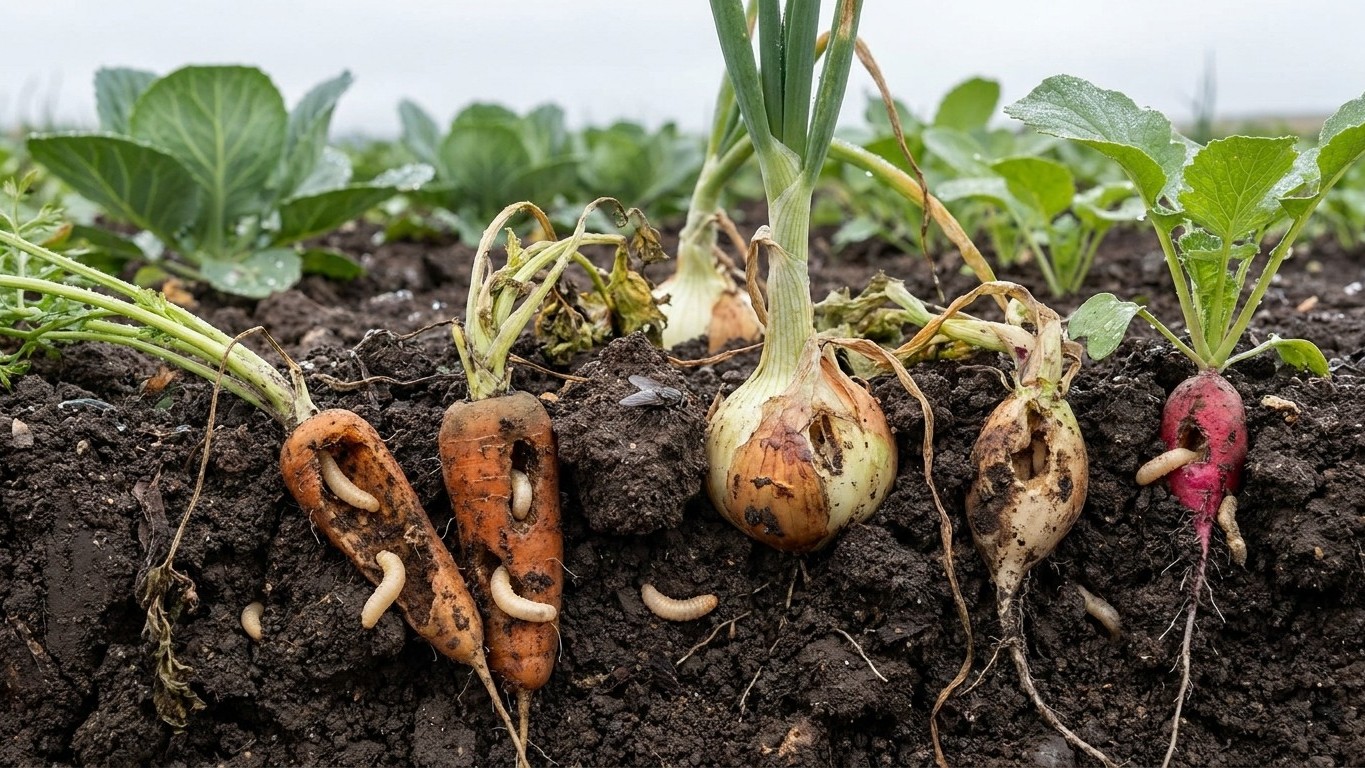

Saskatoon’s average last spring frost is May 18, but that date is only the starting gun for the frost-tender planting. Celeriac, kohlrabi, horseradish and Jerusalem artichokes all grow in Saskatchewan, though they aren’t equal bets. Kohlrabi and the perennials are easy. Celeriac is the one that gets squeezed by a roughly 123-day window.
When the soil is warm enough in Saskatchewan

The reference point is Environment and Climate Change Canada’s Canadian Climate Normals for the Saskatoon SRC station (climate ID 4057180): the last spring frost falls on average on May 18. That is a mean, not a safe date. In one year out of two the last frost comes later, and a frost date is a probability, not a promise. Treat May 18 as the middle of a window that runs on both sides of it.
Two more caveats come with the number. It describes one station, and a province is not one climate: northern and upland districts run weeks behind Saskatoon. It also comes from the 1981-2010 normals, while the US figures cover 1991-2020, so don’t compare the two sets too tightly.
Frost is a proxy, soil is the real trigger
Frost is only a stand-in. These root crops wait for warm soil, and the soil warms after the frost risk ends, not at the same moment. A bed can be frost-free on a Tuesday and still be cold, wet and slow underneath. Seed sown into it sits and rots, or germinates unevenly. A cheap soil thermometer pushed in at planting depth, read in the morning, tells you more than the calendar does.
Each crop reads that signal differently. Kohlrabi, a quick brassica, tolerates cool conditions and can go in early, as soon as the bed is workable and the worst of the frost risk is behind you. Celeriac is the fussy one. It is usually started indoors and set out only after the frost risk has passed, and a spell of cold after transplanting can push it to bolt instead of swelling a root. Horseradish is planted as a root piece, and it wants the soil to have thawed and drained rather than any particular warmth.
Siting Jerusalem artichokes before you plant them
Decide where Jerusalem artichokes go before you decide when. Once planted, they are effectively permanent. Every fragment of tuber left in the ground regrows, and digging the patch only scatters more pieces. It is the single most regretted planting in a vegetable garden. Give it a corner you will never want for anything else, or a bed bordered by a lawn edge, a path or a solid barrier. Plant tubers in spring once the soil has thawed, and expect to see the crop in that spot every year afterward.
For named varieties trialled on the prairies, go to Saskatchewan’s agriculture ministry.
How long the season lasts here
Saskatoon SRC’s average first fall frost is September 18, from the same normals. Count from May 18 and you get about 123 days between the two mean dates. Both are averages, so in half of years the first frost arrives earlier than September 18, and the real window shrinks in exactly the years you least want it to.
The number matters less than what it allows. A window of 123 days is short by the standards of most of the country. A gardener in a longer-season state can sow kohlrabi in spring, harvest it, and sow again for fall. Here the first sowing is close to the only one for anything slow. There is room for a follow-up kohlrabi sowing in early summer, because kohlrabi is quick and tolerates cool autumn weather. There is no room to treat the planting calendar loosely. The Celeriac, Kohlrabi, Horseradish and Jerusalem Artichokes overview explains how each crop uses a season.
Season length also changes whether transplanting is worth the risk. Celeriac started indoors gets a head start that direct sowing could never give it, but every transplant disturbs the root, and a bruised or chilled seedling can stall right when the weeks matter most. In a window this short, the head start usually wins. Harden the plants off gradually and set them out after the frost risk has gone, accepting that a few days of delay costs less than losing the seedlings.
Turnip and rutabaga belong in the same conversation, because they and kohlrabi are all brassicas. They share pests and diseases with cabbage, kale and mustard, so rotating kohlrabi into a bed that grew cabbage last year rotates nothing. In a short season you can’t afford a disease carried over in the soil.
A neighbor with a longer season shows how much the window matters. See Growing Unusual Root Crops in Kentucky for what changes when summer stretches out. For the nearest prairie comparison, Growing Unusual Root Crops in Alberta faces a similar short window with its own regional wrinkles.
Heat and water in Saskatchewan

Environment and Climate Change Canada’s climate normals for the Saskatoon SRC station publish both for your nearest station. Look them up, because that’s where this group of crops is won or lost on water.
Whatever the numbers turn out to be, the rule is short. Where summers run hot, give roots airflow and shade at the base. A mulch layer helps, because swelling roots like steady moisture and punish swings between drought and soaking. Where a summer turns cool and damp, expect the opposite set of troubles: mildew on leaves, slow ripening, and rot in crowded, wet beds. Space plants generously and water in the morning so foliage dries before evening.
The winter low decides what stays in the ground
The fact that matters most for the perennials is cold. At Saskatoon, the mean daily minimum of the coldest month is -20.7 °C (-5.3 °F). That is an average low, not a record, and individual nights go well below it. Natural Resources Canada places Saskatoon in Canadian hardiness zone 3a. That is the Canadian system, built on seven climate variables, and it does not convert to a USDA zone. The figure is for Saskatoon, not the whole province.
Horseradish and Jerusalem artichokes are perennials that gardeners across cold regions leave in the ground, and a layer of mulch over the bed is reasonable insurance. Check the ministry for local guidance on your district. Celeriac is the opposite case. It should be lifted and stored before the soil freezes, and the same goes for any root you aren’t confident will survive a prairie winter outdoors.
Storage touches food safety, so inspect before you trust anything. Look over every root for soft patches, weeping spots or a moldy crown. Any of those ends the question: discard the root. A sound-looking surface proves nothing about what is underneath, and how long any root keeps depends on your conditions.
Which these root crops suit Saskatchewan
Match the type to the facts. A 123-day mean window favors the earliest, quickest types. A cool, damp summer makes disease resistance the first criterion. A winter low of -20.7 °C makes the perennials easy and celeriac a lift-and-store crop.
| Crop | Fit for a short season | Winter plan |
|---|---|---|
| Kohlrabi | Good: quick, tolerates cool weather. A brassica, so rotate away from cabbage and kale. | Harvest and eat or store carefully. |
| Celeriac | Hardest: the slow one, needs an early indoor start and early transplanting. | Lift and store before the soil freezes. |
| Horseradish | Easy: a perennial that waits for thawed soil. | Generally left in the ground under mulch. |
| Jerusalem artichoke | Easy: a tuber, but permanent once planted. | Generally left in the ground; every fragment regrows. |
Pick types by those traits rather than by a catalog name. A variety that performs in a longer-season state may never finish here. A variety recommendation only means something if it was trialled where you garden. Saskatchewan’s agriculture ministry is the place to ask which ones have been tested on the prairies. A wrong variety costs you a whole season, and the window only offers one.
Two kitchen notes before you commit. Grating fresh horseradish releases compounds that burn the eyes and airways. Ventilate the room, keep your face away from the bowl, and don’t treat it casually. Jerusalem artichokes store inulin instead of starch, and they cause digestive discomfort in many people. A small first portion is the sensible way to find out where you stand.
Common questions
Can I plant these crops on May 18?
May 18 is the average last frost at Saskatoon SRC, so frost falls later in about half of years. Check soil temperature and the forecast, and wait for warm soil before setting out frost-tender transplants like celeriac. Kohlrabi and horseradish can go in sooner.
Can celeriac finish in Saskatchewan?
Possibly, but it is the crop most at risk. With a mean window of about 123 days, it needs an early indoor start and a prompt transplant after the frost risk passes. Ask the provincial agriculture ministry which types have done well locally.
Should I leave horseradish and Jerusalem artichokes in the ground over winter?
Both are perennials that gardeners in cold regions commonly leave under mulch, and the coldest-month average minimum at Saskatoon is -20.7 °C in Canadian zone 3a. Confirm local advice for your district. Jerusalem artichokes will keep returning from any fragment left behind.
Do kohlrabi, turnip and rutabaga count as brassicas?
Yes. They share pests and diseases with cabbage, kale and mustard, so rotating them into a cabbage bed rotates nothing.