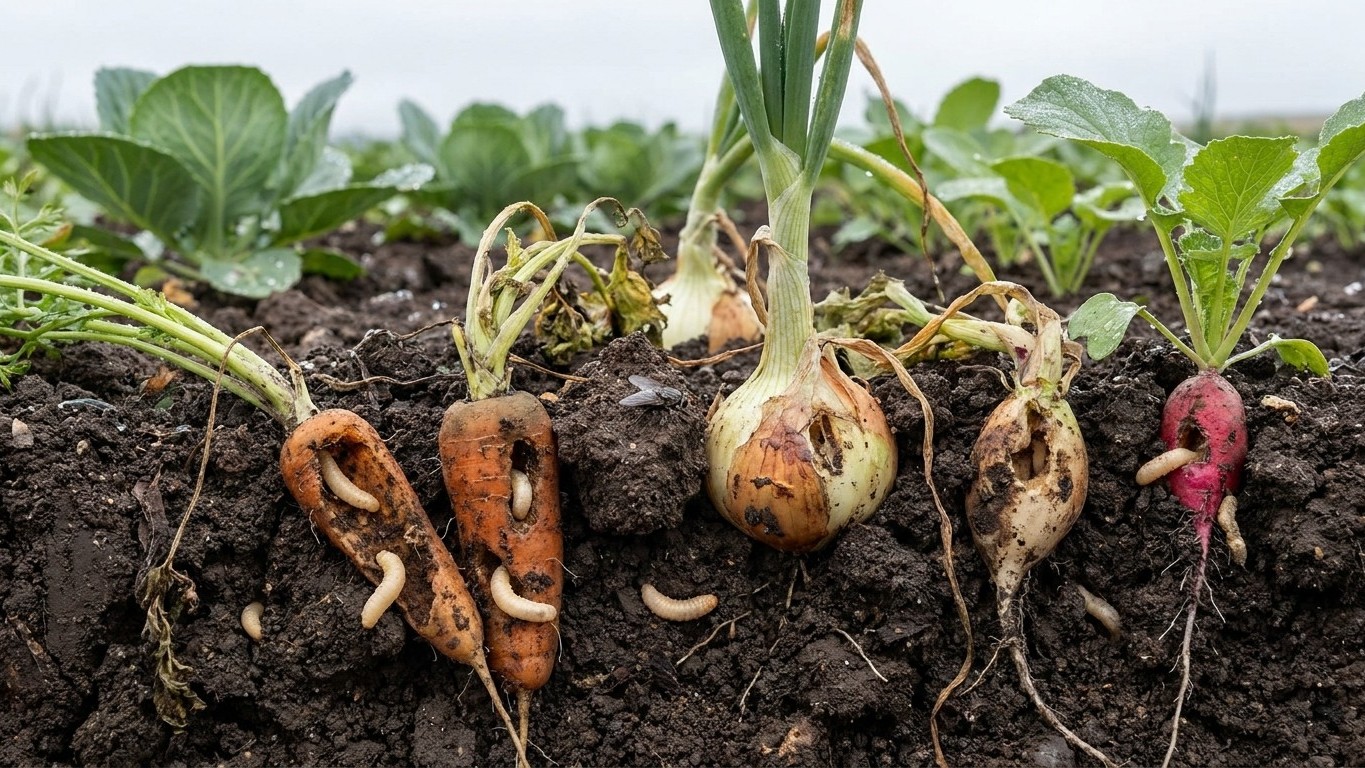

Celeriac, kohlrabi, horseradish and Jerusalem artichokes all have a place in Rhode Island gardens. The sowing calendar hangs on soil warmth after the last frost (April 7 to April 17 at the Providence airport reference station), and the season runs about 200 days between frosts. Winter lows decide which roots can stay in the ground. For the wider picture, start with the Celeriac, Kohlrabi, Horseradish and Jerusalem Artichokes overview.
When the soil is warm enough in Rhode Island
NOAA’s 1991-2020 U.S. Climate Normals put the last spring 32 F freeze at the Providence airport station between April 7 and April 17. That is the 30 to 70 percent probability band, a likelihood and not a promise, so a late cold snap can still arrive after the range. Airports run warm, too. Suburban and rural gardens typically get their last frost one to two weeks later, and sometimes more at elevation. For a yard inland, think late April, possibly the first days of May. Check your own county before you commit seed.
Frost is a proxy, and an imperfect one. These crops wait for warm soil, and soil warms after the frost risk ends, not with it. A bed can be frost-free for ten days and still be cold and sodden four inches down, which is where seed sits and where transplant roots have to start working. An inexpensive soil thermometer, read in the morning, tells you more than the calendar does. The University of Rhode Island Cooperative Extension can give you the soil temperatures it recommends for each crop.
The crops differ in how much they care. Kohlrabi and turnips are cool-season plants that tolerate a chilly start, so they go in first. Celeriac wants the opposite treatment: it needs a long run, which means starting seed indoors and moving seedlings out only once frost risk has passed and the ground has warmed. Horseradish roots and Jerusalem artichoke tubers go in as the soil becomes workable in spring, since both are tough, cold-hardy perennials.
Site Jerusalem artichokes before you plant them
Settle this first. Jerusalem artichoke is effectively permanent once planted. Every fragment of tuber left in the soil regrows, and digging the patch only scatters pieces. It is probably the most regretted planting in a vegetable garden.
Give it a corner you will never want for anything else: along a fence line, at the edge of a field, or in a bed with a hard boundary such as a lawn edge that gets mowed. Never put it in the middle of a rotation bed. A tall stand also shades neighbors, so keep it on the north side of the garden. Only after the site is settled does the growing itself matter, and that part is easy: tubers go in during spring and the plants largely look after themselves.
How long the season lasts here
Take the two frost dates from the same NOAA normals at the Providence airport station. The last spring freeze falls April 7 to April 17, and the first fall freeze October 24 to November 3. Pair the early ends and you get 200 days. Pair the late ends and you also get 200. Mix them and the window runs from 190 to 210 days. About 200 days, then, in the reference city.
Gardens away from the airport will not match it. If a rural lot loses one to two weeks at each end, the window shrinks by as much as a month, and the choices below change with it.
What does a 200-day window allow? A second sowing, for one thing. Kohlrabi and turnips mature quickly and handle cool autumn weather, so a spring sowing can be followed by a late-summer one that comes in ahead of hard freezes. The overview of these crops covers each plant’s rhythm, and the succession sowing guide on this site has the spacing between sowings. A window near 200 days also makes transplanting celeriac worth the trouble. Start seed indoors, harden seedlings off, and plant out with the soil warm.
If your land sits closer to the short end, the arithmetic turns harsh. Celeriac gets less margin, and a second kohlrabi sowing may not have time to size up. Then the first sowing is the main one, and you should lean on the earliest types and the fastest crops. A gardener with a shorter window should also be careful about transplants: every disturbed root costs a few days, and few days are left to spend.
Climates elsewhere give very different answers. The Growing Unusual Root Crops in Iowa and Growing Unusual Root Crops in Kansas pages show how a continental interior changes the same questions.
Heat and water in Rhode Island
A straight admission first. The verified figures behind this page do not include a count of days above 90 F or a summer rainfall total, and I am not going to guess at either. NOAA’s normals for the station nearest you will give both, and the URI extension service knows how the numbers play out across the state. What can be said honestly is qualitative: Rhode Island summers are humid and coastal, not desert-dry, so the usual trouble is not scorching root zones but damp foliage, mildew, slow ripening and rot. A cool, wet summer here punishes roots more than a hot one does.
That shapes practice. Space plants for airflow. Water at the base in the morning so leaves dry by afternoon. Mulch to hold moisture steady, because celeriac and kohlrabi both resent swings between drought and flood. Remember too that turnip, rutabaga and kohlrabi are brassicas. They share their diseases and pests with cabbage, kale and mustard, so rotating them into a cabbage bed rotates nothing. Use the crop rotation guide on this site and give them a bed that has been free of that family.
Two facts govern the rest. The first is season length. At roughly 200 days in Providence, celeriac, the long one, has room to finish, though a rural garden with a shorter window leaves it thin on margin. The second is the winter low. The coldest month at Providence averages a daily minimum of 22.1 F, and the USDA Plant Hardiness Zone Map (2023 edition) puts the state across zones 6a to 7b. That zone figure rests on one variable, the average annual extreme minimum, and it varies from the coast to the northwest hills.
Under mulch, horseradish and Jerusalem artichokes can generally be left in the ground. Frozen soil may stop you digging them in January, so lift what you want before the ground locks up, or accept that the rest waits for a thaw. Celeriac, kohlrabi, turnips and rutabagas are different. Lift them before the soil freezes, and use any of them stored only after a careful look. Check each root for soft patches, weeping spots and moldy crowns. A root that looks sound can still be compromised, and a soft patch, a weeping spot or a moldy crown ends the question. Discard it.
Which these root crops suit Rhode Island
Choose by type, reasoning from what the facts say. A window near 200 days in the reference city, shorter inland, favors the earliest-maturing types of kohlrabi, turnip and celeriac. Humid summers make disease resistance the first criterion, ahead of size or flavor. Airflow at the root and between leaves matters more than heat tolerance.
| Crop | Season demand | Winter in the ground? | What to prioritize |
|---|---|---|---|
| Kohlrabi | Short; suits two sowings | No, lift before hard freezes | Earliest types, even moisture |
| Turnip and rutabaga | Short to moderate | No, lift before the soil freezes | Disease resistance, brassica-free bed |
| Celeriac | Longest; needs transplants | No, lift before the soil freezes | Earliest types, steady water |
| Horseradish | Perennial | Generally yes under mulch | Dedicated bed, easy digging |
| Jerusalem artichoke | Perennial | Generally yes, harvest as you need | A permanent site, chosen first |
I am deliberately not naming a single cultivar. The varieties trialled in Rhode Island conditions are the only recommendation that means anything, and this page does not have those trial results. Any name I offered would be a guess dressed up as advice, and gardeners spot that at once. The University of Rhode Island Cooperative Extension is the place to ask for tested types for your county, and the same goes for resistant lines.
Two kitchen notes belong here. Grating fresh horseradish releases compounds that burn the eyes and airways. Open a window, run a fan, and keep your face well back from the bowl. And Jerusalem artichokes cause digestive discomfort in many people, because they store inulin instead of starch. Start with a small first portion to find out how you react.
Common questions
What frost date should I use for my own town?
Start with April 7 to April 17 as the Providence airport reference, then add a week or two for suburban and rural gardens, and more at elevation. Your county extension office can narrow it further. Then check the soil with a thermometer, not just the calendar.
Can I keep Jerusalem artichokes from spreading?
Careful siting is the only real answer. Hard boundaries and a mowed edge help, and a deep container reduces the risk, but any tuber fragment left in the soil regrows. Choose the spot once, and expect it to be permanent.
How do I know a stored root is still usable?
Inspect every root before eating. A soft patch, a weeping spot or a moldy crown means discard it. Looking sound on the outside does not make it safe, and I will not promise a storage time.
Can I rotate turnips or rutabagas into a cabbage bed?
No. Turnip and rutabaga are brassicas, like cabbage, kale and mustard, and they share the same pests and diseases. Use the crop rotation guide on this site and move them to a bed that has been free of brassicas.