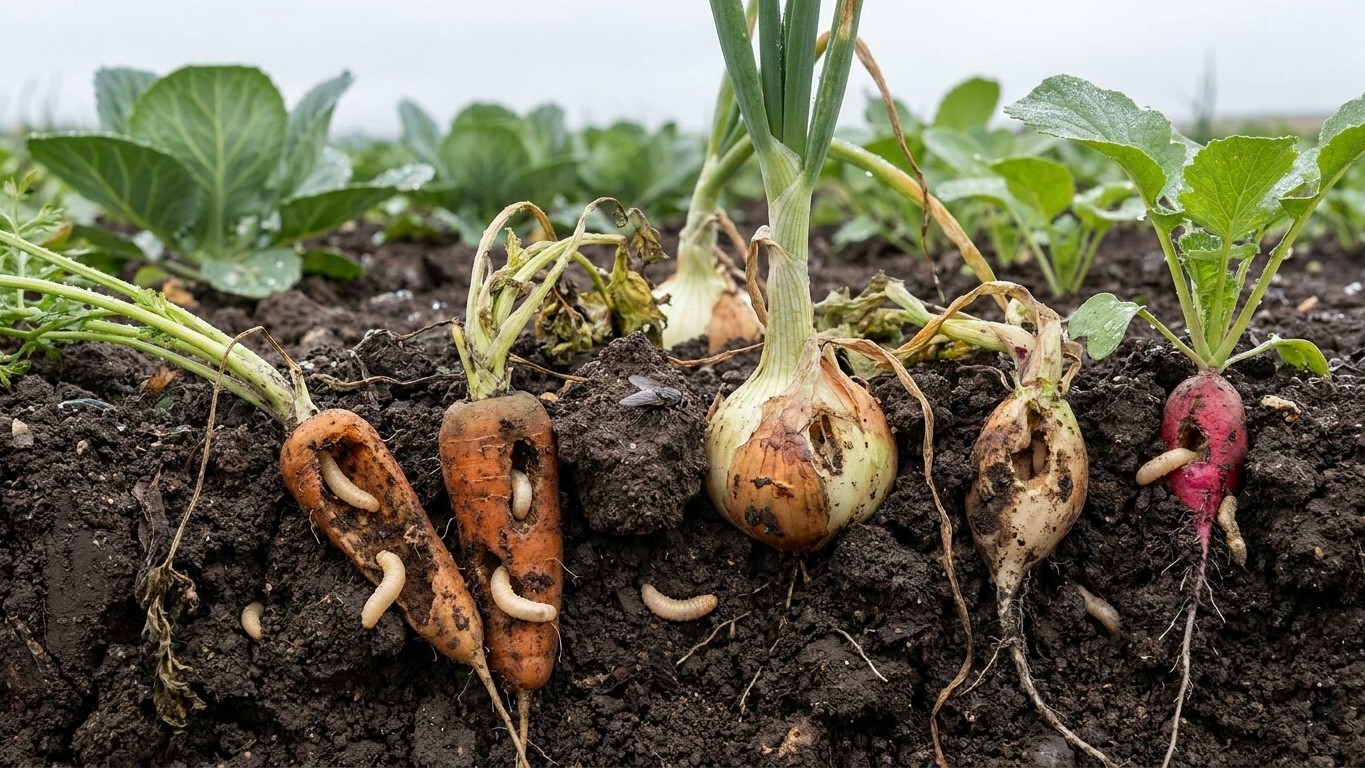

Connecticut rewards the cool-season and hardy perennial roots: celeriac, salsify, scorzonera, daikon, black radish, horseradish, sunchokes and burdock all fit its season. It punishes the tropical ones, ginger, turmeric, yacon and oca, which want far more warm months than the state offers. Your pick comes down to how many frost-free weeks a root needs and whether it can sit through winter.
The short answer for Connecticut
Start with the clock. At the Bridgeport station, NOAA’s 1991-2020 Climate Normals put the last spring 32°F freeze between April 2 and April 12, and the first fall one between October 28 and November 10. Both ranges are the 30-70% probability band of a 32°F freeze, so they are odds, not guarantees. Bridgeport also sits on Long Island Sound and is the mildest corner of the state. From the late end of the spring band to the early end of the fall band, the coast gets just under 200 days. Inland and northwest Connecticut get fewer.
Winter is the second filter. The mean daily minimum of the coldest month at Bridgeport is 24.4°F, and the USDA Plant Hardiness Zone Map (2023) places the state in zones 6a-7b. Hardy roots shrug that off and can stay in the ground. Tender ones cannot.
| Type | Examples | Verdict for Connecticut |
|---|---|---|
| Quick cool-season roots | Daikon, black radish | Reliable; sow in spring or late summer |
| Mid-season storage roots | Celeriac, Hamburg parsley | Good, with transplants started indoors |
| Slow taproots | Salsify, scorzonera | Works if sown early and left alone |
| Hardy perennials | Sunchokes, horseradish, burdock | Easiest; plant once and dig in fall or winter |
| Tender tropicals | Ginger, turmeric, yacon, oca | Containers only, or skip |
Sorting by days to maturity
Read the days-to-maturity number on the packet, then count backward from the early end of your fall freeze range. If the count lands before your last-frost date, the root is too slow for your yard. Anything near that line is a gamble you can improve by starting seed indoors.
What will not work here
Tropical roots top the failure list. Ginger and turmeric need many months of steady warmth, and Connecticut’s fall freeze arrives as early as October 28 even on the coast. Yacon is damaged by a 32°F night. Oca sets most of its tubers late in the fall, as days shorten, which is exactly when an early inland freeze can end the crop. In a pot you can drag indoors, they are a fun experiment. In the ground, they are a waste of a bed.
The slow roots sown too late or too early
Scorzonera and salsify take most of a season, so a sowing in late June has little chance of sizing up before frost. The opposite mistake is sowing during a mild spell in March. The April 2 to April 12 band means a freeze is still a 30-70% proposition, and parsnip-type seed is slow to sprout in cold soil. It can sit for weeks and then crust over under a spring rain.
Tall, leafy crops punish crowding. Celeriac and Hamburg parsley pack dense foliage, and squeezing them tight in a warm, muggy Connecticut July invites leaf diseases. This page has no rainfall or humidity figures, so treat that as a reasoned caution, not a measured one. Give them room for air to move.
Soil is the last trap. Many Connecticut yards sit on stony glacial ground, and long taproots hit a rock and fork. Plan on a raised bed or a deep, sifted trench for anything with a long root, or choose short, broad roots like celeriac and daikon. The page does not carry county soil data, so a quick dig with a trowel tells you more than any map.
What changes across Connecticut
Connecticut is not one garden. The USDA hardiness system runs on a single variable, the average annual extreme minimum temperature, and the state spans zones 6a to 7b. That is four half-zone steps, so there is no single answer for the whole state. The Bridgeport figures above describe the coast, not the hills.
A gardener in the northwest corner or on higher ground should shift in three directions. Expect spring to arrive later and fall to arrive earlier than the Bridgeport ranges. Favor the quick roots and the hardy perennials. Start celeriac indoors so it enters the bed already sized up, and sow slow taproots the moment soil can be worked. Leave the tender roots out entirely.
On the coast, the window is as long as it gets. That is where a container of ginger has its best shot, and where a second sowing of daikon in late summer has time to finish before the freeze band opens. Even so, a zone number says how cold winter gets and says nothing about how long the growing season runs. Two yards in the same zone can differ by weeks.
To see where your own address falls, look it up on the USDA Plant Hardiness Zone Map by ZIP code. Then use the dates on our page about When to Plant Unusual Roots in Connecticut as a starting point, nudged earlier or later to match your corner of the state.
Where to check this for your own county
The best next stop is UConn Extension, Connecticut’s land-grant extension service. Look for two things there. The first is a local planting calendar for vegetables, ideally one that names your county or region. The second is any list of varieties trialled in Connecticut, since a root that sizes up nicely in a university plot has already survived the state’s stony soil and humid summers.
It also helps to ask about soil testing and to find the contact for your county office. Extension staff hear the same questions every spring, so they know which roots fail locally and which ones people quietly grow every year.
A county recommendation beats a state one, every time. This page is the state one. It is built on a single coastal station and a statewide hardiness range, and it has no crop-by-crop extension calendar for Connecticut roots. Where the two disagree, trust the county office.
For the bigger picture of how these crops fit together, see our guide to Growing Unusual Root Crops in Connecticut.
Checking this against your own garden
Your yard outranks every date here. Three observations will tell you more than a chart.
- Soil warmth by feel. Push your hand a few inches into the bed in spring. If it feels cold after a full minute, seed will sulk. A bed that warms early, usually south-facing or sandy, can be sown days ahead of a shaded or clay one.
- The first true leaves. Sow a few radishes as a test strip. When their true leaves, the ones after the round seed leaves, appear, you know how fast your soil is moving. A week’s difference between two beds is a real microclimate.
- The first blackened leaf in fall. Note when basil or dahlias get hit in your yard. If it happens well before the early end of the October 28 to November 10 range, you sit inland or in a cold pocket, and the slow roots need an earlier start next year.
Write the dates down once. After two seasons, your own notes will beat any state average.
Common questions
What is the easiest unusual root for a beginner in Connecticut?
Sunchokes and horseradish. Both are hardy perennials that tolerate the winter minimums here. Give them a bed you can contain, because both spread.
Can I grow ginger in the ground in Connecticut?
Not reliably. It needs a long warm season and cannot take a 32°F night. Grow it in a container, start it indoors and bring it inside before the first fall freeze.
Do hardy roots need to be dug before winter?
No. With a coldest-month mean minimum of 24.4°F at Bridgeport, salsify, scorzonera, horseradish and sunchokes can stay in the ground. Mulch heavily if you want to dig them in midwinter, since the soil can freeze hard.
Do the Bridgeport frost dates apply to my yard?
Only if you garden along the coast. Inland and northwest Connecticut freeze earlier in fall and later in spring. Even on the coast, the dates are the 30-70% band, so a freeze can still arrive after the later date in a given year.